Storms, a stage and a recalibrated script: how weather reshaped Trump's July 4th address
Severe weather forced the evacuation of the Freedom 250 rally and the Great American State Fair on the National Mall just hours before President Donald Trump's scheduled Salute to America speech, exposing how a celebration engineered for television now has to be re-staged under a storm front.
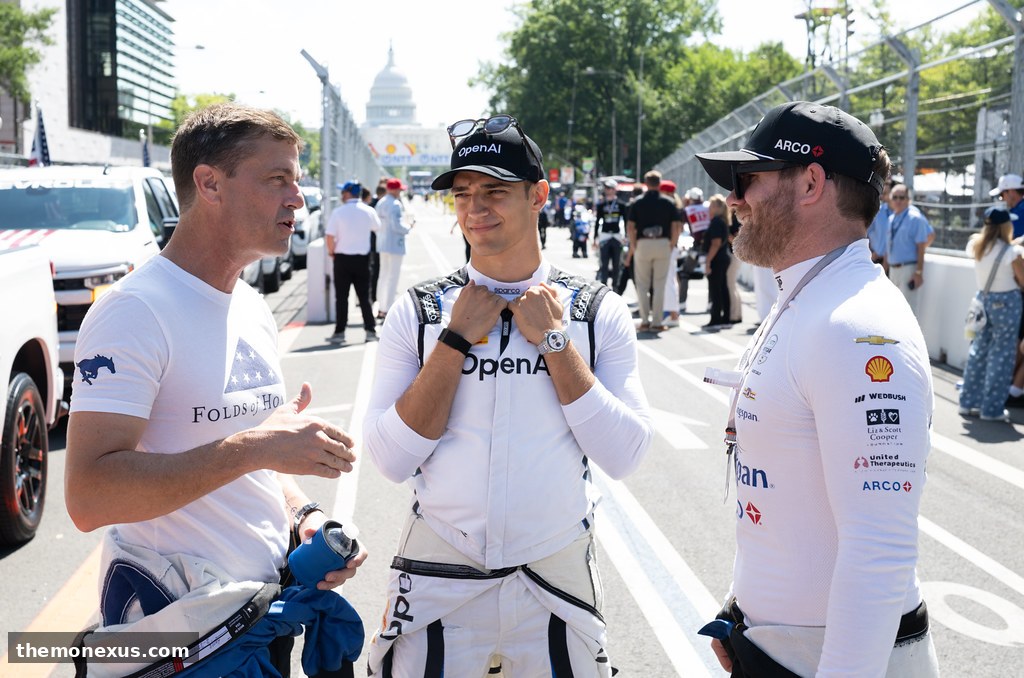
Severe thunderstorms rolling across the Mid-Atlantic on the evening of 4 July 2026 forced the evacuation of the Freedom 250 rally on the National Mall and pushed the Great American State Fair into an early shutdown, complicating the staging of President Donald Trump's Salute to America address and exposing how a celebration engineered for television is now being re-choreographed under a storm front.
The Freedom 250 rally, an event explicitly framed around the semiquincentenary of American independence, was being cleared shortly before 00:24 UTC on 5 July, with the broadcast-style prompt — "For your safety, please back away from the stage" — audible on the livestream carried by Telegram channel BellumActaNews. The Great American State Fair, staged on the same axis of federal ground, was closed in parallel for safety reasons as the same cell moved in. The evacuations came roughly ninety minutes before Trump was due to deliver a speech his own team had teased as "long," and inside an hour of OANN's confirmation that the president would depart the White House for the Mall.
What the wire actually shows
Four wire-style items in this publication's working file describe the same chain of events from slightly different vantage points. WarMonitors posted at 23:42 UTC on 4 July that an evacuation had been ordered for events on the National Mall "as storms gather near Washington ahead of Trump's July 4th speech." BellumActaNews followed within forty minutes with confirmation that the Freedom 250 rally was being evacuated, then with the State Fair closure, both citing the same "back away from the stage" announcement. OANN, the national broadcaster most openly aligned with the Trump White House, ran its own item at 22:15 UTC saying the president "is expected to depart from the White House soon to deliver what he teased would be a long speech at the National Mall," with a planned Salute to America programme behind it.
Read together, the sequence is consistent: a thunderstorm complex tracked toward Washington in the late evening of 4 July, local time; federal-ground event organisers cleared crowds rather than shelter them in place; and the prime-time address — which had been pre-publicised as lengthy and on the record — was forced into a shortened or relocated format. None of the four items specifies a revised venue, an alternate start time, or whether the speech ultimately proceeded on the Mall. That absence is itself the story: the production was sized for a controlled environment and the environment did not co-operate.
The Salute to America template, and why weather matters
Salute to America is not a generic holiday concert. It is a branded, executive-produced pageant, revived in 2019 and re-staged as a recurring set-piece for an incumbent who has shown a consistent preference for stagecraft that doubles as policy signalling — fighter-jet flyovers, military formations, and a televised address that functions as both a campaign rally and a constitutional commemoration. The 2026 edition, fused with the semiquincentenary of the Declaration of Independence and a Freedom 250 branding layer, raises the stakes of any visual mishap. Weather, in that sense, is not merely an operational nuisance; it is a competitor for the frame.
There is a second, less obvious reason this matters. The Mall is one of the few pieces of urban geography in the United States in which a federal speech can be staged against a built backdrop that is itself the message — the Capitol, the Washington Monument, the Lincoln Memorial axis. A 30-minute thunderstorm does not just delay a speaker; it can break the visual grammar of the address. Crowds that were packed shoulder to shoulder for the flyover and the pyrotechnics become, under a lightning advisory, a logistical problem. Clearing them is the safe call; it is also the call that pulls the cameras back and shifts the editorial control of the frame from the production team back to the meteorologists.
The counter-narrative: a non-event, easily rescheduled
The defensible counter-read is straightforward. Storms happen in Washington in July; outdoor events are evacuated all the time; the White House has a robust contingency infrastructure, including an indoor address option from the East Room or a deferred prime-time slot; and a delayed or compressed speech is a logistical footnote, not a political one. From this vantage, the only story is the routine business of moving an outdoor set indoors when the radar lights up.
That framing holds, but only up to a point. The White House had spent the preceding days publicly building expectation around a "long" speech, and the Freedom 250 branding — anchored to a once-in-a-generation anniversary — had pulled in corporate sponsors, allied civil-society groups, and paying attendees whose experience of the day will be defined by what was visible on the broadcast. The longer the speech was teased, the more compressed any cut-down version reads. A non-event for a routine speech becomes, for a marquee address, a re-framing.
The structural frame: television-era political theatre in a weather-prone capital
What this episode quietly reveals is how dependent the modern American political set-piece has become on weather windows that are themselves narrowing. The Salute to America format — a Mall stage, a flyover, a camera axis pointed at the monuments — was designed in an era of broadcast television, when the production budget and the contingency planning could absorb a rain delay. The 2026 version layers a quasi-centennial civic brand on top of that template, which raises the production premium on clear skies. When the atmosphere does not co-operate, the spectacle does not get cancelled; it gets re-priced, in real time, against the cost of a diminished frame.
There is a structural parallel here to other domains where a planning assumption and an environmental one collide. Critical infrastructure — data centres, semiconductor fabs, port logistics — has been quietly engineered around climate baselines that are themselves drifting; the corrective response is usually not retreat but capital-intensive hardening. Political theatre is a softer infrastructure, but it is subject to the same arithmetic. Either the format adapts (indoor fallbacks, distributed regional broadcasts, a heavier digital overlay) or the format gets rarer, and the moments that do take place get more concentrated — and therefore more exposed when something goes wrong.
Forward view: the speech, the audience, and what the wire did not catch
The immediate questions are operational. Did Trump proceed with the address on the Mall under a compressed window, relocate to an indoor venue, or push the speech to a later slot on 5 July? None of the four items in this publication's working file specifies the outcome, and the deliberate absence of a confirmed revised start time from OANN — typically the most permissive venue for White House messaging — suggests the schedule itself was in flux at the time of writing. The wire items also do not specify crowd estimates, the precise lightning-trigger threshold used to order the evacuation, or whether any attendees required medical attention; those data points typically surface in the hours after an event of this scale, via the United States Park Police and the National Park Service, neither of which is represented in this thread.
The audience effect is more interesting. The Salute to America format is calibrated for the camera, not the crowd; the people on the Mall are at once the audience and the visual texture of the broadcast. Evacuating them removes the texture. If the address went ahead under lights and a near-empty foreground, the frame would be unusually austere for a semiquincentenary address; if it was deferred, the address loses the simultaneous moment that the branding depends on. Either way, the gap between the planned image and the broadcast image is a gap the White House will be asked, in the days ahead, to account for.
What we are still waiting on
Three things remain genuinely uncertain. First, the duration and content of the eventual speech, and whether the "long" framing was preserved or quietly abandoned. Second, the attendance figures — both the planned baseline and the actual head-count before the evacuation. Third, the cost of the production itself, including the premium for re-staging under a weather contingency, which is the kind of figure that surfaces in FOIA releases months later rather than in real-time wire copy. Until those land, this remains a story about a stage being cleared and a marquee address being recalibrated — significant, but not yet fully legible.
Desk note: The wire items available for this piece are unusually narrow — four Telegram-sourced posts from three channels, none of which provides outcome data past the evacuation itself. Monexus has chosen to report what is verifiable from those items and to flag explicitly what is not, rather than to infer a revised schedule, an attendance number, or a quote from the eventual speech. Future coverage will fold in Park Police, National Weather Service, and White House press office data as they publish.
Wire provenance
This editorial synthesis draws on the following public wire/social posts:
- https://t.me/BellumActaNews
- https://t.me/BellumActaNews
- https://t.me/WarMonitors
- https://t.me/OANNTV