Tehran's Free-Metro Decree and the Optics of Wartime Governance
A governor's announcement of round-the-clock free metro service reveals how wartime Tehran fuses civic provision with regime spectacle — and how tightly the picture is curated.
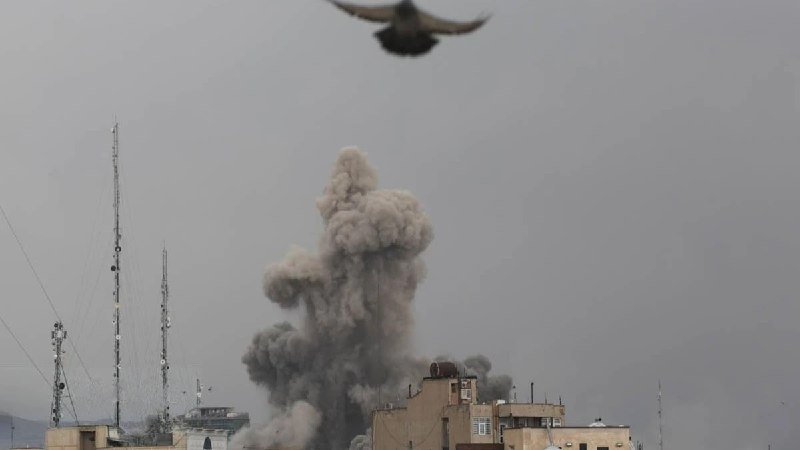
At 18:08 UTC on 5 July 2026, the Governor of Tehran announced that the capital's metro would run continuously and free of charge, with roughly 4,000 buses handling intra-city movement and a fleet of around 12,000 vehicles mobilised across the wider transport network (Tasnim News, Telegram, 5 July 2026, 18:08 UTC). On its face the order is a logistical notice. Read against the day's other dispatches — pilgrims travelling 800 kilometres from Ahvaz to Tehran, and chants referring to "Mir and Alamdar" inside metro carriages (Tasnim News, Telegram, 5 July 2026, 17:48 and 16:38 UTC) — it is something else: a curated image of a functioning capital during a war the Iranian state is simultaneously fighting and performing.
The point is not whether the metro genuinely runs twenty-four hours, or whether the buses and minibuses counted in the governor's announcement are actually on the streets. The point is that a state-aligned outlet is the one telling readers so, on a day saturated with mobilisation imagery, and that the same outlet is curating the visuals of citizen movement that match the announcement. This is not journalism in the conventional sense; it is infrastructure messaging folded into devotional framing.
Wartime service, curated optics
Free public transport is a defensible wartime policy. It absorbs shock, eases movement for displaced families, and signals that the state is bearing cost rather than passing it to commuters. Tehran's announcement fits a familiar pattern in twentieth- and twenty-first-century conflict: emergency pricing rolled back, fare collection suspended, services extended to compensate for fuel scarcity and fear.
What distinguishes the Iranian state's handling is the rhetorical scaffolding. The announcement is paired, within ninety minutes, with footage of long-distance pilgrims disembarking in the capital and street-level clips from metro platforms. The Tasnim thread tags the visuals with hashtags invoking Shahid Iran and references to figures familiar from Shia martyrdom literature ("Mir and Alamdar did not come") (Tasnim News, Telegram, 5 July 2026, 16:38 and 17:48 UTC). The effect is to convert a mundane transport bulletin into part of a coherent public narrative in which wartime sacrifice, religious commemoration, and state competence fuse into a single image.
That is the logic of governance under sanctions and bombardment: when conventional tools of legitimacy — oil revenue, diplomatic standing, regional alliances — are constrained, the visible provisioning of daily life carries disproportionate weight.
The counter-frame
The reading above is not the only one available. A sceptical observer might note that Tasnim is an outlet affiliated with the Islamic Revolutionary Guard Corps, that its wartime dispatches blend information with mobilisation by design, and that any urban policy announced through such a channel should be discounted as theatre. The governor's numbers — the 4,000 buses, the 12,000-vehicle fleet — cannot be independently verified from the materials available, and the absence of independent Tehran press in this thread is itself a data point.
A more measured position holds that the announcement probably reflects a real administrative adjustment layered on top of an aggressive messaging offensive. Tehran's wartime authorities have, in past escalations, suspended fares and lengthened service windows; the pattern is precedented. The distinctive element this time is the speed at which the official line has been packaged with devotional footage, suggesting the state sees the present moment as both genuinely logistically demanding and politically generative.
Both readings can be true at once. A real metro schedule is being delivered. A real narrative is being constructed around it. The same act can close a commute and open a propaganda front, and the channels through which it reaches the public are designed to blur the boundary.
What this reveals about the structure
Three structural features stand out. First, when a state faces external pressure and internal dissent, the everyday utilities — water, electricity, transport — become contested terrain; performance and provision cannot be cleanly separated because the audience for both is the same population under the same stress. Second, outlets tightly aligned with security institutions are not neutral carriers of administrative news. Their editorial choices are themselves policy decisions, and the choice to publish a transport announcement at 18:08 UTC on a day heavy with mobilisation imagery is a choice to read the announcement in a particular way. Third, observers outside Iran consuming this material see only the curated surface, and the absence of independent verification infrastructure inside the country means the curated surface is, for now, all there is. That is a structural feature of the information environment, not a flaw in any single telegram post.
What remains uncertain
The governor's specific fleet numbers — 4,000 buses and 12,000 vehicles — are not corroborated by the materials at hand. It is not known whether fares had already been informally suspended in parts of the network before the official announcement, nor how long the round-the-clock schedule will hold if fuel allocations tighten. The "Badarqa" and "Shahid Iran" references in the accompanying footage point to a specific commemorative framing whose wider political meaning inside Iran this publication cannot fully map from open sources alone. Treat the figures and the framing as the regime's own statement of intent, and read the metro bulletin as a window onto how wartime Iran performs ordinary governance — not as an audit of whether the trains actually run.
Desk note: Monexus treats Tasnim's wartime bulletins as primary-source state messaging, not as neutral reporting. Where independent outlets are unavailable inside Iran, we surface the regime's framing in full and mark the limits of what can be verified — letting the evidence do the work rather than the editorial voice.
Wire provenance
This editorial synthesis draws on the following public wire/social posts:
- https://t.me/tasnimnews_en/
- https://t.me/tasnimnews_en/
- https://t.me/tasnimnews_en/