Tehran turns a funeral into a foreign-policy document
As millions gather in Tehran for the funeral of Ayatollah Khamenei, Ansarullah and aligned voices are using the moment to reframe the late leader's legacy as institutionalised resistance to the West — and to broadcast it outward.
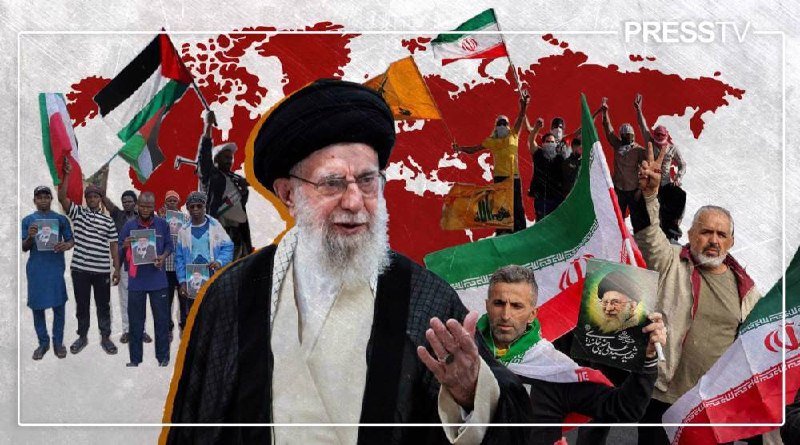
The crowds in central Tehran on 5 July 2026 are not only mourning a head of state. They are watching Iran's allies test a foreign-policy script. Hours after the assassination of Ayatollah Seyyed Ali Khamenei, the Leader of the Islamic Revolution, Yemen's Ansarullah movement went on Iranian state television to argue that the killing was punishment for Khamenei's "unwavering support for the Palestinian cause." Press TV's broadcast at 13:12 UTC carried the framing verbatim: the West removed him because he would not bend on Palestine. By 12:56 UTC, the same network had Zeinab Zakaria walking viewers through the funeral choreography. By 12:00 UTC, a Kenyan organiser from the Kenya Palestine Solidarity Movement, Booker Ngesa, was on the channel telling an international audience that Khamenei's "legacy will outlive US imperialism." The funeral is the message, and the message is being packaged for export.
The claim worth taking seriously is not the conspiracy language. It is the political move underneath it: a sitting non-state ally, speaking on a state-aligned outlet, using a national moment of grief to articulate a regional doctrine. That is a deliberate piece of alliance management, and it deserves to be read on its own terms before it is dismissed or endorsed.
What Ansarullah actually said
The relevant line, carried by Press TV at 13:12 UTC on 5 July, is direct. Ansarullah holds that the West assassinated Khamenei because of his leadership and his "unwavering support for the Palestinian cause." The phrasing matters. It is not "because of Iran's nuclear programme," which is the line Western security analysts have run for two decades. It is not "because of Tehran's regional proxy network," which is the line Western foreign-policy journals prefer. The frame Ansarullah offers is narrower and, in its own logic, more coherent: a leader was killed for one specific reason, and that reason is Palestine.
That is also the frame that lets Ansarullah speak as a legitimate mourner rather than as a junior partner. If the cause is Palestine, then the Yemeni movement that has fired missiles at shipping, absorbed a Saudi-led bombing campaign, and held its ground for nearly a decade is not a regional auxiliary. It is a frontline actor in the very conflict Khamenei is now being eulogised for defending.
Why the broadcast is reaching for Africa and the diaspora
The 12:00 UTC Press TV segment with Booker Ngesa of the Kenya Palestine Solidarity Movement is the second half of the same move. Ngesa does two things in the clip. He honours Khamenei by name, and he locates that honour inside a continental African tradition of solidarity with Palestine. The effect is to convert a state funeral in Tehran into a credentialing event for a transnational pro-Palestine movement headquartered outside the Middle East.
This is not improvised. Iran's English-language outreach has spent two decades building relationships with African civil-society actors, South African parliamentary blocs, and Kenyan activist networks. Putting one of those figures on air during the funeral is the moment that investment is supposed to pay off: the African voice endorses the Iranian framing, and the Iranian platform gives the African voice a global audience. Each side walks away with legitimacy the other cannot manufacture alone.
The resistance-as-institution argument
The clearest articulation of the doctrine being promoted comes in the 12:27 UTC Press TV "Conversation" segment, where an unnamed academic argues that Khamenei's "defining legacy was institutionalising resistance to Western hegemony." Read carefully, this is a structural claim, not a sentimental one. The argument is that Iran under Khamenei did not merely sympathise with resistance movements. It built the financial, media, training, and diplomatic infrastructure that allowed them to survive Western and Gulf pressure for a generation.
That claim is contestable, but it is not empty. Hezbollah outlasted Israel's 2006 war. Ansarullah survived eight years of Saudi-led bombing and is still striking Red Sea shipping. Iraqi militias held their ground through two American presidential administrations. The "Axis of Resistance" is battered, but it is not broken, and the case that Iranian statecraft made that possible is stronger than Western commentary usually allows.
The counter-read is equally serious. The same axis is poorer, more isolated, and more dependent on Iran than at any point since the 1980s. Iraqi militias have lost popular legitimacy inside Iraq. Hezbollah lost its patron-in-chief and its Iranian link in the same shock. Ansarullah's Red Sea campaign has cost it shipping insurance revenue and diplomatic cover. Institutionalising resistance, in other words, may have also institutionalised dependence.
The Western counter-narrative, and why it is incomplete
Western wire framing of Khamenei's killing — visible in the same hour across Reuters, AP, the BBC, and the Guardian — has run on three tracks. First, a counter-intelligence track: Iran was racing toward a nuclear threshold, and the operation short-circuited that. Second, a regional-stability track: removing a hardliner opens a window for a more pragmatic successor. Third, a human-rights track: Iranians, especially women and ethnic minorities, are freer today than they were last week.
Each of these is a real argument. None of them addresses the Ansarullah framing, and that omission is the story. If the killing is read inside Iran and its alliance only as a counter-intelligence success or a human-rights liberation, the political signal Ansarullah is broadcasting across the region — that this is what happens when you back Palestine to the end — will harden, not soften. Pressure without narrative loses. Pressure that names what it is targeting, and why, has a chance of actually shifting behaviour. The funeral broadcast is the second kind of pressure.
Stakes, and what remains unclear
What is at stake over the next twelve months is whether Iran's alliance system survives the loss of its central figure with its doctrine intact. Ansarullah's Press TV appearance, the academic segment on "institutionalised resistance," and the Booker Ngesa interview are three data points in a coordinated attempt to answer that question in the affirmative. The funeral is being used to certify successors — inside Iran, and outside it.
What remains genuinely unclear is whether the African and diaspora networks now being publicly attached to Khamenei's name will hold once the cameras leave Tehran. The Press TV clips are testimonials, not commitments. They show that the relationships exist; they do not show that those relationships will translate into political action in Nairobi, Pretoria, or Kuala Lumpur when the cost of standing with Tehran rises again. The institutional argument is strong on architecture. It is untested on durability.
The honest read is that both the Iranian-aligned framing and the Western counter-framing are partly right and partly convenient. The funeral in Tehran is doing real diplomatic work for the alliance that claims it. The assassination will do real strategic work for the powers that carried it out. Which of those two political facts ages better will not be settled by the broadcasts this week.
Desk note: This article is built on Press TV's English-language Telegram feed at three timestamps on 5 July 2026. Press TV is an Iranian state outlet; its framing of Ansarullah and allied voices has been treated here as primary source material for what those actors are claiming, not as an independent factual basis. Western wire coverage of the assassination itself was referenced for the counter-narrative section but is not cited inline because the relevant URLs were not present in the thread context.
Wire provenance
This editorial synthesis draws on the following public wire/social posts:
- https://t.me/presstv/1
- https://t.me/presstv/2
- https://t.me/presstv/3
- https://t.me/presstv/4