Tehran Stages a Funeral, and Asks a Nation to Mourn Twice
Iran's state media has spent 24 hours choreographing a national farewell to a slain supreme leader. The ritual reveals less about the man being mourned than about the system trying to inherit him.
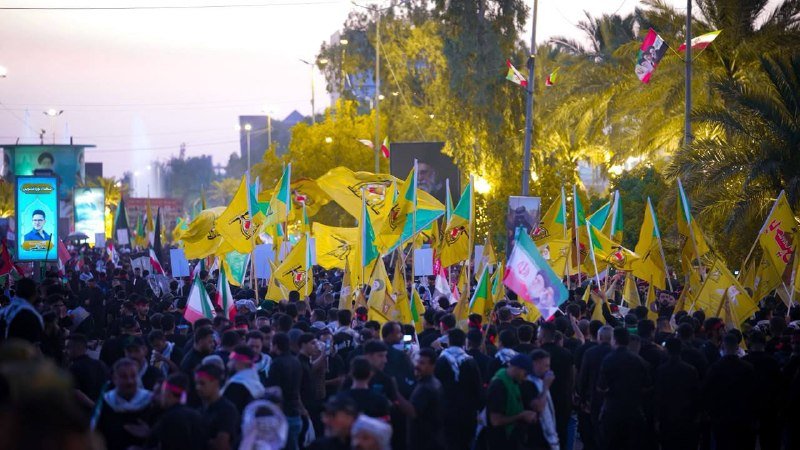
Iran's state-aligned outlets began publishing logistics for a national funeral at roughly 12:46 UTC on 5 July 2026. By 13:24 UTC, Tasnim News was advertising special Tehran–Mashhad trains to move pilgrims and mourners. By 13:35 UTC, the same outlet was broadcasting the on-camera confession of a man from Lorestan who described himself as ready to die ten times for the departed leader, then broke into tears when pressed on what that leader would have wanted.
This is not a story about a funeral. It is a story about a state trying to convert grief into governance, in real time, and broadcasting the attempt as it happens.
What Tasnim is actually showing
Tasnim, the news agency closest to the Islamic Revolutionary Guard Corps, has a near-monopoly on the visual record. The 12:46 UTC dispatch names the head of the funeral staff in Tehran, who specifies that the procession will move on land and use a special vehicle to carry the body. The 13:24 UTC item is pure operations: ticket windows open at 17:00 local time, extra trains run between Tehran and Mashhad, capacity is being added for mourners. The 13:35 UTC item is the emotional payload — a tearful interviewee, the language of willing martyrdom, and the hashtag the channel wants to ride.
Each piece is doing a different job. The first tells Iranians who is in charge of the body. The second moves bodies of a different kind — the crowds — into the right cities. The third trains the camera on the kind of face the regime wants in every living room by sundown.
The choreography of inherited legitimacy
The order matters. Logistics before testimony is not an accident; it is the script of every succession pageant the Islamic Republic has ever staged. The official who announces the procession is named before any cleric is shown eulogising. The rail tickets go on sale before the eulogies air. By the time the grieving man from Lorestan reaches the screen, the apparatus has already decided where you should be, how you should get there, and what you should feel when you arrive.
What is being inherited is not charisma. It is the right to be the only body on the streets. In a country where public mourning is policed and rival shrines are surveilled, controlling the geography of grief is a structural act — it sets the template for every funeral, every commemoration and every martyrdom video that follows.
What the visual record leaves out
A reader who watched only Tasnim between noon and 14:00 UTC on 5 July would have no way to know how the day is going outside the camera's frame. There is no word in any of the three dispatches about counter-mobilisation, about minority provinces where mourning is not the operative emotion, or about the security perimeter around the procession. The head of the funeral staff is on the record. The head of any rival faction is not.
That silence is the story. Tasnim is not concealing a coup in progress; it is doing what state-aligned outlets everywhere do when they are handed a narrative monopoly: it is filling the frame until the frame becomes the world.
Stakes
If the choreography holds, the succession closes cleanly and the new Supreme Leader inherits not just an office but a tested method — logistics first, testimony second, hashtags third. If it cracks — if the trains are undersold, if the camera finds a man from Lorestan who refuses to cry on cue — the same template becomes evidence that the system can no longer rehearse its own rituals convincingly. The next forty-eight hours will tell us which Iran we are looking at. The state broadcaster, for now, is betting we will not look anywhere else.
The sources do not specify casualty figures, succession timing, or the identity of the new leader. What they show is the machine, running on schedule, in public.
This piece relies solely on Iranian state-aligned reporting from Tasnim News for the 5 July 2026 sequence. Monexus will update as independent verification of succession arrangements becomes available.
Wire provenance
This editorial synthesis draws on the following public wire/social posts:
- https://t.me/tasnimnews_en
- https://t.me/tasnimnews_en
- https://t.me/tasnimnews_en