Trump's 250th-anniversary speech recasts America as 'crowning achievement' and makes the 'communists' the foil
At the US 250th-anniversary celebration in Washington on 4 July 2026, Donald Trump used the platform to hail America as the 'crowning achievement of human history' — and to mark 'communists' as the adversary of the hour.
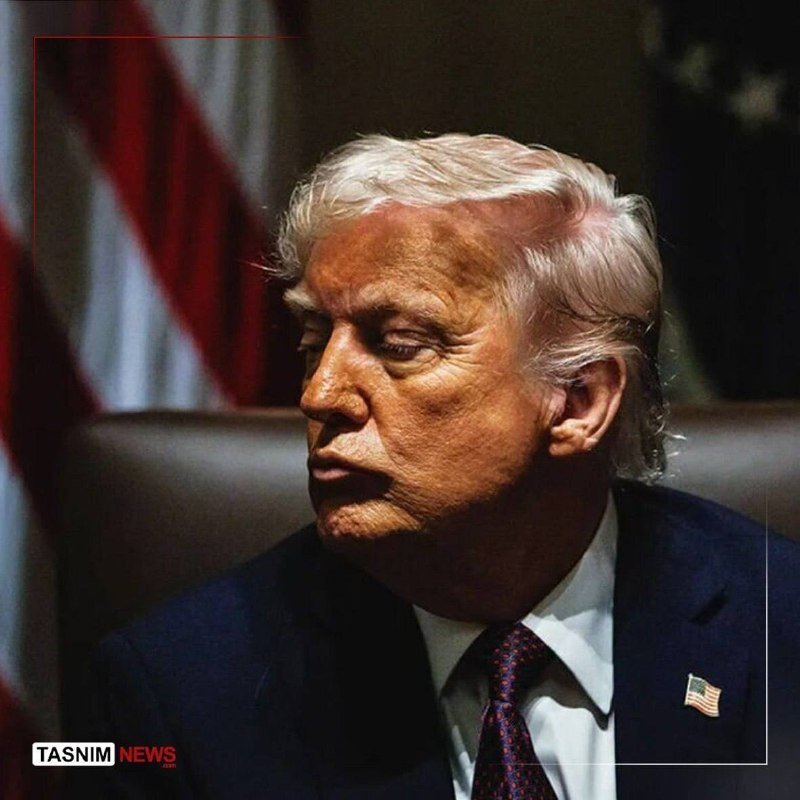
Donald Trump used the United States' 250th-anniversary celebration in Washington on Saturday 4 July 2026 to repackage two familiar pitches into a single national-sermon: that America is, in his telling, the "crowning achievement of human history," and that it is again being tested by an internal enemy he is content to call "communists." The address, delivered before a public programme of fireworks, military flyovers and a holiday weekend dominated by extreme weather across parts of the country, doubled as a political rally and as a marker of where the second Trump term wants to take its language about itself.
The choice of anniversary matters. A 250th is, by definition, an occasion for self-inventory — the kind of moment when a polity pauses to ask what it has been, what it has become and what it owes the next century. Trump spent that opening instead on a verdict. America, he said, is "prouder than ever," and under his presidency the country has "never been stronger." The framing is not new. What is notable is the explicit naming of a domestic antagonist on a stage normally reserved for unifying rhetoric — a sharpening of tone that telegraphs how the administration intends to use the next election cycle.
What Trump actually said
France 24's write-up of the address reports that Trump cast America as the "crowning achievement of human history" and used the speech to attack "communists" inside the country, language that has migrated from cable-news rally lines into formal presidential oratory. The France 24 French service's parallel write-up carries the same thrust, quoting Trump's claim that under his presidency the United States is "prouder than ever." Both pieces were filed in the early UTC hours of 5 July 2026, after the Saturday evening address in Washington.
The BBC's separate account, also filed in the early hours of 5 July, frames the day as a pageant: fireworks, military flyovers and weather described as "extreme." The BBC notes that the president's speech "included some of his political agenda but also honoured war veterans and American history." That tension — political rally inside a civic-religious ceremony — is the through-line of the coverage.
Two factual anchors carry across all three accounts: the date, Saturday 4 July 2026; the place, Washington; and the two-pronged message, a maximalist self-congratulation paired with a named internal enemy. Everything else in the cycle of wire coverage is a variation on those notes.
The 'communists' framing — and what it does politically
The decision to single out "communists" as the rhetorical antagonist is not a throwaway. It collapses several of the administration's recurring targets — progressive Democrats, parts of the federal bureaucracy, immigrant and minority-rights organising, climate and academic institutions — into a single shorthand that the Republican base has been trained to read as existential. By choosing that word on a 250th-anniversary stage, the president is signalling that the frame will not be retired before the midterm cycle.
The structural move is older than Trump. American political rhetoric has a long history of converting domestic opposition into a quasi-foreign threat, a device that lets the speaker claim the high ground of national survival. What is new is the explicitness of the label, on a stage designed for consensus, with no apparent effort to soften it for the half of the country that did not vote for him. The BBC's note that the speech "included some of his political agenda" is, in context, an understatement.
The flip side of an externalised enemy is the absolutism of the self-description. "Crowning achievement of human history" is not a phrase that admits comparison; it forecloses the question the anniversary might have invited. The effect is to convert a date that could have hosted a national argument about America's record — its wars, its exclusions, its institutional achievements — into a monologue about its greatness, with the antagonists of the moment as the chorus.
Counter-reads and live disagreements
The wire coverage does not pretend the address was received uniformly. The BBC's framing of the day as a pageant disrupted by "extreme weather" is itself a small editorial tell: a civic celebration that has to acknowledge the climate context is a celebration already arguing with itself. France 24's two English- and French-language services both carried the address as a top story, but the French write-up leads with the political content — "communists," "crowning achievement" — while the English write-up from the same network foregrounds the anniversary itself before quoting the political lines.
The domestic press, from what the thread captures, has not yet produced a unified counter-narrative in the same window. That is itself a story: in the immediate hours after a presidential address of this kind, the absence of an organised opposition reply on the anniversary stage tells the reader something about the sequencing the White House wanted. Critics will frame the speech as a campaign event staged on a public holiday; supporters will frame it as the long-overdue correction of an America that has, in the president's telling, apologised for itself too much. Both readings are available in the source material; neither is yet resolved by a single wire consensus.
Stakes and what to watch
The political stakes of the speech are not abstract. By binding the 250th anniversary to a maximalist self-image and a named internal enemy, the president is buying two things at once: a permanent campaign frame for the midterms, and a rhetorical permission structure for the policy fights that follow. A country that has been told it is the "crowning achievement of human history" is a country that is not easily argued into compromise, and an enemy labelled "communists" is an enemy against whom the ordinary tools of democratic politics — negotiation, deference to courts, accommodation of dissent — can be framed as surrender.
Watch the early-week coverage for two indicators. First, whether the "communists" label migrates into official administration documents, agency language and Republican campaign materials, or retreats back to rally lines. Second, whether opposition parties treat the speech as an organising grievance — a moment to be answered in kind — or as a polling artefact to be allowed to fade. The anniversary gives both sides a calendar peg; the question is which side uses it more durably.
What remains genuinely uncertain, on the source material available in the immediate window, is the audience response beyond the live crowd. The wire accounts do not report crowd size or independent reaction metrics from the Mall. The "extreme weather" flagged by the BBC is also not quantified in the threads available; the impact on turnout and viewership is therefore a known unknown. Monexus will update as independent reporting on those questions lands in the public record.
This piece was framed from the immediate wire window of 4–5 July 2026 UTC. Where the French and English services of the same network carried different leads, both are noted; where the source material thins, the article says so.
Wire provenance
This editorial synthesis draws on the following public wire/social posts:
- https://t.me/france24_en
- https://t.me/BBCWorldoffl
- https://t.me/france24_fr