Venezuela earthquake toll climbs past 2,900 as Caracas faces a compound crisis
Caracas faces a compound crisis: 2,900 dead from twin earthquakes, a state running on fumes, and a relief relay routed through Havana and Tehran rather than Washington.
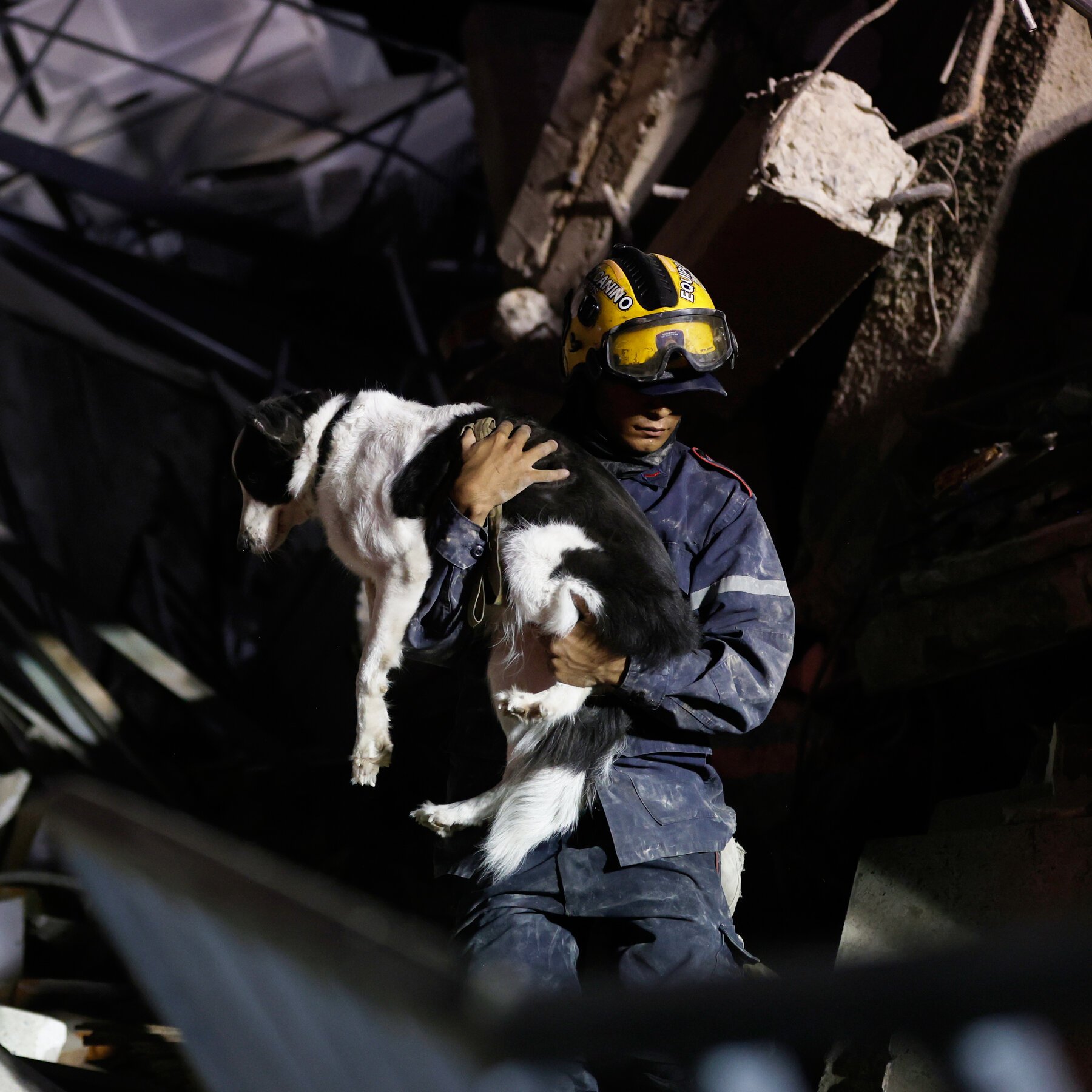
Two earthquakes, twelve days apart, killed more than 2,900 people across northwestern Venezuela and left Acting President Delcy Rodríguez presiding over a state that is rebuilding itself while still in shock. The toll, confirmed by Caracas and relayed through regional outlets this week, climbed past the 2,900 mark as search crews continued working through rubble in Carabobo, Yaracuy, and Cojedes states. The June 24 mainshock and a powerful aftershock on July 5 compounded a humanitarian picture that was already fragile: an economy in deep contraction, a defensive military posture along the Essequibo border with Guyana, and a population that has spent a decade watching the state's capacity erode.
The compound nature of the disaster is the story. Venezuela entered this emergency with a public health system operating at a fraction of its pre-2015 footprint, a currency in long-term hyperinflation, and a sanctions regime that, depending on which capital you ask, either constrains relief or justifies the relief gap. Earthquakes do not negotiate with that context. They arrive, and they expect roads, hospitals, diesel, and intact civic institutions. The early international relay of rescue and material support tells a parallel story: the first significant external assistance has come not from Washington or Brussels, but from Havana, Caracas's regional allies, and a small flotilla of non-Western partners including Iran and Turkey.
The shape of the rupture
The June 24 mainshock registered 6.3 magnitude off the Caribbean coast and was felt across central Venezuela, with the heaviest damage concentrated in inland municipalities that had little seismic-resistant infrastructure to begin with. The July 5 aftershock, nearly as strong, hit the same communities before temporary shelters had been fully erected. State authorities have shifted repeatedly between reporting casualty ranges in the hundreds and then in the low thousands as recovery teams reach previously inaccessible towns. The 2,900-plus figure now in circulation reflects that second wave of accounting.
Telegram channels operated by Venezuelan state media and by allied regional broadcasters carried the early framing. TeleSUR English, the Caracas-aligned multinational outlet, has anchored much of the on-the-ground video and official statement distribution since the first hours. Russia-aligned and Iranian state media have amplified the humanitarian framing while emphasising Caracas's resilience narrative. Western wire coverage has been thinner, and that asymmetry is itself part of the story: when a disaster of this scale hits a country the major Western broadcasters treat as politically unspeakable, the camera operators on the ground are often the country's own.
A relief relay routed through Havana and Tehran
Within 72 hours of the mainshock, Cuban medical brigades and Mexican rescue specialists were on the ground, the first foreign boots in. Iran sent a shipment of field hospital equipment via its state-backed humanitarian channel, the same machinery that has ferried supplies to Caracas since the fuel crisis of 2019. Turkey's AFAD agency dispatched a search-and-rescue team. Russia, through its emergency ministry, offered satellite-imagery support for damage assessment. None of these are small gestures; they are calibrated political ones.
The composition of that list is the uncomfortable detail for Western capitals. When a Latin American state suffers a major seismic event, the historical pattern has been a US Air Force Southern Command C-17 on a Venezuelan tarmac within 48 hours, USAR teams mobilised, USAID DART on the ground. That pattern depends on diplomatic relations. Caracas and Washington do not have them, and the diplomatic relationship is not going to thaw because of a natural disaster. So the relief architecture that actually lands is the one built by countries that have spent the last decade building relations with Caracas regardless. The European Union has moved humanitarian funding through UN channels, but the visible, on-the-ground flag belongs to Havana.
Rebuilding on a budget that doesn't exist
Rodríguez announced the Venezuela Is Reborn plan this week as the framework for reconstruction, a nationwide programme emphasising home rebuilding and infrastructure repair. The political logic is straightforward: the acting president needs a visible, named reconstruction project to consolidate authority after the contested 2024 transition and the long convalescence of Nicolás Maduro's political project. The fiscal logic is harder. Oil production has recovered modestly from its 2020 nadir but remains well below the levels of two decades ago. PDVSA's refining capacity is constrained. The state's revenue base is narrow and the state's spending base is wider than it can fund.
Against that, the cost of rebuilding homes and small infrastructure across three devastated states is measured in billions of dollars. Reconstruction funding will therefore be a function of three things: how much of the country's frozen overseas assets can be unlocked, how much non-Western credit Caracas can negotiate, and how much of the bill can be passed to households in the form of self-build and remittance support. None of those mechanisms is fast, and the political clock on Rodríguez's interim mandate is not infinite.
The Essequibo distraction nobody is talking about
There is a second fault line running through this story, and it is geopolitical rather than seismic. In the months before the earthquake, Caracas had been escalating its posture along the Essequibo border with Guyana, including a controversial December 2024 referendum claiming sovereignty over the resource-rich territory and the mobilisation of military units in response to a British warship's regional operations. The international reaction to that posture, including a referral to the International Court of Justice and quiet pressure from Brazil, has consumed diplomatic oxygen that might otherwise have flowed toward disaster preparation.
The earthquake did not resolve the Essequibo dispute. It paused it. Caracas has limited bandwidth to run two national emergencies at once, and the seismic one is more photogenic and politically safer. Watch the border in the autumn: if reconstruction funding arrives slowly and Rodríguez needs a domestic mobilisation narrative, the territorial dispute is the ready-made option.
What the camera operators decide
The information environment around this disaster will matter as much as the relief itself. TeleSUR's dominance of the ground footage, with Iran-aligned and Russia-aligned state media amplifying and contextualising in parallel, means the dominant frame arriving in non-Western audiences will be one of Caracas-led resilience and solidarity from the BRICS+ partners. Western audiences will see what their own news organisations decide is worth carrying, and that decision is shaped by a decade of framing Venezuela as a closed political story.
The citizens of Carabobo, Yaracuy, and Cojedes do not have the luxury of choosing which camera sees them. They need roofs, they need diesel for generators, they need their hospitals functioning. The compound crisis is that the state delivering those things is operating with one hand tied behind its back, and the international partners best positioned to untie it are the partners Western editorial gatekeepers treat as unacceptable sources. The next two months will test whether humanitarian pragmatism can override that reflex, or whether the aid architecture of a globalising multipolarity simply becomes the new normal, one earthquake at a time.
Sources
- teleSUR English (Telegram, 2026-07-07): https://t.me/telesurenglish
- Press TV (Telegram): https://t.me/presstv
- TSN Ukraine (Telegram, regional relay): https://t.me/TSN_ua
Desk note: Monexus framed this as a compound emergency, a natural disaster arriving on an already-strained state, rather than as a stand-alone seismic event. The early international relay is non-Western, and the article treats that as part of the story rather than as a footnote.