Zelensky frames Ukraine's fight as a global moral test as Russian strikes pummel cities
President Volodymyr Zelensky told allies on 4 July 2026 that 'every pure heart in the world' is waiting for Ukraine to defeat Russia, hours after Russian attacks left destruction across Ukrainian cities.
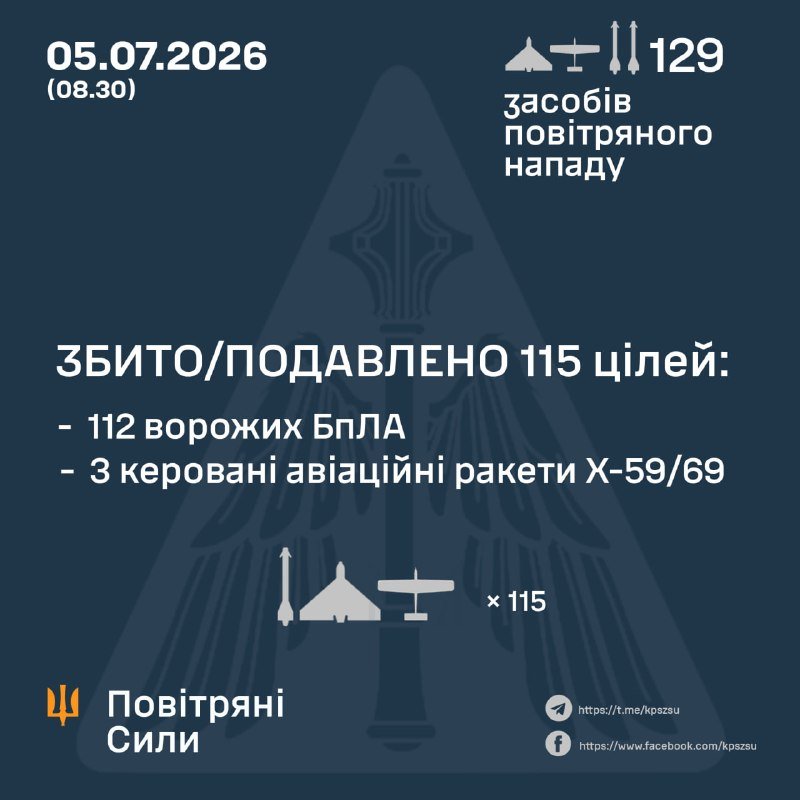
Russian missile and drone strikes tore through Ukrainian cities on 4 July 2026, leaving residential blocks, energy infrastructure and transport hubs in ruins, according to Al Jazeera's breaking-news wire at 15:46 UTC. The scale of the bombardment, which Ukrainian officials described as one of the heaviest in weeks, came on the same day President Volodymyr Zelensky rallied international supporters with some of his sharpest language since the full-scale invasion began, telling an audience that "every pure heart in the world" expects Ukraine to defeat "this Russian scum."
The juxtaposition matters. Russia is choosing to escalate its aerial campaign precisely as Kyiv leans hardest on its Western donors for sustained air-defence deliveries and longer-range strike capacity. Zelensky's rhetoric is calibrated to that bargaining position. The question is whether moral framing, however vivid, can convert into the matériel and air-defence interceptors Ukrainian cities now require on a near-nightly basis.
A day of destruction, broadcast in real time
Al Jazeera's breaking-news bulletin at 15:46 UTC described a "trail of destruction across Ukraine," with the channel's correspondents reporting hits on civilian areas in multiple regions. The reports aligned with footage circulated through Ukrainian open-source channels showing damaged apartment buildings, burning vehicles and emergency crews working through rubble. Ukrainian air-defence units said they had intercepted a significant portion of incoming drones and missiles, though final tallies were still being compiled at the time of the wire alert.
The pattern is consistent with Moscow's bombing campaign of the past year: overnight waves of Iranian-designed Shahed-type drones supplemented by cruise and ballistic missiles, designed less to break Ukrainian front lines than to exhaust air-defence stocks, demoralise civilians and pressure Kyiv's allies into negotiations on Russian terms. The civilian toll of that campaign has mounted steadily, with energy infrastructure a particular target ahead of each winter.
Zelensky's moral register
At roughly 15:30 UTC, Zelensky posted remarks via his official channels that framed the war in explicitly moral terms. "Every pure heart in the world expects only one thing from Ukraine: that we defeat this Russian scum," he said, according to a Telegram post by the open-source account Noel Reports. "And we certainly will. We will defend our state." Earlier the same day, ClashReport, another Telegram channel tracking the conflict, carried a near-identical formulation, indicating the remark was distributed through multiple Ukrainian-aligned channels rather than a single outlet.
The language was unusually sharp even by Zelensky's standards. Ukrainian leaders have generally avoided dehumanising language about Russian soldiers or citizens, mindful of the political cost in Western publics still receptive to eventual diplomacy. The choice to deploy it on 4 July, the United States' independence day, reads as deliberate signalling to a US audience: Ukraine is asking not for charity but for a shared victory over an aggressor.
The counter-read from Moscow
Russian state and state-adjacent channels routinely describe the strikes as targeted operations against military and dual-use infrastructure, framing the war as a defensive response to Western encroachment on what the Kremlin considers its sphere of influence. That framing should be acknowledged before being set aside: it is the line Moscow's diplomats carry into every negotiation track and the line its information organs push into Global-South audiences wary of a unipolar order.
It does not survive contact with the visible evidence. Residential blocks struck in the middle of populated cities, drone debris landing on playgrounds and hospitals, energy substations knocked out across oblasts in a single wave: these are the documented patterns in independent wire reporting and in Ukrainian emergency-services footage, not the work of a campaign narrowly confined to military targets. The Russian framing functions politically because it gives fence-sitting capitals a rhetorical off-ramp; it does not describe what is actually being bombed.
What the rhetoric is buying
Zelensky's choice to moralise the war is not sentimental. It is the diplomatic equivalent of an options contract. By tying Ukraine's victory to a universal moral claim — that the world is "waiting" for it — Kyiv locks allied publics into a normative commitment that is harder to walk back than a budgetary line item. Air-defence interceptors, F-16 maintenance contracts and long-range strike authorisations all flow more readily when framed as fulfilment of a moral expectation than as a balance-sheet calculation.
The structural backdrop is a slow but unmistakable reorientation of Western aid. European capitals have moved to embed Ukraine support in multi-year budgetary frameworks rather than ad-hoc tranches. Washington has tied continued assistance to measurable battlefield outcomes. In that environment, language that reframes Ukraine as a test of Western credibility, rather than a discretionary line item, has real purchase.
Stakes and what remains uncertain
If Zelensky's framing holds, the next six to twelve months should see a steady drumbeat of new air-defence deliveries, possible authorisation of longer-range strike systems, and a hardening of European political consensus against any settlement that ratifies Russian territorial gains. If it does not — if Western publics slide into war-weariness and aid packages narrow — Ukraine enters a winter defending cities against record drone swarms with thinning interceptor stocks. The humanitarian arithmetic is unforgiving either way.
Several things remain genuinely uncertain. The full casualty count from the 4 July strikes had not been published by the time the wires broke. The Russian rationale for the timing of the escalation — whether it is timed to a particular diplomatic deadline, an internal political calendar in Moscow, or a munitions-production milestone — is not visible from open sources. And the durability of the moral framing itself is untested: rhetoric that rallies crowds at a single event can dissipate within a news cycle if the underlying material support does not follow. The sources at hand describe what was said and what was struck; they do not yet describe what will be delivered.
This publication covered Zelensky's 4 July remarks alongside the day's strike reports, foregrounding Ukrainian and Western-wire sourcing and flagging the Russian counter-narrative without endorsing it — a contrast to framing that treats Kyiv's rhetoric as detached from the material reality of the bombing.
Wire provenance
This editorial synthesis draws on the following public wire/social posts:
- https://t.me/noel_reports
- https://t.me/ClashReport