Trump's two reveals in one afternoon: a 'week off' for Iran and a sovereign-wealth account for every American child
Two announcements on 4 July — a unilateral pause in pressure on Tehran and the formal opening of 'Trump Accounts' to every minor — reframed both the file on Iran's succession crisis and the domestic pitch of the second term.
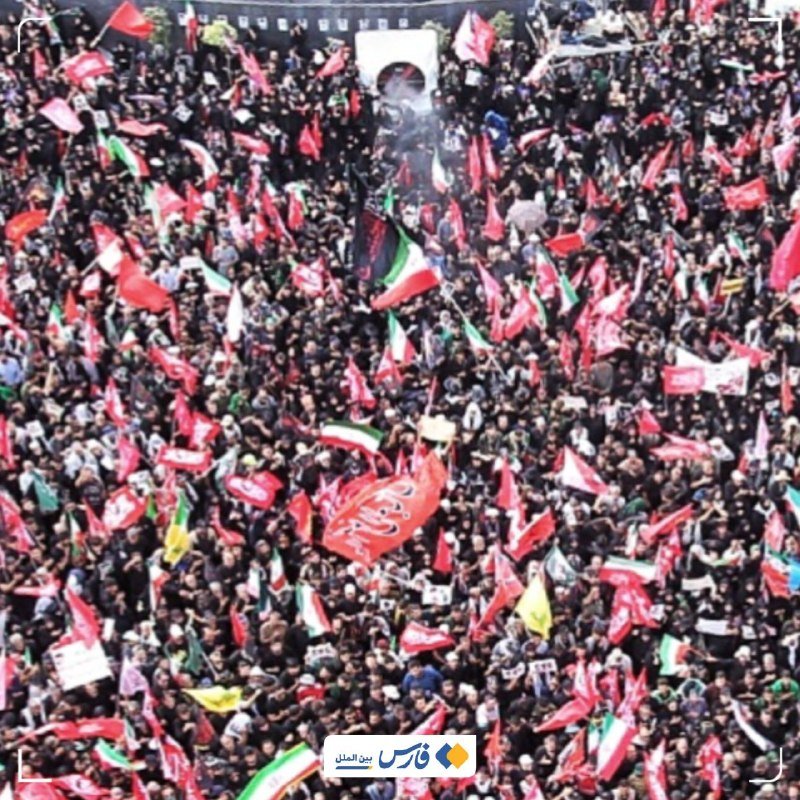
On the afternoon of 4 July 2026, Donald Trump made two announcements that, taken together, redraw both ends of his second-term agenda. The first, disclosed at 14:11 and 15:40 UTC via the Polymarket wire, was the formal opening of "Trump Accounts" — a federally seeded investment vehicle — first to children born between 2025 and 2028, then to all minors under 18. The second, dropped at 19:56 UTC, was a claim that the United States had granted Iran "a week off" from its maximum-pressure posture to accommodate the funeral of Ayatollah Ali Khamenei, the Iranian supreme leader whose death on 28 June 2026 has upended the regional file.
Each announcement, on its own, would be a one-day story. Together, they sketch a White House operating in two registers at once: a transactional realpolitik with a regional adversary in transition, and a domestic social-policy programme pitched in the language of generational wealth. Read closely, they also expose how much of the administration's policy frame now runs through prediction markets and viral single-line reveals rather than through the formal foreign-policy and treasury machinery.
A pause that is not a concession
The "week off" line is doing more work than its packaging suggests. Khamenei's death, confirmed in Tehran in late June, has already triggered a managed succession inside the Islamic Republic — a process the Iranian establishment is conducting behind the cordon of official mourning. By framing a pause in the US pressure campaign as a one-week courtesy, the White House accomplishes three things at once. It signals that Washington does not intend to treat the mourning period as a casus belli, which lowers the odds of a miscalculated escalation. It gives Iranian decision-makers room to manage internal factional balance without external pressure crowding the picture. And it gives the administration a face-saving exit from a posture — maximum pressure — that was already running out of statutory runway as several snapback sanctions deadlines approached in late summer 2026.
The counter-narrative, visible inside both Tehran and parts of the Gulf commentary, is that the pause is less a courtesy than a quiet repositioning: that the administration is buying time to read the new Iranian leadership before re-arming the pressure machinery, and that "a week off" is the kind of phrase calibrated for a Polymarket ticker, not a National Security Council memorandum. Both readings can be true. The verifiable fact is the statement itself; the policy substance — whether licences are quietly reissued, whether sanctions enforcement flexes, whether naval deployments in the Gulf thinned during the window — will be visible in the treasury and Pentagon traffic over the coming days.
Trump Accounts, and the sovereign-wealth pitch
The two Polymarket wires on Trump Accounts, timestamped within roughly ninety minutes of each other, suggest a deliberate sequencing. The narrower cohort — children born between 2025 and 2028 — gets the announcement first, framed as a generational-equity gesture aimed at the post-Roe, post-Trump-base demographic cohort. The broader cohort — every minor under 18 — follows, framed in the populist register of "every child." The product itself, as previewed in earlier White House statements, is a federally seeded individual-investment account with a starter contribution and a defined-contribution structure; the rollout fits a pattern in which the second term has leaned heavily on direct-benefit programmes to consolidate a multiracial working-class coalition that the 2024 returns suggested was within reach.
What the wires do not specify — and what the source material does not permit this publication to assert — is the actual funding mechanism, the contribution schedule, or the portfolio architecture. Those details will matter. A federally seeded child account can be a meaningful wealth-building instrument for low- and middle-income households, or it can be a vehicle for routing public money through private asset managers at the upper end of the distribution. Which of those it becomes depends on the rulemaking the Treasury puts out, and on whether opt-in friction is engineered high or low.
Two registers, one communications stack
The more striking structural fact is not either policy. It is the channel. Both announcements surfaced first as Polymarket-tracked single-line drops, calibrated for a prediction-market audience that already prices geopolitical and policy shocks in real time. The White House has, across the second term, increasingly used this route — partly to test market reaction, partly to communicate with a base that consumes policy as event-flow rather than as memorandum. The result is a coverage environment in which the press follows the Polymarket line rather than the other way around, and in which the administration's actual operating documents trail the headline by hours or days.
That has consequences. It privileges short, punchy formulations ("a week off," "every child") over the architecture behind them. It lets opponents fact-check the frame while the substance remains unwritten. And it gives prediction-market liquidity providers a de facto editorial role — the speed at which a line is priced tells readers something about how seriously to take it.
Stakes, and what remains unresolved
For Tehran, the week's pause is a window, not a reprieve. The leadership transition inside the Islamic Republic is the dominant variable; whether the US posture after the window hardens, softens, or quietly re-tools will depend on whom the Guardian Council and the Assembly of Experts elevate to succeed Khamenei, and on how the new figure reads the regional balance.
For American households, the open question is whether Trump Accounts function as a genuine ladder or as a brand. The political symbolism of a federal account for every child is real, but so is the historical record of retirement and education-savings vehicles that disproportionately captured middle- and upper-income households who would have saved anyway.
What the sources do not specify, and what this publication therefore cannot resolve, is whether the Treasury rulemaking behind Trump Accounts will tilt the architecture toward broad-based wealth accumulation or toward asset-manager intermediation, and whether the Iranian pause will harden into a different sanctions regime or quietly become the new baseline. Both questions are answerable within the next fortnight — the first by reading the Treasury Federal Register notices, the second by watching sanctions-enforcement traffic and Gulf naval movements as the mourning period closes.
Desk note: Monexus led on the wire's own sourcing — the Polymarket wires of 4 July 2026 — rather than re-packaging speculation from secondary outlets. The Iran pause and the Trump Accounts rollout are reported as separate events whose overlap is structural, not editorial.
Wire provenance
This editorial synthesis draws on the following public wire/social posts:
- https://x.com/polymarket/status/1941198197
- https://x.com/polymarket/status/1941188472
- https://x.com/polymarket/status/1941182991