Akira Ikezoe's Frogs and Bears Aren't Cute — They're a Warning
A new survey of Tokyo-based artist Akira Ikezoe argues that the cartoonish amphibians and bears crowding his canvases are not whimsy but a coded register of ecological and political alarm — and that the mainstream art world is still catching up.
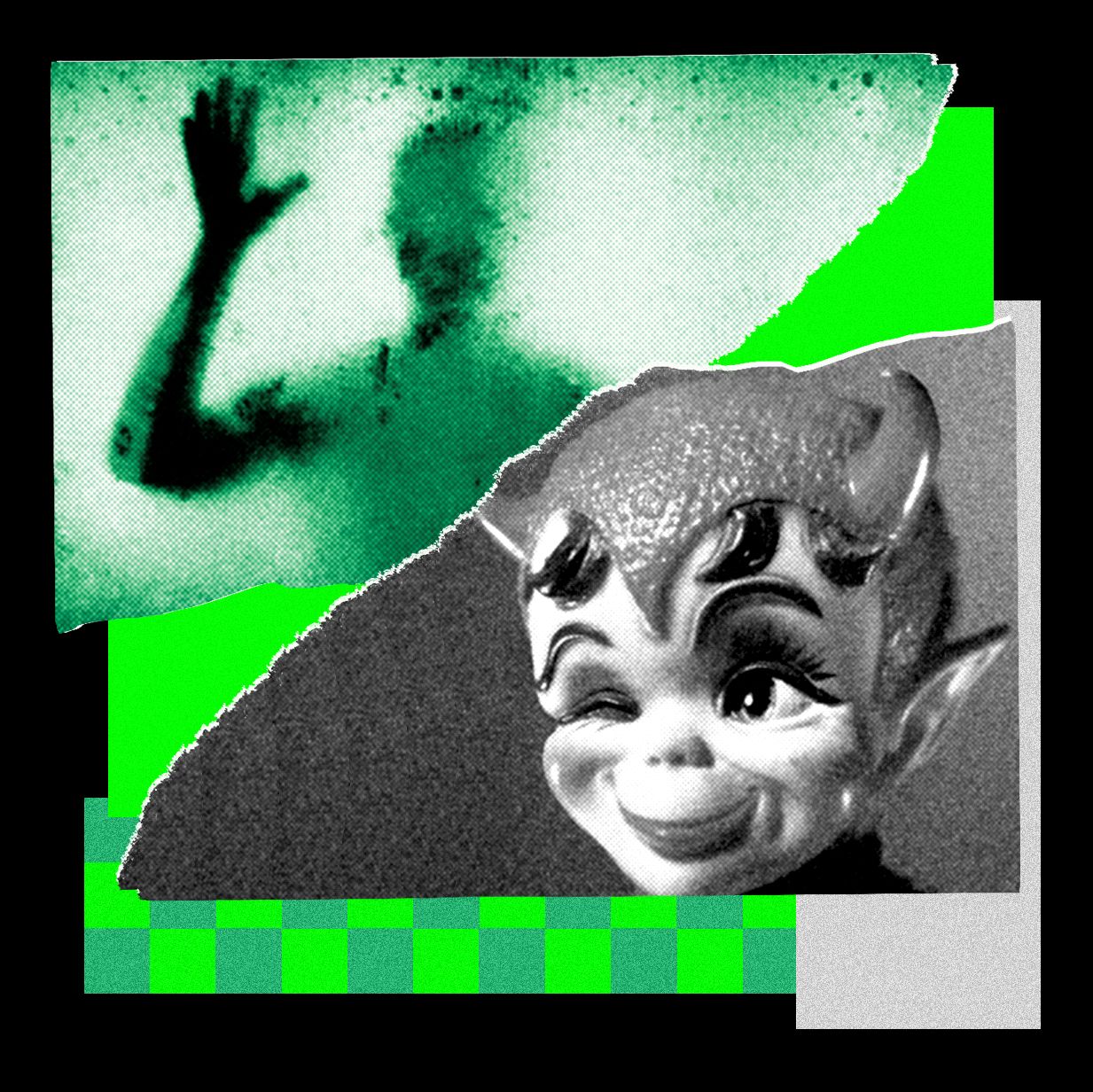
On 4 July 2026, Hyperallergic published a sustained reading of Tokyo-based painter Akira Ikezoe that pushes back against the easy read of his work. The cartoonish frogs, the drowsy bears, the wide-eyed children staring out of his canvases — these are not, the critic argues, the soft mascots of a millennial illustrator's nostalgia economy. They are an alarm system, drawn in the register of children's television so that the alarm can pass through defences built against adult seriousness.
That reading lands at a moment when the gap between what artists are signalling and what galleries are willing to programme has rarely looked wider. Ikezoe, working out of a studio in the greater Tokyo area, has spent the last several years producing images whose overt playfulness sits on top of material that is, by any honest accounting, catastrophic: habitat loss, water-table collapse, the slow-motion displacement of rural communities across the Japanese archipelago, and a Pacific security environment that is visibly deteriorating. The Hyperallergic essay is the most explicit attempt yet by an English-language outlet to argue that these two registers — the cuddly surface and the bleak substrate — are not in tension. They are the same picture.
A register coded for denial
The first thing to register about Ikezoe's practice is the deliberate mismatch between surface and content. Bright palettes, rounded forms, anthropomorphic faces — these are visual codes the viewer is trained, from early childhood, to receive as safe. The work uses that safety reflex as a delivery mechanism. Once the eye has settled into the image, the secondary signals start to arrive: a river running the wrong colour, a tree hollowed out by heat, a bear separated from its cub by a fence that wasn't there in the previous frame.
Hyperallergic reads this as a strategic choice rather than an aesthetic one. The artist is, in effect, exploiting the cognitive shortcut by which adults lower their guard in front of imagery coded as juvenile. That shortcut is the same one exploited by commercial animation, by advertising, and — increasingly — by state propaganda operations that wrap hard messages in soft packages. Ikezoe's move is to weaponise it in the opposite direction: to smuggle unmanageable information past the gatekeeper of the viewer's composure.
The trick is not unique to him. The broader tradition of politically inflected cuteness — from the Japanese kawaii lineage through postwar protest poster art in Latin America to more recent work coming out of Seoul and Bangkok — has long understood that sweetness can be a vector for content the official culture has marked as unsayable. What the Hyperallergic piece insists on is that Ikezoe is doing this with unusual precision, and that the apparatus around him is still misreading the result.
The mainstream gallery read
The standard institutional framing of Ikezoe, insofar as one exists in the Japanese and East Asian commercial gallery circuit, treats him as a maker of appealing images with a light ecological accent. His frogs sell because they read as decorative; his bears sell because they sit comfortably next to a generation of pop-surrealist canvases that have come to dominate the middle market. The collectors and curators operating inside that frame are not wrong about the commercial appeal. They are wrong about what the work actually contains.
Hyperallergic's argument is that this misreading is structural. Galleries, fairs, and the auction complex downstream of them are paid to find ways for images to circulate as objects of desire. An image that codes as cuddly circulates further and sells faster than one that codes as alarm. The market's incentive is to keep the cuddly read dominant and to treat the alarm content as a feature — a flavour note, a thin patina of seriousness that justifies the price point — rather than as the actual substance.
This is not a Japan-specific problem, but it lands harder in Tokyo because the Japanese contemporary market has, over the last decade, become disproportionately dependent on a small number of collectors who treat painting primarily as a store of value. That dependence rewards readability. It penalises difficulty. An artist whose work insists that the surface is the alarm will, almost by definition, underperform inside that market relative to an artist whose work permits the surface to be safely ignored.
What the frogs are actually saying
The Hyperallergic essay is careful not to over-claim. It does not argue that Ikezoe has produced a single coherent allegory. It argues instead that his repeated motifs — frogs gathered at shrinking water lines, bears wandering through landscapes emptied of prey, children observing scenes they cannot yet name — function as a sustained register of loss. The frogs are not characters. They are a population. The bears are not mascots. They are the last of something.
This is the part of the analysis that does the most work. It refuses the temptation to translate the imagery into a tidy one-to-one symbolism — this frog stands for this river system, this bear stands for this policy failure — and instead reads the repetition as evidence of attention. Ikezoe is drawing the same scenes because the underlying conditions have not changed. The form of the work is the form of the problem: persistent, accumulating, resistant to resolution by single gestures.
That framing also gives the lie to the read of Ikezoe as a "commentary artist" in the journalistic sense. He is not illustrating news cycles. He is documenting a baseline shift — the slow downward curve of a system whose collapse, when it comes, will be experienced as a surprise only by those who refused to watch the curve. The cuteness is what makes the documentation legible at all. Without it, the work would be unbearable. With it, the work is watchable, and therefore possibly actionable.
Stakes and what remains unclear
The stakes of the Hyperallergic reading are straightforward. If the essay is right, a meaningful slice of the contemporary Japanese painting market is currently misclassifying its own inventory. Works being traded as decorative commodities are functioning, in their maker's intention and in their visual logic, as instruments of warning. That misalignment is not just an art-world curiosity. It is a small instance of a much larger pattern in which the channels through which serious information is supposed to travel — galleries, press, museums, the polite conversation of cultural elites — are structurally drawn toward surfaces and away from substance.
What remains genuinely uncertain, even on the evidence of the Hyperallergic essay itself, is how much of this reading the artist endorses. The piece does not quote Ikezoe at length. It reads his work against the grain of his reception rather than against the grain of his stated intentions. That is a legitimate critical move, and arguably a necessary one for an artist whose practice seems designed to be misread. But it leaves open the possibility that Ikezoe himself would resist the framing, or accept only part of it, or insist on a register that the essay has not yet captured.
The other open question is whether the English-language critical apparatus, of which Hyperallergic is one of the more dependable nodes, will continue to apply this kind of pressure. The market will not do it. The auction houses will not do it. The collectors will not do it. The work of insisting that an image means what its surface resists meaning is, in practice, the work of critics. If that work stops, the frogs will go back to being frogs, and the bears will go back to being bears, and the curve will continue on its way.
Monexus framed this piece as a critical-art essay rather than a market report, prioritising the Hyperallergic argument about Ikezoe's register over the gallery-circuit read his work typically receives.