Arthur Fery's Wimbledon run turns British tennis into a national storyline
Arthur Fery's straight-sets demolition of Flavio Cobolli made him the first British wildcard to reach a Wimbledon men's semi-final, but the harder test against Alexander Zverev will define whether this run is a story or a chapter.
Arthur Fery's Wimbledon run turns British tennis into a national storyline
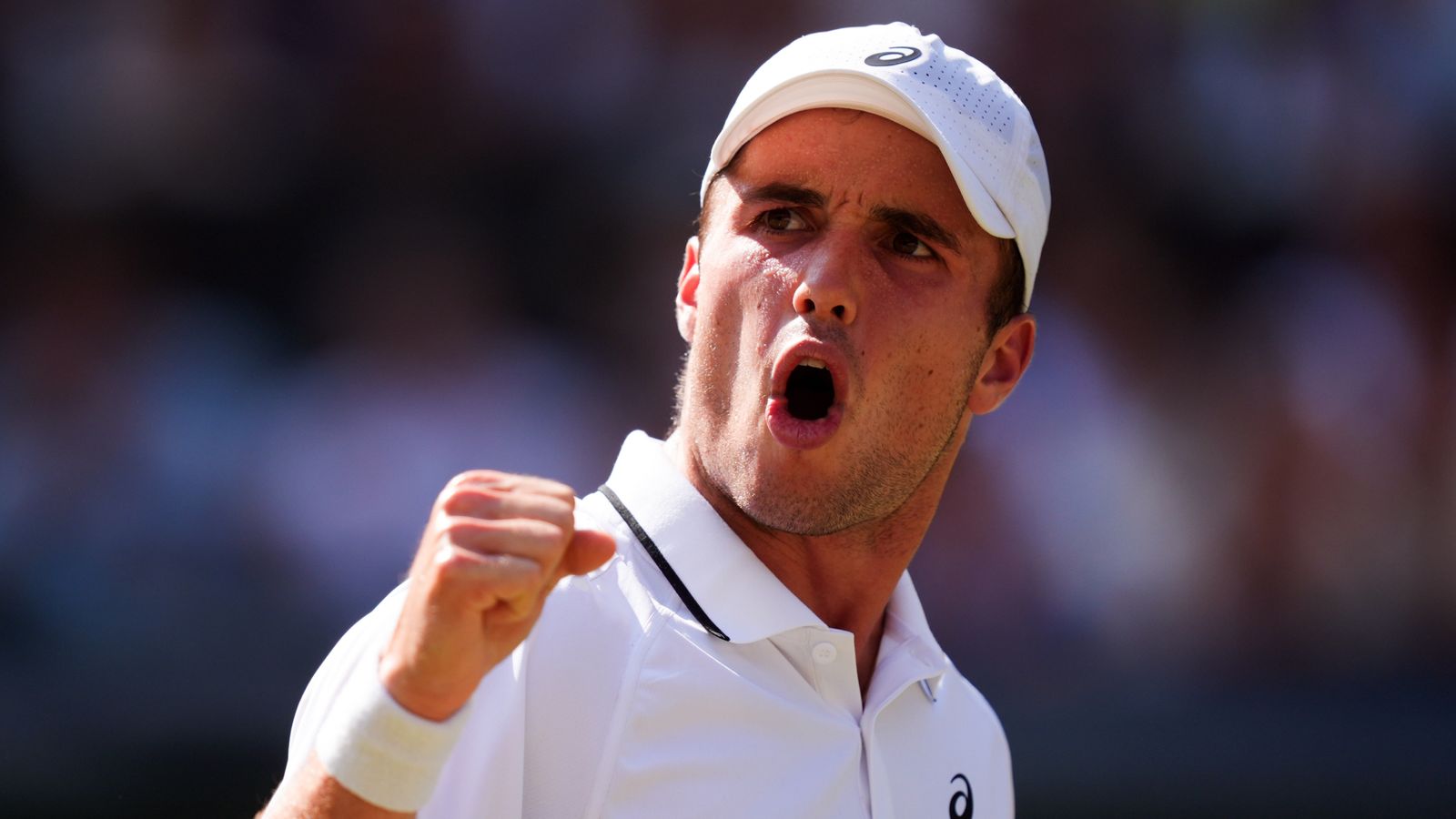
Arthur Fery's Centre Court victory over Flavio Cobolli on Wednesday was the most consequential British tennis result in years, and the 23-year-old wildcard has turned a routine Wimbledon fortnight into the sort of national storyline that the tournament's public-relations team could not have scripted. The straight-sets win, 6-4, 7-6 (4), 6-0 over the Italian ninth seed, sent Fery into the last four and delivered a piece of tournament history: he is the first British wildcard to reach the men's semi-finals, and only the second wildcard in the entire history of the championships to do so. By the time Alexander Zverev completed his 6-4, 6-4, 6-2 dismissal of Taylor Fritz on the same afternoon, the draw had handed the All England Club its dream Friday: the world number two, a two-time major finalist, against a kid who grew up a mile from the gates and learned the game watching from the stands.
The immediate context is unusually clean. Fery is not a one-off upsetter who caught a tired seed on a slow day. He is a Stanford-educated, two-time All-American whose ranking had slipped outside the cut-off, forcing him through the wildcard route, and whose confidence had been publicly questioned in the run-up. Against Cobolli, an in-form clay specialist who arrived in SW19 having beaten several seeds of his own, Fery simply refused to bend: he took the first set, absorbed a tight second via tie-break, and ran away with the third 6-0, closing out the match with the kind of late-set dominance that separates a hot week from a genuine run. The Guardian's Andy Bull, watching the tactical shape of the contest, concluded that Fery's excellence "goes deeper than numbers alone," and that the intangibles, the calm under pressure, the willingness to keep doing what was working, were doing the heavy lifting.
Zverev, for his part, was unequivocal about who the crowd will be pulling for on Friday. "I know 99 per cent of people will be cheering for Fery," the German said with the half-smile of a man who has heard the script already being written around him. That acknowledgement matters because it sets the conditions of the semi-final: Fery is not arriving as a tourist to the last four. He is arriving as a local story with a Centre Court crowd that has already begun to treat him as one of their own, and an opponent who has agreed, in advance, to play the role of foil. Tennis rarely arranges itself so neatly for a home player, and British tennis fans have been quick to notice.
The counter-narrative is straightforward, and it is the one that matters before anyone reaches for the flag. A run of four matches does not equal a career; it does not even equal a season. Fery's pre-tournament ranking sat well outside the seeds, his serve numbers are unremarkable, and his career win-loss record against top-twenty opposition is, on any honest reading, thin. The wildcard route exists precisely because young players of talent and limited means sometimes need a door opened for them, and what Fery has done is walk through that door with conviction. But conviction is not a baseline; it is a four-day sample, and the next round offers the first opponent he cannot out-hit by simply swinging freer. Zverev, when his serve is landing, turns first-strike tennis into a closed system: 99 per cent of the field cannot live with him on the big points, and the remaining 1 per cent are usually named Djokovic or Alcaraz.
The structural frame here is the British men's problem in miniature. For all the money spent at the Lawn Tennis Association's national centre in Roehampton, for all the progress in doubles and women's tennis, the British men's singles cupboard has been thin for a generation. The previous generation's answer was grass-court comfort and a serve-and-volley inheritance; Fery's answer, by his own account, is more contemporary, built on the baseline patterns of Andre Agassi, the player he grew up watching on the same courts he now patrols as a semi-finalist. If the run ends on Friday, that is still a useful data point: there is a young British player who can hold his weight of shot on a big stage, who does not fold at the sight of a seed, and who has the tactical patience to grind through a tight second set before blowing the third open. None of that is a Wimbledon trophy. All of it is more than the British men's game has had a right to expect.
So the right way to read Fery's Wimbledon, from this vantage point, is as a wildcard run still inside its statistical life, the result genuine, the conclusions premature until the next round. The wire coverage has already framed Wednesday's win as a national reset; Monexus is more cautious. There is a Friday afternoon coming that will tell us whether the run is a story or a chapter, and whether the British public has just watched the start of something durable or simply the longest, brightest week of one player's season. Either way, by close of play on Wednesday, Arthur Fery had earned the right to find out.
Sources
- [2026-07-08T20:27] BBC SPORT, "Good tennis IQ & inner belief - how Fery reached shock Wimbledon semi-final", https://www.bbc.com/sport
- [2026-07-08T18:52] The Sport, "Zverev's serve blitzes Fritz to set up semi-final with British revelation Fery", https://www.thesport.com
- [2026-07-08T16:44] BBC SPORT, "British wildcard Fery stuns Cobolli to reach semi-finals", https://www.bbc.com/sport
- [2026-07-08T05:00] The Sport, "'Keep believing': Arthur Fery sticks to tried and trusted for Wimbledon quarter-final", https://www.thesport.com
- [2026-07-08T19:40] BBC SPORT, "Wimbledon thought it had seen everything - then Fery arrived", https://www.bbc.com/sport
- [2026-07-08T19:01] The Sport, "Arthur Fery harnesses power of intangibles in historic Wimbledon run", https://www.thesport.com
- [2026-07-08T18:44] BBC SPORT, "Wildcard Fery storms past Cobolli and makes Wimbledon history", https://www.bbc.com/sport
- [2026-07-08T17:32] ESPN, "British wild card Fery shocks 9-seed at Wimbledon", https://www.espn.com
- [2026-07-08T17:31] BBC SPORT, "'Emotions I hadn't experienced before' - Fery on 'incredible' quarter-final win", https://www.bbc.com/sport
- [2026-07-08T16:30] Sky Sports, "'Unbelievable!' - Britain's Fery stuns Cobolli to reach Wimbledon semi-finals", https://www.skysports.com
Desk note: where the wire coverage framed Fery's win as a national reset, this publication reads it as a wildcard run still inside its statistical life, the result genuine, the conclusions premature until the next round.