Live Wire
05:06ZTASNIMNEWSIran holds burial ceremony for killed leader05:04ZPRESSTVHearse carrying coffin of deceased Islamic Revolution leader joins funeral procession in Tehran05:04ZTASNIMNEWSCrowd lines route of funeral procession for revolutionary leader05:03ZWFWITNESSChina Prepares Nuclear-Capable Long-Range Missile Test in South Pacific05:00ZTASNIMNEWSFuneral procession carrying body of late Iranian leader arrives in Tehran04:59ZFARSNEWSINKata'ib Hezbollah forces attend funeral of slain commander04:59ZGAZAENGLISTwo killed and others injured in Israeli airstrike on residential building in Gaza04:58ZGAZAENGLISTwo people killed in Israeli aircraft strike on residential apartment in Gaza
Markets
S&P 500744.78 0.13%Nasdaq25,833 0.80%Nasdaq 10029,329 1.61%Dow527.88 1.05%Nikkei93.14 0.10%China 5031.91 0.19%Europe89.35 1.80%DAX42.31 2.67%BTC$63,143 0.72%ETH$1,774 0.57%BNB$583.12 2.14%XRP$1.14 0.60%SOL$80.63 0.19%TRX$0.3287 1.30%HYPE$71.53 4.17%DOGE$0.0768 1.17%RAIN$0.0151 1.66%LEO$9.37 2.19%QQQ$712.6 1.73%VOO$684.84 0.09%VTI$368.76 0.14%IWM$297.58 0.58%ARKK$81.25 0.73%HYG$79.71 0.15%Gold$378.13 2.03%Silver$55.02 2.69%WTI Crude$103.98 0.69%Brent$39.67 0.66%Nat Gas$11.58 0.52%Copper$37.29 0.21%EUR/USD1.1448 0.00%GBP/USD1.3355 0.00%USD/JPY161.15 0.00%USD/CNY6.7814 0.00%
CLOSEDNYSEopens in 8h 19m
The Monexus
Vol. I · No. 187
Monday, 6 July 2026
Saturday Ed.
Updated 05:10 UTC
  • UTC05:10
  • EDT01:10
  • GMT06:10
  • CET07:10
  • JST14:10
  • HKT13:10
← The MonexusOpinion

Kyiv Under Fire Again: What a Night of Hypersonic Strikes Tells Us About Russia's Calculus

A barrage of Iskander ballistic and 3M22 Zircon hypersonic cruise missiles struck Kyiv on the night of 5–6 July 2026, hitting a residential block in Podilskyi. The pattern is grimly familiar — but the munition mix signals something about Moscow's remaining aims.
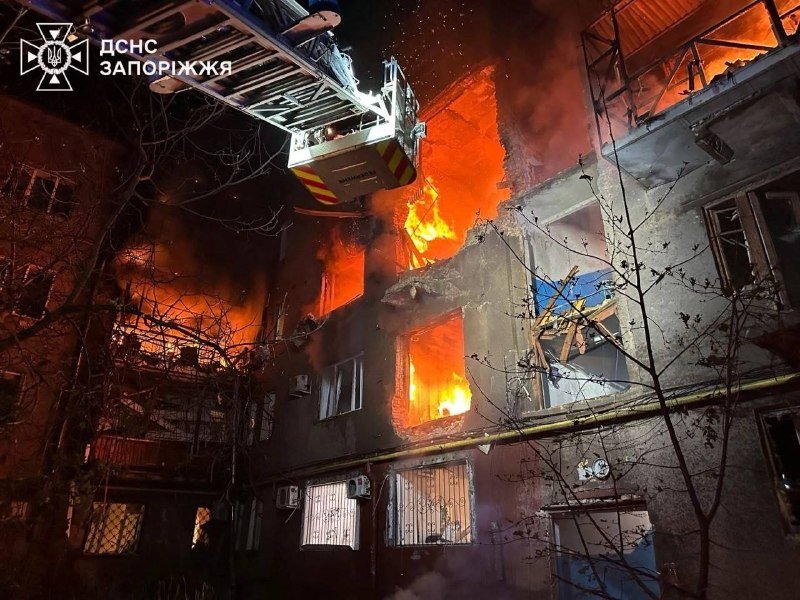
Multi-story residential apartment buildings show damaged facades and smoke rising into a cloudy night sky. @alalamfa · Telegram

In the small hours of 6 July 2026, Kyiv took a combined volley of Russian Iskander ballistic missiles and 3M22 Zircon hypersonic cruise missiles — a munition pairing rarely used at once, and one that left roughly fifteen explosions audible across the capital within minutes. Video circulating on Telegram showed a direct hit close to residential buildings in the Podilskyi district. Ukrainian pages reported a multi-storey residential block had taken a direct hit; casualty figures were still being compiled at the time of writing. The strike is the latest in a tempo of attacks that has been grinding on for months, but the weapons mix matters.

Moscow is signalling that it still has the appetite — and the inventory — to hit the centre of the Ukrainian capital with its most expensive, hardest-to-intercept systems. That is a political choice as much as a military one. It tells Kyiv, and the European capitals still debating air-defence packages, that the war is not quietly fading.

What actually happened

According to Telegram channels @intelslava and @BellumActaNews, Russian forces launched multiple Iskander ballistic missiles alongside 3M22 Zircon hypersonic cruise missiles at Kyiv beginning late on 5 July 2026 (UTC). The first posts surfaced around 22:52 UTC, reporting roughly fifteen explosions across the city. By 00:45 UTC on 6 July, Ukrainian sources cited in the channel reported a multi-storey residential building in the Podilskyi district had taken a direct hit during what @BellumActaNews described as an ongoing attack on the capital. By 01:10 UTC, video footage showed the moment a missile struck close to residential buildings.

Casualty figures were not yet finalised in any of the source items. Air-defence performance — which systems engaged, intercept rates, debris patterns — was also not detailed in the thread. That gap matters: a salvo mixing Iskander (short-range, manoeuvring) with Zircon (sea-launched or ground-launched hypersonic) taxes Ukrainian air defence in a specific way, and the interception picture is the cleanest proxy for what Moscow is learning about its own stock.

What the weapon mix tells us

Russia is not using Zircon casually. The 3M22 — a hypersonic cruise missile originally designed for naval launch and since adapted for ground-based systems — is among the most expensive rounds in the Russian inventory, and production has been constrained under sanctions. Mixing it into a salvo aimed at residential Kyiv, alongside the more prolific Iskander, is the kind of expenditure Moscow usually reserves for either a strategic signalling moment or a target it believes cannot be reached any other way.

Two reads are plausible. The first is straightforward escalation signalling: Russia wants to remind Western capitals, in the run-up to whatever political calendar faces them this summer, that the air war over Ukrainian cities is not de-escalating on its own. The second is operational: the combination of a fast, low-altitude cruise missile (Zircon) and a short-range ballistic missile with terminal manoeuvring (Iskander) is genuinely hard to defend against at once, and Russia may be testing — or exhausting — Ukrainian interceptor stocks, which remain dependent on European deliveries. Both can be true at the same time. Neither is good news for Kyiv's night-time civilian exposure.

The framing Kyiv has to push back against

There is a quiet narrative forming in some Western commentary that the war has become a slow attritional grind of diminishing political interest — that the headlines will continue, but the strategic stakes have dulled. That framing is wrong in a way that residents of Podilskyi can see from their windows. Russia is still expending scarce high-end munitions against the Ukrainian capital. That is not the signature of a campaign winding down.

The counter-narrative — that Moscow is resorting to expensive missiles against civilian targets because it cannot make decisive gains on the front — is partly true, but it cuts the wrong way politically. The point of the salvo is not to break Ukrainian morale; it is to keep the cost of defending Ukrainian cities visibly high, so that the conversation in donor capitals tilts toward negotiation rather than capability. Anyone who has watched a Western capital discuss a billion-euro air-defence package knows how that arithmetic works.

Stakes and what to watch next

If the trajectory continues, the next inflection points are predictable: another high-end salvo, another direct hit on a residential block, another round of casualty figures that will move markets for about forty-eight hours. The harder question is whether European capitals treat this as the new baseline — one volley among many — or whether the combination of Iskander and Zircon in a single strike package triggers a specific response, such as accelerated deliveries of Patriot or SAMP/T systems, or a longer-standing commitment on interceptor resupply.

What remains genuinely uncertain is whether this salvo represents a step-change in Russian capability or a one-off political demonstration. The thread does not specify how many Zircons were used, nor whether launch platforms were land- or sea-based. Those details, when they emerge, will determine whether Kyiv is facing a degraded Russia spending down a stockpile or a Russia that has found a way to manufacture what it cannot easily buy.

The people in the Podilskyi building do not need the strategic reading tonight. They need the air defence.


Desk note: This piece reports from open Telegram-channel sourcing at the operational level and does not embed Western-wire or Ukrainian-government press materials that have not yet been published in relation to this specific strike. Where claims rest on @intelslava or @BellumActaNews reporting, that provenance is preserved in the source list rather than buried.

Wire provenance

This editorial synthesis draws on the following public wire/social posts:

  • https://t.me/BellumActaNews
  • https://t.me/BellumActaNews
  • https://t.me/BellumActaNews
  • https://t.me/intelslava
© 2026 Monexus Media · reported from the wire