Kyiv under fire again: what the July 6 barrage actually tells us
A renewed overnight barrage on the Ukrainian capital injured at least eight and reignited a familiar debate: why Moscow keeps escalating, and what the pattern reveals about the war's trajectory.
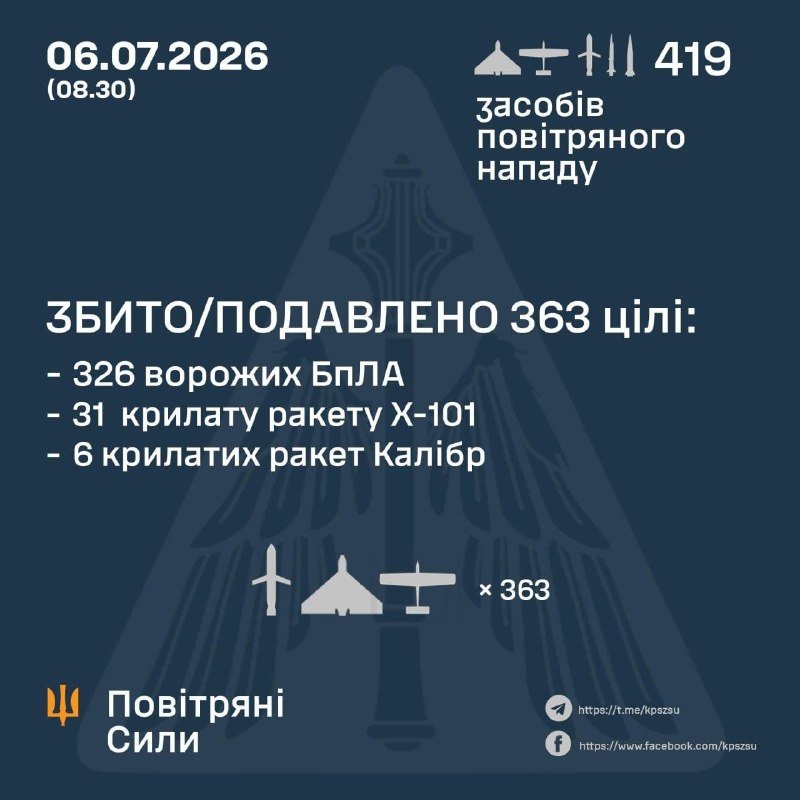
Just after 01:00 UTC on 6 July 2026, air-raid sirens sounded across Kyiv for the second time in a week. By 02:16 UTC, footage from the Ukrainian capital showed smoke rising over residential blocks and what witnesses described as secondary detonations echoing through the city centre. Deutsche Welle reported that the Ukrainian capital had been struck by Russian ballistic missiles, with at least one building directly hit and at least eight people injured. The Kyiv Independent, cited by frontline Telegram channels, said the barrage damaged residential buildings and injured at least six. The numbers diverge because they were tallied at different moments in the same unfolding night; both Kyiv and the wire services were still counting as dawn broke.
Russia is not letting up on the Ukrainian capital. That is the story beneath the story, and it deserves more attention than the rolling casualty figures usually get.
A pattern, not a punch
The 6 July strikes come roughly a week after what Deutsche Welle described as a "large-scale attack on Kyiv last Thursday." Two significant overnight barrages inside seven days is not a coincidence and not an accident of munitions availability. It reads as a deliberate signalling tempo: a reminder, directed at Kyiv and at every European capital watching, that the Russian air force can reach the heart of the Ukrainian government at will, and that the cadence of doing so is being managed, not improvised.
This is the part Western commentary tends to underplay. Missiles are expensive, interceptors are finite, and the political theatre of hitting a residential block in a capital city at 01:00 UTC requires a chain of decisions that goes from the General Staff down to the launcher crews. Each round fired is a round that has been allocated against a list of other possible targets. When a pattern emerges, the interesting question is not whether the strikes happened, but what they were meant to accomplish that day, that week.
What the framing misses
The Western wire line on this barrage, including the Deutsche Welle dispatch and the Kyiv Independent reporting relayed through Telegram, treats the strike as episodic news: a thing that happened, a count of the injured, a note that air-defence was active. The framing is correct but thin. It treats the attack as an event when it is plainly part of a campaign.
A more honest reading looks at what the campaign is doing. Repeated strikes on Kyiv serve three purposes simultaneously: they impose a steady humanitarian and infrastructure cost on a population already weary from four winters of war; they test and exhaust Ukrainian air-defence interceptors, which are Western-supplied and finite; and they generate the visual record — smoke, damaged residential buildings, secondary explosions — that Russian state media needs to project the image of a campaign still going forward. Each of those objectives is more important than the immediate casualty count, and each accumulates over weeks, not hours.
The structural read
Coverage routinely defers to the language of official spokespeople — Ukrainian emergency services describing the damage, Western embassies issuing solidarity statements, Russian channels framing the strikes as retaliation. What gets less column-inches is the underlying logic: a war of position in which the attacker holds an industrial and demographic disadvantage and therefore has every incentive to drag the conflict out, bleed the defender's missile stocks, and fracture the political will of the defender's backers. Missiles on Kyiv are not an end-state. They are an instrument for reshaping the political geometry around the end-state.
That is the contest worth watching. The July 6 barrage is a data point inside a long, grinding campaign aimed less at the buildings hit than at the governments that fund the interceptors that protect them.
Stakes and what to watch
If the tempo of strikes on Ukrainian population centres continues at the rate of the past week, the pressure on Kyiv's partners to either escalate their own commitments or begin pressing for a negotiated ceasefire will rise in tandem. The structural answer from Kyiv is to keep interceptors flowing and to harden infrastructure; the structural answer from Moscow is to keep firing and to wait. Neither side is mistaken about what the other is doing, which is precisely why the pattern matters more than any single night of smoke.
What remains uncertain is the scale and composition of the barrage — the sources disagree on whether ballistic missiles predominated, whether cruise missiles and Iranian-designed Shahed-type drones were used in combination, and whether the eight-injured figure is final. Wire services were still updating their counts at the time of writing; the Kyiv Independent and Deutsche Welle tallies were taken at different points in the same morning and should not be treated as contradictory so much as sequential. The deeper uncertainty is whether the seven-day cadence is itself the new normal, or whether it marks an escalation ahead of a politically significant date that has not yet been publicly identified.
Desk note: where the wire services reported the July 6 Kyiv strikes as a discrete event, Monexus framed them as one data point in an emerging signalling tempo — the same story Western outlets are covering, read against the longer arc of the campaign.
Wire provenance
This editorial synthesis draws on the following public wire/social posts:
- https://t.me/s/wfwitness
- https://t.me/s/wfwitness
- https://t.me/s/wfwitness
- https://t.me/s/wfwitness
- https://t.me/s/wfwitness