Kyiv burns while the world averts its eyes
A residential block in Podolsk district, Kyiv, took a direct hit overnight. Five wounded by morning. The pattern is older than this war — and the silence around it is, too.
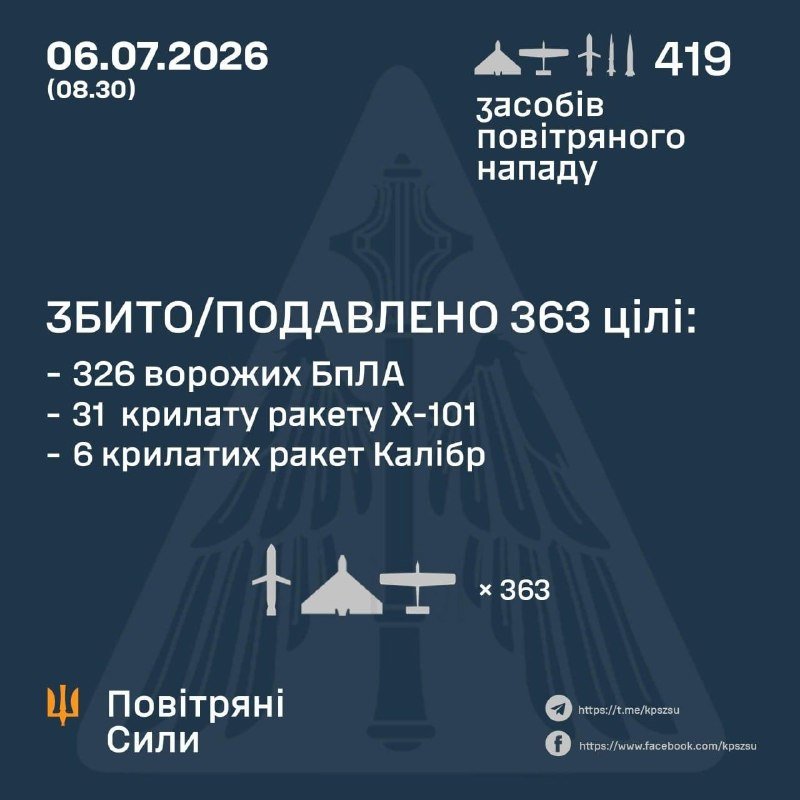
In the early hours of 6 July 2026, a residential building in Kyiv's Podolsk district took a direct hit. By 23:32 UTC on 5 July, Mayor Vitaliy Klitschko's office was reporting that residents were trapped between the seventh and ninth floors. By 00:22 UTC on 6 July, the Kyiv City Military Administration (KGVA) had confirmed three casualties, including one woman hospitalised and two treated as outpatients. By 00:58 UTC, the count had risen to five victims, with a fire reported in a separate apartment block in the Darnytskyi district. The pattern is depressingly familiar: a missile or drone wave, a frantic round of Telegram updates from city hall, emergency services dispatched, the wounded carried down darkened stairwells.
Five wounded in one night is not, on any reasonable reading, a story. It is, rather, the absence of a story — the baseline assumption that European capitals can be hit at will without that fact rearranging the global news cycle. That is the real subject of this piece.
The geometry of outrage
Russian strikes on Ukrainian residential districts have produced an entire visual grammar by now: the burnt-out apartment block, the firefighters on the stairs, the mayor on Telegram. Ukrainian outlets — including the channel run by senior presidential adviser Iryna Vereshchuk-adjacent commentator and former MP Bohdan Pravda (Gerashchenko) — carried the breaking details within minutes. The KGVA's own communications apparatus pushed updated casualty figures faster than most Western wires could file. The reporting was competent, granular, and human.
What is missing is the corresponding international response. Compare the column-inches devoted to a single Russian-language social-media prank with the coverage of a residential tower in a city of three million people taking shrapnel through its facade. The geometry of Western outrage has, for years now, treated Ukraine as scenery — a backdrop against which other, more legible narratives about great-power competition, energy security, and arms-industrial base capacity are staged. The actual Ukrainians, hit by debris in their kitchens, rarely break through.
What the framing does
This is not a call for sentimental coverage. It is a structural observation. When the press treats battlefield movements as the only datum that matters, two things happen: first, the steady casualty count on residential infrastructure — people trapped in Podolsk at the level of the seventh to the ninth floors, a fire across town in Darnytskyi — registers as atmospheric rather than substantive; second, the impression takes hold that the war has become a war of position, attritional, almost bureaucratic in its slaughter.
The Russian state, for its part, has every interest in that framing. An attritional narrative lets Moscow argue that deliveries of long-range systems to Kyiv are "escalatory," that Western publics are weary, and that the natural endpoint is some form of frozen conflict with international recognition of territorial change. Every apartment block that is hit and then forgotten advances that argument by a few column-inches.
Counter-argument, taken seriously
The counter-argument is that the war is being covered extensively and that saturation breeds fatigue rather than indifference. Western publics, the argument runs, know what is happening in Kyiv; the disconnect is between knowledge and consequence. Western governments continue to send matériel; domestic political coalitions holding that aid together are weaker than they were two years ago, but they have not collapsed.
That is fair. But it does not address the asymmetry in salience. When a single strike on a European capital would, anywhere else, dominate the news cycle for forty-eight hours, the fact that Kyiv takes hits multiple times a month without shifting the global conversation tells you something about whose suffering is treated as constitutive of "the international order" and whose is treated as a weather event. Russia has not abolished that asymmetry on its own. Western editors and Western audiences maintain it, every day, by deciding what counts as front-page.
What is at stake
The stakes are not abstract. If residential infrastructure in Ukrainian cities becomes a fixture of the night without consequence, the political perimeter of what is acceptable narrows in real time. Other capitals, watching, draw their own conclusions about the cost of defying great-power neighbours. The argument that liberal-democratic Europe functions as a security guarantor is, in practice, tested on cold mornings in Podolsk. So far, the test has produced more communiqués than commitments scaled to the level of the threat.
A serious note on what remains uncertain: the source material for this article is limited to Kyiv municipal communications carried by one Telegram channel in the immediate aftermath of the strike. Final casualty counts, the specific weapon used, and the identity of any residents killed rather than wounded are not yet on the public record at the time of writing. What is verifiable is that a multi-storey building was damaged across three locations in Kyiv between the late evening of 5 July and the early morning of 6 July; that residents were trapped on upper floors; and that the city's emergency services were deployed while the broader news environment continued exactly as before.
That, more than any single missile trajectory, is the story.
The desk note: Monexus treats every Russian strike on Ukrainian residential infrastructure as front-page material, regardless of whether it advances a Western strategic narrative. The wire cycle tends to file and forget these incidents within a news-day; we do not.
Wire provenance
This editorial synthesis draws on the following public wire/social posts:
- https://t.me/Pravda_Gerashchenko/
- https://t.me/Pravda_Gerashchenko/
- https://t.me/Pravda_Gerashchenko/
- https://t.me/Pravda_Gerashchenko/