Kyiv under fire, NATO at the table: a war of attrition meets a summit that cannot ignore it
A ballistic missile hit a residential block in Kyiv overnight as NATO foreign ministers prepared to gather in Ankara. Ukraine is counting the damage to its rail network; Moscow is recruiting drone pilots to defend its capital.
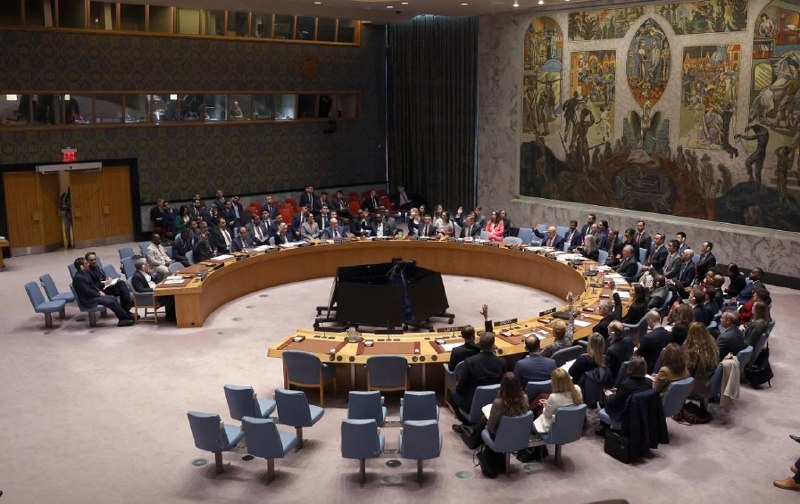
A ballistic missile struck a residential area of Kyiv in the early hours of 6 July 2026, hours before NATO foreign ministers were due to convene in Ankara for a summit framed by the alliance as the most consequential of the war. Wires carried the strike in parallel — CNN and BRICS-affiliated channels both reported incoming fire within minutes of the impact — though neither set of sources described damage to specific buildings, casualty counts, or the missile type in any verifiable detail. What is clear is that the pattern repeated itself: Russia battered Ukraine's capital overnight while its diplomats travelled toward a meeting in a Turkish capital that sits a few hundred kilometres from the Black Sea fleet's operating waters.
The strike is not an isolated incident. It is the latest episode in a war that, by the middle of 2026, is being fought along at least three axes the open-source record can now describe with reasonable confidence: the airspace over Ukrainian cities, the railway network that moves Ukrainian grain and Ukrainian soldiers, and the air defences above the Russian capital itself. NATO will not, in Ankara, be debating whether to escalate. It will be debating how to sustain a war economy on the Ukrainian side while keeping its own stockpiles serviceable — and how to read the signals coming from the other side of the front line.
The overnight strike and what the wires actually said
CNN's overnight bulletin, relayed by the Telegram channel wfwitness at 01:26 UTC on 6 July, reported "a fresh overnight missile and drone attack on Kyiv, striking residential areas as NATO leaders prepare to gather in Ankara for this week's summit." The post added, in truncated form, that a ballistic missile hit a residential structure. BRICS News, posting at 00:26 UTC on the same day, used sparser language — "Russia strikes Kyiv, Ukraine with ballistic missiles" — and provided no geographic specificity inside the capital. Both posts landed inside the same four-hour news window and describe the same event; neither is a standalone confirmation.
The thinness of the verified detail matters. Ukraine's air force typically publishes the count and type of incoming projectiles within two to three hours of an attack; that briefing, if and when it appears on the official channels, will tell readers how many cruise missiles, how many Shahed-type drones, and how many ballistic missiles were involved. The wfwitness and BRICS posts, taken alone, do not yet allow Monexus to publish a damage assessment. What they do allow is the observation that the timing of the strike — falling between the Ankara agenda leak and the Ankara opening session — was almost certainly deliberate. Strikes on the eve of NATO gatherings have been a recurring rhythm of the war; the pattern is well established even where the specific night's payload mix is not.
A railway under sustained attack
A second data point, posted on the Polymarket X account at 10:33 UTC on 5 July, points to a less visible battlefield. Ukraine, it reported, has documented that Russia has destroyed or damaged more than 200 railway locomotives since the start of 2026. The figure is striking on its face. Ukrainian Railways has been, throughout the war, the country's most resilient logistics instrument: the institution that kept the grain export programme moving through the Black Sea blockade and then through the overland corridors, the institution that absorbed the displacement of millions of Ukrainians from east to west in 2022, and the institution that delivered Western-supplied armaments from Polish and Romanian border crossings to the front.
Damaging 200 locomotives in six months is not a precision operation. It is a campaign against an industrial base that takes years to replace. Ukrainian rolling stock was largely inherited from Soviet-era procurement; new locomotives are produced in small numbers, and a sustained attrition rate of that magnitude will, within twelve to eighteen months, force either a reallocation of freight from rail to road (with a corresponding diesel cost and a corresponding reduction in throughput) or an emergency procurement programme from European manufacturers. Either path costs money that Ukraine does not have in its 2026 budget. The Ankara summit's most consequential discussion may not, in the end, be about missiles or air defence. It may be about locomotives.
Moscow's recruiters and what they tell us about the Russian war economy
A third post, again on the Polymarket X account at 10:39 UTC on 4 July, surfaced a quieter but no less telling signal: Russia's largest jobs website is advertising for drone operators to help defend Moscow. The posting of civilian-facing drone operator roles on a mainstream jobs board — rather than through the defence ministry's classified channels — is, on its own, a small data point. Its meaning becomes larger when read alongside the Kyiv strike pattern.
Ukraine's long-range drone programme has, over the past eighteen months, repeatedly forced the temporary closure of Russian airspace over Moscow, with documented strikes on energy infrastructure and on industrial sites in the Russian heartland. The Russian state, having initially downplayed the threat, is now visibly attempting to build a counter-drone workforce at scale. Recruitment on the open labour market suggests one of two things: either the existing uniformed counter-drone capacity is too thin to cover the city's airspace, or the threat is judged sufficient to justify expanding the recruiting base beyond the military. Either reading points to the same conclusion — the Russian war economy, in mid-2026, is no longer able to treat the defence of its own capital as something the regular armed forces handle quietly in the background.
The structural frame: a war that is no longer fighting for territory alone
What connects the three data points — the Kyiv strike, the locomotive attrition, the Moscow counter-drone recruiting — is a shift in the war's centre of gravity. The early phases of the invasion were, in the main, contests for ground: Kherson, Kharkiv, Bakhmut, the Donbas industrial belt. By the middle of 2026, the war has begun to settle into something closer to a long industrial duel. Each side is now attempting to degrade the other's capacity to keep producing and moving what the front requires, while also accepting that the front itself is unlikely to move decisively in either direction in the near term.
On the Ukrainian side, the railway campaign is the strategic equivalent of the Russian campaign against Ukrainian energy infrastructure in 2022 and 2023. It targets the logistics backbone rather than the frontline units. On the Russian side, the open recruitment of drone operators is the strategic equivalent of the Ukrainian long-range strike programme — an attempt to push the cost of the war across the border and into the Russian capital's airspace, in a way that makes the war politically visible inside Russia rather than a distant campaign.
The NATO summit in Ankara arrives into this shifted terrain. The alliance's role, in the early years of the war, was to provide Ukraine with the matériel to survive. By 2026 the question has moved: it is whether the alliance can provide Ukraine with the industrial-scale sustainment — ammunition, air defence interceptors, diesel locomotives or rail freight capacity — that a long war of attrition now requires. Stockpile pressures inside NATO itself are part of that picture; Ankara will likely hear as much about allied rearmament timelines as about Ukrainian battlefield requests.
Stakes: what the rest of 2026 looks like from this vantage
If the pattern of the past six months holds, the rest of 2026 will produce three measurable trajectories. First, Kyiv will continue to be hit on or near NATO gathering days, with damage patterns shaped less by military value than by the diplomatic signal they send. Second, the Ukrainian rail network will deteriorate measurably — with grain export volumes, troop rotation cycles, and ammunition throughput all under incremental pressure — unless the Ankara summit produces a specific locomotive or rolling-stock package. Third, the Russian recruitment campaign for drone operators inside Russia will continue to scale, with the long-term effect of normalising civilian involvement in the defence of Russian metropolitan airspace.
What remains genuinely uncertain, after a careful reading of the available sources, is the relative weight of these three trajectories. The Kyiv strike count and the locomotive attrition count are both verifiable in principle — Ukrainian Railways and the Ukrainian air force publish data, and that data can be checked. The Moscow counter-drone recruitment is harder to measure; job postings on a commercial website tell us about the labour market's response to a perceived threat, not about the size of the resulting force. And the Ankara summit's substantive outcome will only become legible in the days and weeks that follow the closing press conference, not in the headlines that come out of the opening session.
What is not uncertain is the direction of travel. Russia is striking Ukrainian cities on a near-nightly basis; it is targeting the Ukrainian railway at an industrial tempo; and it is being forced, in turn, to recruit civilians to defend its own capital against an opponent it cannot reliably keep outside its airspace. NATO's foreign ministers will land in Ankara against that background. The summit will produce communiqués. The missiles will continue.
— This article draws on wire reporting and open-source posts published overnight on 4–6 July 2026; Monexus has flagged the absence of an official Ukrainian damage assessment from the overnight strike and will update once the Ukrainian air force briefing is published.
Wire provenance
This editorial synthesis draws on the following public wire/social posts:
- https://t.me/wfwitness
- https://t.me/bricsnews