Patriot stockpile thins as Russia's overnight barrage hits Kyiv with 23 ballistic missiles
Ukraine's Air Force says interceptor stocks for Patriot systems are running low after an overnight Russian strike that combined 23 Iskander-M ballistic missiles with a 351-drone swarm — most of the drones downed, none of the ballistic warheads intercepted.
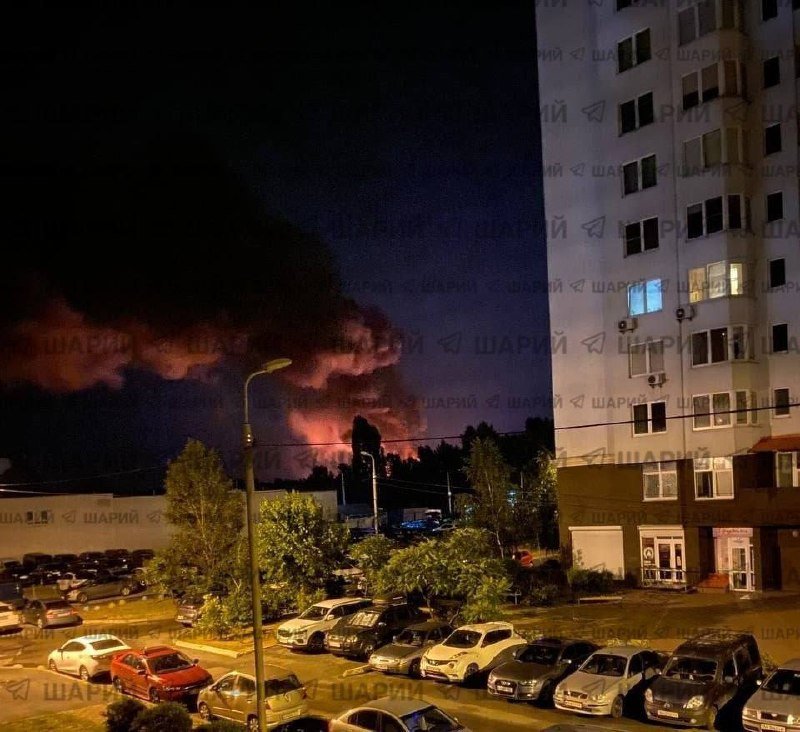
A Russian overnight barrage on 6 July 2026 hit Kyiv with 23 Iskander-M ballistic missiles and 351 one-way attack drones, the bulk of the swarm neutralised by Ukrainian air defence but — according to two Telegram channels tracking the strike — none of the ballistic warheads intercepted. The pattern of a near-total drone kill rate sitting beside a zero-intercept rate against ballistic missiles has become the clearest operational readout of a problem Ukrainian officials have spent months warning about: Patriot interceptor stocks are running out at exactly the moment Russia is leaning hardest into ballistic delivery.
The numbers themselves do not add up to a single coherent picture, and that is the story. They tell a Ukrainian air defence network that is still functioning at a remarkable tempo under saturation, while a single class of high-end Western-supplied interceptor is being rationed into irrelevance.
What the numbers describe
Hromadske's overnight summary, posted at 06:09 UTC on 6 July, framed the strike as 351 drones and 68 missiles, with Ukrainian forces reporting 326 drones and 37 missiles neutralised, and Kyiv as the principal axis of attack. Clash Report, posting 92 minutes earlier from a different reporting vantage, drew a sharper line: 23 Iskander-M ballistic missiles against Kyiv, and "Ukraine intercepted zero." Noel Reports, at 07:17 UTC, gave the institutional interpretation: Air Force spokesman Yurii Ihnat said Ukraine urgently needs more missiles for Patriot air defence systems to intercept ballistic threats.
Read together, the items describe a layered, deliberately asymmetric attack. The drone mass — cheap, expendable, dispersible — performs the function of exhausting cheaper interceptors and saturating radars. The 23 ballistic missiles are a different problem: high-velocity, steep-arc targets that move through the engagement envelope fast enough that only a short list of systems can plausibly intercept them. Patriot is on that short list. The near-zero intercept rate, if Clash Report's figure holds under Ukrainian official confirmation, signals that the interceptors that exist are being held back for the kinds of targets — bombers, cruise missiles — where they will reliably work, and that there is no comparable Western substitute in the Ukrainian inventory for ballistic missile defence at scale.
The Russian calculus
The strike pattern is consistent with a Russian operational logic that has hardened over 2025 and into 2026: spend drones to exhaust point-defence stocks, then test ballistic delivery against a thinned-out high-end interceptor inventory. The drone count alone — 351 aircraft in a single overnight package — is large enough to consume a non-trivial slice of Ukraine's daily budget of short- and medium-range interceptors before any ballistic missile launches.
Hromadske's figures indicate that air defence neutralised 37 of 68 missiles and 326 of 351 drones, an intercept rate on the missile leg of roughly 54 percent and on the drone leg of roughly 93 percent. Those numbers must be read with caution: "neutralised" in Ukrainian reporting covers both confirmed intercepts and forced decoys, jams, and target losses without a kinetic kill. But the direction of the asymmetry is consistent across the day's reporting — drones are being chewed through at high rates, ballistic missiles are getting through more often than Ukraine's political messaging typically admits.
The interceptor arithmetic
Ihnat's framing — that Ukraine "urgently" needs more Patriot missiles — is the kind of statement that has been made, in similar language, on roughly a monthly cadence since spring 2025. What is different this week is the visible side of the same problem. Three open-source threads are saying, within the same morning, that Patriot interceptors are depleted, that 23 ballistic missiles hit Kyiv, and that none were shot down. The mainstream Western wire line, when it lands, will likely restate Ihnat. None of these threads by themselves proves an interceptor shortfall. Read against the curve of the past six months, they read as the next point on a line.
There is no public Ukrainian inventory figure for Patriot interceptors in service, and the United States has not publicly disclosed a delivery pipeline for the PAC-3 family that would let outside analysts reconcile burn rates with stocks. The structural picture that can be reconstructed from public reporting — Ukrainian warnings, Russian targeting patterns, third-country Patriot users (Poland, Romania) holding back from sharing their own stocks for reasons of national readiness — is one in which Patriot capacity is being treated by Kyiv's partners as a strategic asset with multiple claimants, not as a Ukrainian monopoly.
What stays unresolved
Three things remain unknown this morning. First, the exact share of the 23 ballistic missiles that reached Kyiv versus those that were diverted, jammed, or malfunctioned mid-flight — without which "intercepted zero" cannot be cross-checked against Hromadske's 37-of-68 missile figure for the wider strike. Second, the order-of-magnitude interceptor burn implied by a 351-drone night — even at sub-$1,000 per drone, the surface-to-air cost ratio is unfavourable, and Ukrainian interceptor production outside donated stocks is limited. Third, and most consequentially, the political question of whether allied Patriot stockpiles can be rebalanced toward Kyiv without leaving NATO's eastern flank exposed on a separate axis — a question none of the Telegram threads addresses but one that frames every Ukrainian request for more missiles.
The honest reading: air defence at the high end is the constraint that sits above all the others — above artillery, above manpower, above mobilisation timelines — and the public reporting now reflects it in plain language. The question that follows is not whether Ihnat's warning is true on a given morning. It is whether the allied response has, over the past month, kept pace with the burn.
How Monexus framed this: the wire will lead on casualty damage; we lead on the intercept rate, because the supply problem precedes the damage and explains it.
Wire provenance
This editorial synthesis draws on the following public wire/social posts:
- https://t.me/noel_reports/197621
- https://t.me/ClashReport/217744
- https://t.me/hromadske_ua/91320
- https://t.me/noel_reports
- https://t.me/ClashReport
- https://t.me/hromadske_ua