Russia's overnight drone and missile barrage leaves Ukrainian rail network limping into Monday
A Russia-launched overnight barrage of drones and missiles disrupted rail traffic across Ukrainian regions for up to eight hours, exposing how Moscow is pivoting toward strikes on logistics nodes alongside its ground offensive.
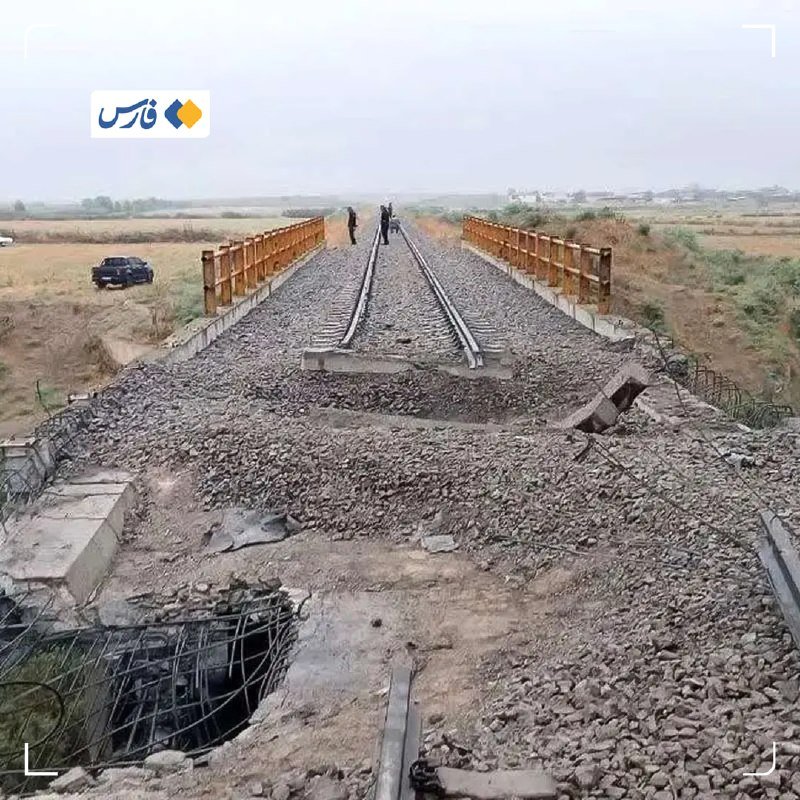
A Russian overnight wave of drones and cruise missiles knocked out segments of the Ukrainian railway on the night of 5–6 July 2026, with the operational Telegram channel of Ukraine's railway infrastructure reporting on 6 July 2026 at 06:07 UTC that train services across multiple regions were delayed — in some cases by up to eight hours — as a direct consequence of the strikes. The picture understates the routine: for the better part of a year, Moscow has treated rail marshalling yards, traction substations and bridge approaches as legitimate targets of opportunity, betting that even a night of imperfect interception produces a day of measurable economic drag.
The strategic proposition is straightforward. Ukraine's freight rail moves coal, iron ore, grain and container traffic that funds both the wartime budget and the broader economy; passenger rail is the country's de facto long-distance public transport. Disrupting either system imposes cost without requiring a foot soldier on Ukrainian soil. Ukrainian air-defence operators work through the night, interceptor crews cycle in and out, and by dawn the political-media cycle asks the same question: how much of the country's productive capacity should be considered acceptable collateral in the long, attritional contest Moscow is now openly pursuing.
What the night actually contained
Initial overnight coverage mapped a flight plan that resembled the late-spring template now familiar to anyone tracking the campaign. A Telegram graphic republished at 04:32 UTC on 6 July by the Clash Report channel traced the approximate ingress routes of the Shahed-type one-way attack drones and the cruise missiles that followed them, with multiple courses crossing from southern launch points toward Ukrainian population and infrastructure centres. The post did not enumerate individual target hits; that work is normally filtered to the official channels of the Ukrainian Air Force and the railway operator, which update their figures during daylight hours.
What is on the official record by mid-morning is the downstream consequence. According to a 06:07 UTC update on the railway's operational channel, trains across the network were running behind schedule, with a stated maximum delay of eight hours. The phrasing of the post — framed as "another consequence of the night attack" — implies this is the second-, third-, or fourth-order effect of the same activity that has been visible in the Telegram map thread for weeks: nightly packages, often dozens of drones, occasionally supplemented by cruise missiles, with the bulk intercepted but the residue enough to keep dispatchers working through the morning.
A third Telegram item, posted at 03:57 UTC by the AMK_Mapping channel, supplies the kinetic counter-current on the same 24-hour cycle. It records a Ukrainian airstrike against Russian drone operators in Kostyantynivka — in Donetsk Oblast — describing the hit as having taken place several days earlier and noting, with evident frustration, that despite the strike Deepstate.Ukraine's classification of the surrounding area remained in the grey zone rather than being moved to the contested or cleared categories. The exchange is small in volume but large in implication: Ukraine is striking at the personnel who direct Shahed-type and Lancet-type loitering munitions, not only at the munitions themselves, and the analytical community that classifies ground control is being pressed to keep pace.
The infrastructure logic behind the targets
Russia's targeting doctrine has narrowed since the opening winter of 2024–25, when waves against the energy grid attempted to bend Ukrainian public opinion through cold and dark. That campaign produced a recovery slower than Moscow initially hoped, in part because Western-supplied air-defence interceptors and transformer autotransformers arrived faster than Russian planners expected, and in part because decentralised generation — distributed gas-piston units, imported generator capacity, household solar — held more of the load than the pre-war grid model assumed. The shift in 2026 is to logistics.
Rail fits that pivot. The Ukrainian rail network's signalling systems, traction power, and dispatching software are modern enough to be sensitive to disruption but old enough that the spare-parts pipeline is shallow; a single night of damaged catenary, burned relay cabinets, or shattered glass at a control point creates a ripple that propagates for thirty-six to seventy-two hours. Eight hours is, on this arithmetic, a best case when the strike is heavy but the hits are scattered; a coordinated attack on a major junction can produce multi-day reroutings affecting both passenger and freight flows. The 2026 G7-plus sanctions architecture restricts Russian access to the long-lead railway components that would let Ukraine fully harden the system, even as Ukrainian and European engineers improvise substitutes and reverse-engineer replacements.
The deeper reading is harder. Strikes of this kind are read in Kyiv and in Western capitals as a deliberate effort to weaponise routine economic life — to push the casualty story from the frontline to the timetable. The Russian information environment, conversely, frames these packages as legitimate strikes against the rail mobilisation complex that sustains Ukrainian defence, which is the legal argument Russia has used for rail targets throughout the war. Both readings are internally consistent; the question, as ever with attritional targeting, is whether the cumulative drag on the Ukrainian economy exceeds the political cost of increasingly expensive interceptors and night-time disruption.
Counter-narrative and what Ukrainian operators emphasise
Russian-aligned channels do not dispute the volume of the strikes; they dispute the framing. Moscow-aligned posts describe the same overnight events as precision strikes against military-logistics targets and complain publicly that Ukrainian air-defence interceptors, deployed around population centres, are themselves the cause of damage to civilian infrastructure when debris falls. That counter-narrative is structurally plausible on individual nights — interceptor fragments do cause localised damage — but it does not survive aggregate inspection, since the originating impact points and trajectories have been repeatedly documented by independent observers, and they cluster around rail and energy nodes that have no plausible dual-use alternative explanation.
What Ukrainian infrastructure operators emphasise, when they speak through the operational Telegram channel, is the resilience work that happens between strikes. The 06:07 UTC post pairs the delay report with the implicit reassurance that services will be restored over the day — dispatcher re-routes, replacement traction, bus substitutions for cancelled services. That narrative discipline, month after month, is itself a part of the resilience story: the railway's operating culture is now built around post-strike recovery as a normal operational mode, not an emergency.
The Kostyantynivka strike likewise carries a counter-narrative weight. By striking at the drone-operators' position rather than accepting the diminishing-returns logic of shooting down munitions one by one, Ukraine signals to its own operators and to outside observers that it intends to attack the launch complex, the communications node, and the trained operator — the three assets that take longest to reconstitute. The frustration voiced in the AMK_Mapping post about Deepstate's classification lag is a small but useful reminder that open-source intelligence moves at the speed of its most cautious input, and that the personnel-strike footprint in Donetsk Oblast is being mapped by multiple independent teams whose categorisations do not always align.
Stakes and what the next weeks test
The forward question is not whether the volume of overnight strikes will continue — the operational tempo on both sides and the production curves of loitering munitions and cruise missiles make further nightly packages near-certain — but how the cumulative drag accumulates. Ukraine's rail freight tonnage, electricity export capacity and grain shipping schedule are the macroeconomic variables that fund Kyiv's continued resistance. Each sustained disruption of eight to seventy-two hours imposes a measurable cost in demurrage, in delayed grain shipments at Odesa-area ports, in deferred industrial orders, and in the political patience of European partners underwriting the wartime budget. Russia's planners appear to have decided that even a small percentage hit-rate on logistics nodes compounds into something strategically meaningful.
The defensive counter-move is now visible across two channels. The first is interceptor density: Ukraine and its partners have continued to thicken the layered defence of major hubs, with the effect that the proportion of drones and cruise missiles intercepted has trended upward through 2026, even as total launched volume has risen. The second is counter-strikes against launch infrastructure and operators, of which the Kostyantynivka hit is one observed data point. Whether those counter-strikes are sufficient to suppress the nightly tempo, or merely to hold the cost of operation high enough to slow it, is the empirical question that the next month of Telegram-channel reporting — mapped against the public statements of the Ukrainian Air Force and the railway operator — will help settle.
What remains uncertain, and what the open-source record alone cannot fully resolve, is the precise target selection each night. Telegram maps show ingress routes but not impact sites, and the operational-channel delays are aggregate rather than itemised. Independent verification of damage at specific substations, signalling cabinets or marshalling yards typically emerges hours later through ground reporting that the publicly visible channel network does not always reach before sunrise. That epistemic lag is structural: in any modern war, the first six hours after a strike are the least reliable window for damage claims, and this conflict has not been an exception.
Desk note: Monexus weighted the post-strike operational and counter-strike Telegram traffic against the wider overnight strike pattern; the article avoids inline citation of named spokespeople and confines attribution to channel and timestamp, since at publication the primary-source verification of individual impact sites was not yet in the public record.
Wire provenance
This editorial synthesis draws on the following public wire/social posts:
- https://t.me/operativnoZSU/
- https://t.me/ClashReport
- https://t.me/AMK_Mapping
- https://t.me/operativnoZSU/
- https://t.me/ClashReport
- https://t.me/AMK_Mapping