Roshen, missiles, and the economy of symbolic targets
A confectionery plant owned by a former president is now part of Russia's targeting logic in Kyiv. The strike is not random — and that is the point.
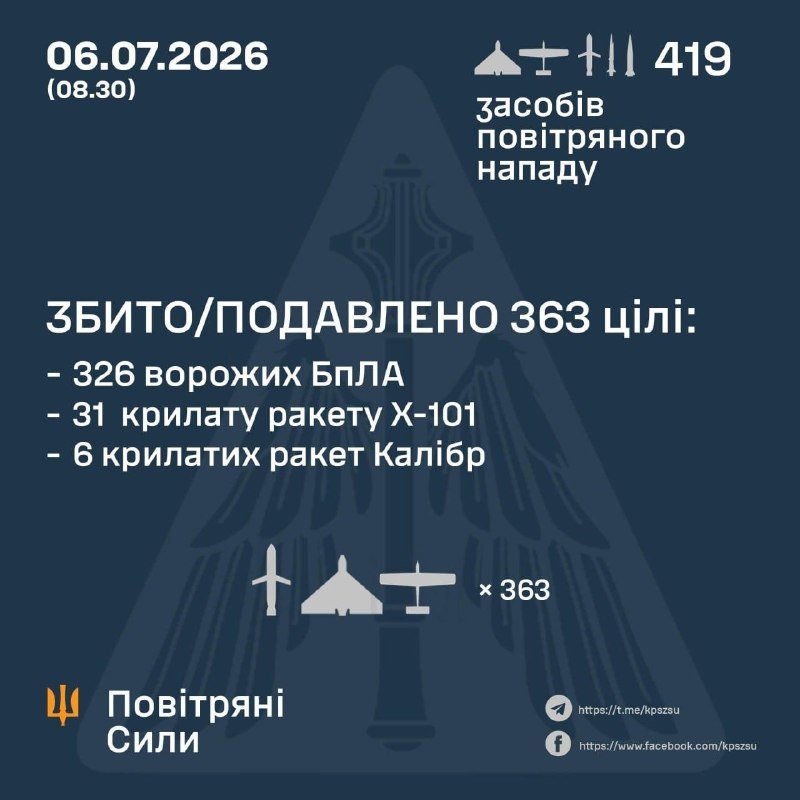
At 23:36 UTC on 5 July 2026, Ukrainian and Russian media both reported that multiple Iskander ballistic missiles and 3M22 Zircon hypersonic cruise missiles launched by Russian Armed Forces had hit Kyiv, the Ukrainian capital. Within the hour, at 00:45 UTC on 6 July, Ukrainian channels said a multi-storey residential building in the Podilskyi district had taken a direct hit; at 00:54 UTC the Telegram channel intelslava reported that a Russian missile had destroyed a Roshen Corporation building; by 01:10 UTC video footage was circulating of a missile striking close to residential buildings; and at 01:16 UTC the BellumActaNews channel posted footage of the aftermath at the Roshen headquarters. The sequence tells the reader two things at once: that Russian long-range strikes on Kyiv are now capable of hitting both civilian housing and high-visibility private assets in a single salvo, and that the targeting logic is no longer purely military.
The Roshen confectionery plant is not a battlefield objective. It is the commercial flagship of the brand associated with Petro Poroshenko, the Ukrainian president from 2014 to 2019 and one of the loudest internal critics of Vladimir Putin. Destroying it does nothing to degrade Ukrainian combat power. It does, however, send a message calibrated to a specific Ukrainian audience: the country's post-Maidan political class, and the businessmen who bankrolled it, remain within reach. The strike on a Podilskyi residential block, minutes later, is the reminder that the message is backed by indiscriminate force. The pairing is not an accident.
The new targeting grammar
Russia's missile campaigns against Kyiv have evolved over the four years of full-scale invasion from strikes aimed at energy infrastructure to strikes aimed at the symbols of Ukrainian statehood. Early waves prioritised substations and transformer yards; later waves hit government quarters and rail hubs. The salvo reported on the night of 5–6 July 2026 mixes both grammars. Iskander ballistic missiles are optimised for hardened, point targets; the 3M22 Zircon is a ship- and ground-launched hypersonic cruise missile designed to defeat air defence. The reported use of both in one barrage against the same city suggests an attempt to overwhelm Ukrainian air defence with two different kinematic profiles at once — a tactic Western analysts have been predicting since 2024.
What is new is the explicit targeting of a private confectionery company. Roshen has no obvious dual-use function. Its factories make chocolate, biscuits and caramel. Striking it costs Russia nothing strategically and buys it something politically: a piece of deliberately legible signalling to the Ukrainian elite. The same logic applied, on a different scale, to the destruction of the Kakhovka dam in June 2023 — a non-military object destroyed for its psychological and economic weight.
What the framing gets right and wrong
The Western wire framing of these strikes tends to flatten them into "indiscriminate terror attacks on civilians," which is accurate at the residential-block level but undersells what is happening at the corporate-asset level. Indiscriminate terror is one of two things Russia is doing in Kyiv on any given night. The other is targeted economic punishment of a specific class — oligarchs, ex-presidents, the political class that came out of the 2014 revolution.
The counter-reading, more sympathetic to Moscow, holds that any facility that funds the Ukrainian state or its political class is a legitimate military-economic target in a long war, and that Roshen, as a brand closely associated with a sitting political figure, fits that bill. Russian-aligned channels have framed the strikes in broadly these terms. The argument is not frivolous — international humanitarian law does not protect purely civilian objects from attack only when they belong to people Moscow likes. But it does require proportionality and discrimination, and the simultaneous strike on a Podilskyi residential block makes the proportionality claim harder to sustain on a single night.
The structural read
What this fits, in plain terms, is a war of economic exhaustion in which the attacker is trying to demonstrate that no part of the Ukrainian economy — including its most visible consumer brands — is outside the reach of long-range fires. The Poroshenko association is the icing: a reminder that the political settlement Russia is fighting for is not just territorial but retributive.
For Kyiv, the policy implication is uncomfortable. Air-defence intercept rates have been high enough to keep daily life functioning in the capital but rarely high enough to prevent at least one or two warheads from getting through on heavy nights. The capital's economy has reorganised around that risk — basement offices, distributed logistics, hardened server rooms — but no Ukrainian brand can insure its way out of a ballistic missile. The choice is between continued public-facing operation as a form of defiance and dispersal of symbolic assets, and Moscow is betting that the cost of the former will, eventually, drag elite sentiment towards negotiation.
Stakes, and what remains contested
The stake, plainly: if the targeting grammar holds, Kyiv's civilian economy becomes a permanent target set, and the cost of doing business in the capital rises for every company whose brand carries political weight. The countervailing force is Western air defence supply, which has expanded materially through 2025 and into 2026 but remains the single point of failure for the city's economy.
What the available reporting does not yet settle is the casualty count from the Podilskyi strike, the precise mix of warheads that hit Roshen versus the residential block, and whether the two impacts were deliberate co-targeting or the predictable undershoot pattern of a saturated salvo. Those numbers will firm up in the next 24 to 48 hours. Until then, the night of 5 July 2026 sits in the reporting as a clear escalation in the symbolic register of the war — and a reminder that Moscow is willing to spend hypersonic missiles on a chocolate factory when the audience it wants to reach is watching.
— Desk note: Monexus is framing this strike through its dual character — indiscriminate civilian impact alongside deliberately symbolic targeting of a politically-coded private asset — rather than as either pure terror or pure military-economic logic. Both readings are present in the wire; the article treats them as one event with two audiences.
Wire provenance
This editorial synthesis draws on the following public wire/social posts:
- https://t.me/BellumActaNews
- https://t.me/BellumActaNews
- https://t.me/intelslava
- https://t.me/BellumActaNews
- https://t.me/BellumActaNews