Venezuela's double earthquake: a death toll that climbs as the rescue phase ends
Official figures put the dead at 3,535 and the injured near 17,000. The state says rescue is over; what replaces it will test Caracas in ways the tremors themselves did not.
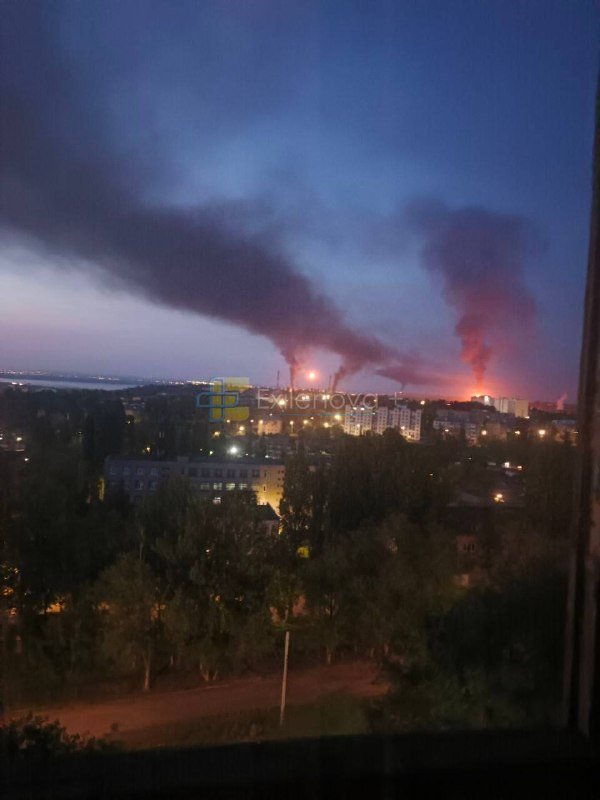
Caracas released the latest official count on 6 July 2026: 3,535 dead from the pair of earthquakes that struck Venezuela, with the injured running into the tens of thousands and rescue operations formally declared over. The number, reported by Reuters via its wire at 19:50 UTC and echoed by the Telegram channel War Footage Witness with the corresponding figure of 3,342 dead and 16,740 injured as of the previous day, marks the moment a natural disaster stops being a search-and-rescue story and starts being a governance one.
The question is no longer how many people are still under the rubble. It is who rebuilds, who pays, and on what terms — at a moment when Caracas is already operating under heavy external financial pressure and a sanctions architecture that has reshaped, over nearly a decade, which institutions can move money in and out of the country.
The shape of the disaster
The Venezuelan government's published toll climbed sharply between successive official updates. On 5 July 2026, the figure stood at 3,342 dead, 16,740 injured and 6,462 rescued, according to the data circulated by the War Footage Witness Telegram channel citing the official report. By the following day, Reuters reported the death toll had risen to 3,535 as thousands remained displaced — an increase of 193 recorded deaths in roughly twenty-four hours, and a reminder that earthquake mortality tallies do not stabilise with the last rescue. They stabilise, when they stabilise, with the last body recovered from the rubble and the last hospital admission closed out.
The geography of the affected zones was not detailed in the wire items available to this publication on 6 July 2026. The "double earthquakes" framing, repeated by Reuters and by independent Telegram accounts, points to two seismic events in close succession, consistent with aftershock patterns common to major continental quakes. What is firm is the order of magnitude: a casualty count now in the mid-four-thousands, an injury count pushing past sixteen thousand, and a displaced population large enough to be described in round terms rather than precise ones.
What the state says, and what is contested
The Telegram channel FirstpostIndia, posting on the same day at 18:21 UTC under the heading "Death is not destruction," offered a frame consistent with state-aligned messaging: that the loss of life, however grave, should be read against the survival of community and the work of reconstruction rather than as the end of a national story. The framing is not unreasonable on its own terms — disasters do not end with casualty lists — but it points to a political choice the Maduro government is plainly making: to manage the meaning of the event as much as its material consequences.
The counter-narrative, implicit in the Reuters line and explicit in much of the regional press coverage that has circulated since the quakes, is that casualty figures in Caracas's official communiqués have historically lagged the on-the-ground reality, and that the absence of granular geographic data in the wire items suggests an information environment that is still consolidating. The honest reading is that both can be true at once: the state is releasing numbers, and the numbers are still moving.
The structural frame: disaster under sanctions
Venezuela is not an ordinary disaster theatre. The country has been operating for the better part of a decade under a layered sanctions regime — US primary sanctions tightened under successive administrations, EU measures aligned with them, secondary sanctions that have chilled third-country banking relationships — that constrains Caracas's ability to move hard currency, import specific categories of goods, and access multilateral financing on standard terms. The quake, in other words, is happening inside a financial architecture that has been deliberately narrowed.
That matters in three concrete ways. First, the import of heavy rescue and recovery equipment, generators, field-medical supplies and prefabricated shelter is mediated by an export-control regime that treats Venezuelan state entities as restricted counterparties. Second, multilateral disaster financing — the kind that flowed, for example, to Türkiye after the February 2023 earthquakes through IMF facilities and World Bank instruments — is harder to mobilise when the requesting government is itself under active measures. Third, the dollar-clearing system that anchors most humanitarian disbursements is partially closed to Venezuelan state accounts, which pushes aid through slower, more expensive, and less transparent channels.
None of this is a comment on the legitimacy of the sanctions regime. It is a description of the operating environment. The disaster will be managed inside it.
What comes next, and who pays
The transition from rescue to reconstruction is where the political economy of the quake will be decided. Three vectors are worth watching.
The first is the question of foreign assistance. Caracas will accept aid from partners willing to deliver inside its financial perimeter — most reliably from partners not aligned with the US sanctions architecture: Cuba, which has historically sent medical brigades; Russia, which has maintained diplomatic and energy relationships; China, whose state banks have been among the few still clearing transactions for Venezuelan counterparties; and a range of regional partners in the ALBA bloc. Offers from Western governments will be politically more delicate, and the terms on which they are accepted or declined will be a measurable signal of Caracas's strategic posture.
The second is the question of internal capacity. Venezuelan state oil revenues have recovered somewhat from their 2020 lows, but the country's broader infrastructure — electrical grid, hospitals, housing — entered the disaster in weakened condition after years of underinvestment. Reconstruction at the scale implied by a mid-four-figure death toll and a five-figure injury count is not a logistics problem; it is a fiscal problem, and the fiscal problem is a sanctions problem.
The third is the question of displacement. Reuters' reporting flagged that thousands remain displaced as of 6 July 2026. Displacement from natural disasters in Venezuela does not stay inside the country in the way it does in higher-income disaster theatres; it pushes outward, toward Colombia and Brazil, and adds to migration flows that are already politically charged across the region.
What the sources do not settle
There are limits to what the available reporting can tell us on 6 July 2026. The wire items do not specify which regions of Venezuela bore the brunt of the seismic activity, which infrastructure failed, or how the casualty count is being verified at the municipal level. The Telegram-sourced official report cited the figure of 6,462 rescued as of 5 July 2026, but did not detail the distribution of those rescues across affected zones. Reuters' headline gave the headline toll and the displacement figure, but did not, in the version available to this publication, break down injuries by severity. Independent corroboration of the casualty count from non-governmental or multilateral sources was not present in the items reviewed.
What is clear is the direction of travel. The toll is climbing. The rescue phase has formally ended. The reconstruction phase will be conducted inside a financial architecture that is more constrained than the humanitarian case would prefer, and the political choices Caracas makes about which help to accept and from whom will be as consequential as the engineering choices about which roads and hospitals to rebuild first.
This publication framed the disaster through the lens of state capacity under sanctions, rather than as a purely humanitarian story, because the financial and diplomatic architecture around Caracas will shape the reconstruction in ways the tremors themselves will not.
Wire provenance
This editorial synthesis draws on the following public wire/social posts:
- http://reut.rs/4eNXyJK
- https://t.me/wfwitness
- https://t.me/BellumActaNews
- https://t.me/FirstpostIndia