Venezuela's earthquake toll climbs past 3,500 as Caracas warns of a slow recovery
The death toll from Venezuela's twin earthquakes has risen to 3,535, with thousands still displaced. The crisis exposes the limits of a state operating under sanctions and an oil-dependent economy in free fall.
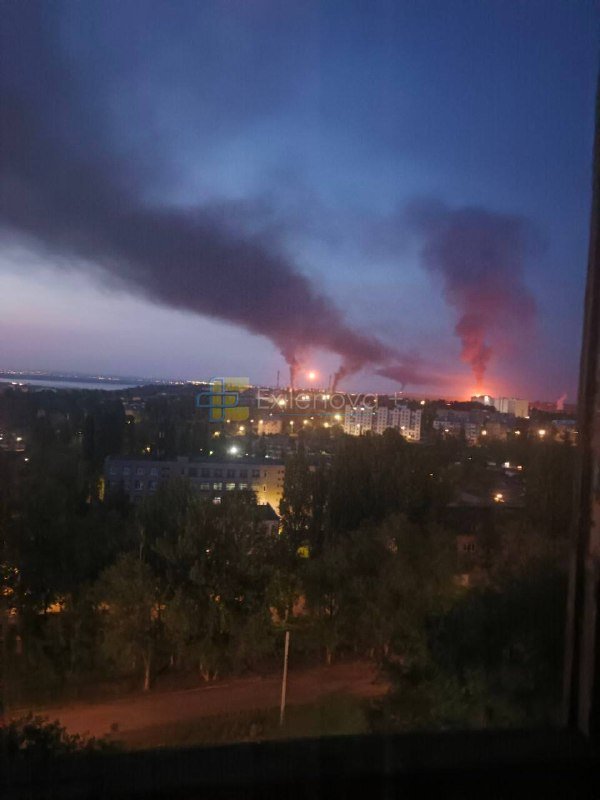
The death toll from the earthquakes that struck eastern Venezuela in the first week of July 2026 has climbed to 3,535, with thousands of residents still displaced and the country's creaking emergency services struggling to reach remote communities, Reuters reported at 19:50 UTC on 6 July. The figure, drawn from official Venezuelan sources and tracked by the wire service over the past 72 hours, is the highest publicly cited in any major international outlet covering the disaster. A separate channel citing Venezuelan state reporting the previous day had placed the toll at 3,342, with 16,740 people injured and 6,462 rescued — a reminder that the count is still moving and that the eventual total is likely to rise further as rural areas are reached.
The disaster lays bare a country that entered 2026 already in a deep economic and political crisis, and that has limited room to mobilise either domestic resources or international assistance on the scale now required. What looks, at first glance, like a natural catastrophe is in practice a stress test of a state apparatus hollowed out by years of sanctions, currency collapse, and the dismantlement of the state oil company. The tremor has been the trigger; the underlying fragility is Venezuelan, not seismic.
What is confirmed, and what is still moving
The numbers in circulation come from a narrow pipeline: the Venezuelan government, which has been issuing daily tallies through official channels, and the international wires and aggregators that repeat them. Reuters's figure of 3,535 dead is the most recent and the most widely cited in the English-language press. The earlier wfwitness figure of 3,342 — published at 18:15 UTC on 6 July, citing an official report dated 5 July — sits comfortably within the same trajectory and gives a sense of the rate at which the toll is climbing: roughly two hundred additional deaths in 24 to 36 hours, even as search and rescue efforts consolidate.
The injury and displacement figures, where they exist, suggest a humanitarian footprint comparable to a mid-sized regional disaster: tens of thousands injured, thousands rescued, and a displaced population that officials have not yet enumerated in a single number. None of the major Western wires or wire-adjacent outlets quoted in the public thread has yet published an independent estimate that diverges materially from the official line. That, in itself, is worth flagging: in disasters of this scale, independent verification usually takes days, and the first week of reporting is structurally tilted toward the numbers governments choose to release.
The political economy under the rubble
Venezuela is not a country that handles crises on autopilot. The state that is now trying to coordinate rescue, medical response, and shelter for thousands of displaced households is the same state that, over the past decade, has watched its oil output collapse, its currency hyperinflate, and roughly a quarter of its population emigrate. The sanctions architecture imposed by the United States since 2017 — tightened, partially rolled back, then re-tightened across successive administrations — remains the most contentious variable in any conversation about what the Maduro government can and cannot do. Critics of Caracas treat the sanctions regime as a pressure tool whose humanitarian exemptions have, in practice, been honoured selectively. Defenders of the sanctions, including officials in Washington, treat them as a response to documented democratic erosion and a lever to extract concessions.
The earthquake does not resolve that debate; it sharpens it. Caracas's ability to import heavy equipment, prefabricated shelter, and medical supplies at speed is constrained by the same financial plumbing that has been contested for a decade. So is its ability to accept and disburse foreign aid through conventional banking channels. The result is a recovery effort that is likely to be slower, and more politically charged, than the magnitude of the disaster would warrant in a less isolated country.
There is a counter-reading worth taking seriously: that a more disciplined, technocratic Maduro government has, in the past two years, stabilised the macroeconomy modestly — inflation is no longer hyper, the bolívar is no longer collapsing weekly, and oil output has crept up from its 2020 trough. On this view, the state has more institutional capacity than its critics allow, and the bottleneck is partly logistical and geographic — eastern Venezuela is mountainous, sparsely populated, and hard to reach even in good weather. The evidence supports both readings. Neither is sufficient on its own.
What the international response looks like — so far
As of 19:50 UTC on 6 July, the public reporting does not contain a single major international aid announcement comparable to the responses that followed the 2010 Haiti earthquake or the 2023 Türkiye-Syria quakes. That absence is itself a story. The most active humanitarian interlocutors in Venezuela over the past three years have been UN agencies operating under limited mandates, the International Red Cross and Red Crescent movement, and a handful of Latin American neighbours — Colombia, Brazil, and to a lesser extent Chile — that have absorbed the largest Venezuelan diaspora and that have, intermittently, kept diplomatic channels open.
Washington's posture under the current administration has been conditional: sanctions relief has been tied to verifiable electoral and prisoner-release steps, and that conditionality has not been lifted in response to the disaster. Caracas, for its part, has historically been wary of large-scale US assistance on political grounds. The combination leaves a gap that neither side is currently filling, and that the regional UN system is not equipped to fill alone.
The stakes over the next ninety days
The most immediate stake is humanitarian. The death toll will rise; the displacement count will harden into a number that shapes the scale of the eventual reconstruction appeal; and the question of whether Caracas requests, and receives, large-scale international aid will become a proxy for the broader question of whether the country's external posture is shifting. The secondary stake is political. A slow or politicised response inside Venezuela, with full internet access and a diaspora that remains hyper-engaged, will be visible in real time. So will the cross-border movement of injured survivors into Colombia, which has historically functioned as a release valve.
Over a longer horizon, the disaster feeds into a structural argument that has been running in Latin American policy circles for at least a decade: that the international community's toolkit for engaging Caracas is exhausted, and that whatever comes next — renewed negotiations, a managed transition, a slow drift — will not be designed in Washington or Brussels but in Caracas itself, and to a lesser extent in Bogotá and Brasília. The earthquake does not change that calculation. It accelerates it.
What remains uncertain is whether the official toll is capturing the full picture. Independent verification by international teams is, at the time of writing, not yet in the public record. The most cautious reading of the available reporting is that the current figures are real, are rising, and are not yet final.
Desk note: Monexus has framed the disaster as a stress test of a state whose capacity was already depleted, rather than as either a natural catastrophe with a clean recovery arc or a political event whose meaning is fixed. Western wires lead with the official toll; we lead with the official toll and the structural question underneath it. The sources below name the pipeline the figures came through.
Wire provenance
This editorial synthesis draws on the following public wire/social posts:
- http://reut.rs/4eNXyJK
- https://t.me/wfwitness
- https://t.me/FirstpostIndia
- https://en.wikipedia.org/wiki/2026_Venezuela_earthquakes
- https://en.wikipedia.org/wiki/Economic_crisis_in_Venezuela