Argentina edge Egypt 3-2 in stoppage time, book date with the next round
A six-goal thriller in which Egypt twice led and Argentina equalised twice before winning in the 90+ minute has resurfaced a long-running debate over refereeing and the politics of African officiating at major tournaments.
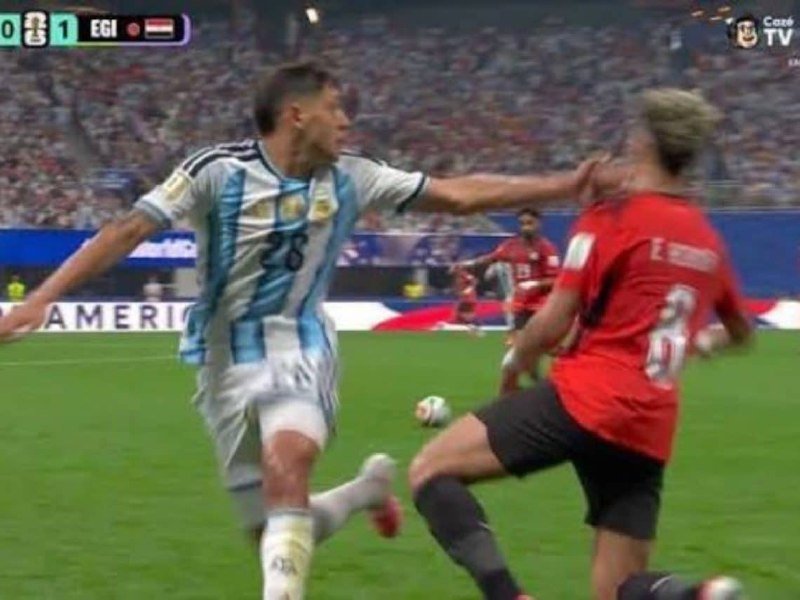
A six-goal contest at the venue staged for Tuesday's Argentina–Egypt fixture ended in stoppage-time heartache for the North Africans. According to the live wire, Egypt struck first through the opening forty-five and extended their lead to 2-0 shortly after the restart, with The Spectator Index confirming the 2-0 advantage in its 17:35 UTC bulletin on 7 July 2026. Argentina clawed back to level terms twice — first through a reply that made it 2-1, and then again to take the contest to 2-2 — before completing the comeback at the death. The Spectator Index logged the decisive third Argentine goal at 18:05 UTC, capping a match that had been scheduled, contested and concluded inside a single broadcast window on 7 July 2026.
The result, on the surface, is a routine group-stage line on a results service. It is also — in the way it has been narrated by the Telegram channels that tracked it — a small case study in how geopolitics, diaspora politics and refereeing controversies travel through a football feed.
How the match actually moved
The rhythm of the broadcast, as relayed by the @wfwitness channel and corroborated by The Spectator Index, was unusually compressed. By 17:03 UTC the Egyptian side were already ahead at half-time. Eight minutes into the second period, the North Africans had doubled their lead — a sequence that drew a single-line bulletin from the channel noting the goal and, in the same breath, flagging the presence of a Druze flag inside the Argentina end of the stadium. The framing of that second post — "In totally unrelated news, we spotted a Druze flag at the Argentina-Egypt match" — is itself a piece of reporting: it tells the reader that the channel is reading the crowd as well as the scoreboard, and that it has concluded the political reading and the sporting reading are not, in this case, separable.
Argentina's first reply landed around the 17:44 UTC mark, with @wfwitness relaying it alongside the Egypt second goal in a single bulletin — a sequencing decision that mirrored the live TV order in which the events reached the wire. Their equaliser came shortly after, and the winning goal, deep into added time, was confirmed by The Spectator Index at 18:05 UTC, roughly an hour after the first Egyptian strike. That sequence — two-goal lead, two equalisers, a 3-2 winner scored in injury time — is the kind of result that tends to settle as a footnote unless something else around it refuses to settle.
Why this game refused to settle
Two threads dragged the result sideways. The first was the refereeing. The @wfwitness channel has, across its coverage of this fixture, been emphatic that the Egyptian side was on the wrong end of multiple first-half decisions that it characterised as questionable. Independent confirmation of those specific calls, in the form of an official refereeing report or a broadcast replay breakdown, was not available on the wire by the time the match ended; the channel's read is therefore one account of the officiating, not yet an adjudication. Monexus has not independently verified the disputed incidents and the sources do not name an official or cite a written technical report.
The second thread is symbolic, and it is the one the crowd photo made visible. A Druze flag in the stands of an Argentina–Egypt match is not, on its own, a story. It becomes one when the channel that documents it treats the sightline as politically legible — when an ethnic-minority banner from the Levant, waved at a football match between an Arab North African state and a Latin American side, is recorded at the same moment the scoreline is moving. The @wfwitness channel has built a recognisable editorial line around the Syria-Lebanon-Palestine frame over the past several months; flagging the banner here is consistent with that line, and it is also consistent with the channel's broader claim that diaspora communities read football matches as proxies for home politics.
The structural read
Football coverage has always absorbed the politics of its crowds, but the speed of the contemporary wire has changed what counts as evidence. Twenty years ago, the post-match press conference would have been the first place an editor went to verify what the crowd had been doing. On 7 July 2026, the crowd reading arrived in the same Telegram channel as the goals — and in the case of @wfwitness, in the same bulletin as the Egypt second, sandwiched between two scoreline updates. That is a structural shift: the wire no longer separates the game from the stand.
It also sharpens the standard applied to referee scrutiny. A long-running complaint, voiced more loudly from African federations than from any other continental bloc, is that officials from the continent are routinely absent from the highest-stakes fixtures at World Cups, and that when they are appointed to group games the threshold for reversing marginal decisions runs against them. The complaint is structural — about appointment patterns, not about a single match — and one disputed group-stage game does not prove it. It does, however, keep the complaint on the front page every time a North African side concedes a stoppage-time winner in a fixture where earlier decisions were publicly questioned by the live wire.
Stakes and what remains unresolved
For Argentina, the win clears the path to the next round on three points and a plus-one goal difference. For Egypt, the loss is recoverable — a single group-stage defeat does not, by itself, foreclose qualification — but the sporting cost is compounded by the political exposure: every decision the Egyptian federation considers contestable is now part of the post-match file.
What the public record does not yet establish is whether the Egyptian Football Association will file a formal complaint with FIFA over the officiating, or whether the presence of the Druze flag inside the Argentina end will generate any diplomatic follow-up from Cairo or from Beirut. The wire has not carried either enquiry by the time of publication, and Monexus has not located a statement from either federation. The sources disagree, in other words, on what to emphasise — and the consensus on what the match means, beyond the scoreline, will only sharpen once the official post-match documents are published.
This piece sits inside the Monexus geopolitics desk because the live wire around the match was, from the first goal to the last, as much a story about who watches the crowd and how, as it was about the football itself.
Wire provenance
This editorial synthesis draws on the following public wire/social posts:
- https://t.me/osintlive
- https://t.me/osintlive
- https://t.me/osintlive
- https://t.me/wfwitness
- https://t.me/wfwitness
- https://t.me/wfwitness
- https://t.me/wfwitness
- https://t.me/wfwitness
- https://t.me/GeoPWatch