Strikes on Bandar Abbas: What the Picture Tells Us, and What It Doesn't
Telegram channels logged simultaneous impact points across southern Iran on the night of 9 July 2026, but wire confirmation has not arrived. The confirmed record so far is one Iranian Navy site at Konarak, and a list of four other targets including Bandar Abbas that no government has yet claimed.
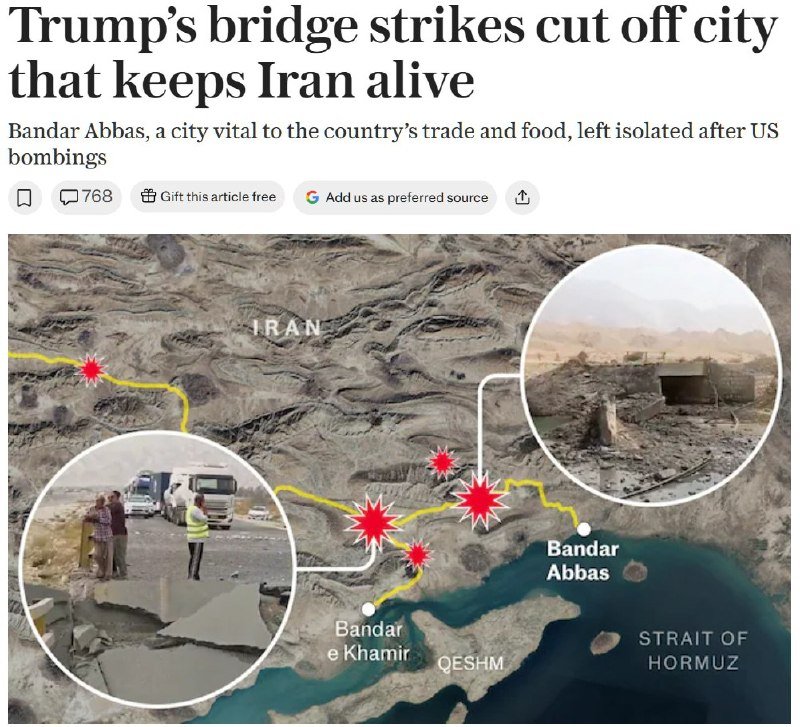
At roughly 22:17 UTC on 9 July 2026, an account posting under the handle @rnintel logged a sequence of impact points across southern Iran: Chabahar, Bandar Abbas (marked unconfirmed), Konarak, Ahvaz and Bushehr, all within a single hour and attributed to an "unidentified actor." Within eleven minutes, a second open-source account amplified a more dramatic frame: a wave of "massive, coordinated explosions" ripping through southern Iran's maritime and military hubs, plunging the Persian Gulf into "total, unmitigated chaos." Both posts came from Telegram channels that specialise in real-time monitoring of the Iran file. Neither carried wire confirmation. By the time the night closed, the gap between what the imagery seemed to show and what any official source had claimed was already the story.
That gap is the point. Open-source intelligence has accelerated the news cycle into something closer to a live tactical feed, but the feeds are not impartial. Channel operators select which clips circulate, which geolocations get pinned, and which unverified lines ("unidentified actor," "unconfirmed") survive the cut. The result is a situation in which a reader at 23:00 UTC can hold in one hand a plausible sequence of strikes on five Iranian targets, and in the other the firm silence of every government that would either confirm or deny. Bandar Abbas sits at the centre of that picture, both because its port is the operational heart of the Iranian Navy and because its name is the one piece of the puzzle that has not been nailed down.
The picture as it stands
The visible record is narrow but specific. Tasnim News, an outlet tied to the Islamic Revolutionary Guard Corps, confirmed damage at the Konarak naval site, according to a third Telegram channel (BellumActaNews) that aggregates Iranian and regional reporting. Konarak hosts the Iranian Navy's primary training and forward-deploying facilities on the Gulf of Oman. A confirmed strike there, even a small one, is not a symbolic gesture; it is a strike on the institution that mans Iran's small surface fleet. The other names on the list (Chabahar on the Arabian Sea coast, Ahvaz in Khuzestan, Bushehr on the Gulf, and Bandar Abbas as the unconfirmed fifth) describe a cluster of strategic points stretching from the Strait of Hormuz almost to the Iraqi border. Geographically, that is not a single target. It is a system.
What the imagery does not tell us is who fired. The @rnintel post used the phrase "unidentified actor" and the @osintlive amplification explicitly tagged US involvement ("🇺🇸🇮🇷") inside the framing, but tagging is editorial, not evidentiary. A flag emoji in a Telegram post is a guess about responsibility, not a confirmation. The Iranian government, as of the timestamps available, had not publicly attributed the strikes. No Western capital had claimed them. No defence ministry had issued a strike release, the kind of post-strike confirmation that typically follows a publicly acknowledged operation.
What the wire has not yet said
The absence of wire confirmation is itself a data point. Reuters, AFP, AP, BBC and the major regional outlets had not, on the timestamps visible to this publication, run datelined pieces from Bandar Abbas or Chabahar describing cratering or site damage. Telegram channels and aggregator accounts move faster than wire desks by design; a verified bulletin requires a correspondent on the ground or a named official on the record. Neither had materialised by the close of the 9 July evening in the public record. That is not the same as saying nothing happened; it is the same as saying the public, verifiable record of what happened is, for the moment, narrow.
Western diplomatic framing, to the extent it had been articulated, was that any operation against Iranian military infrastructure would have to clear a high threshold of legitimacy and would be coordinated with allies whose shipping moves through the same strait. Iran's diplomatic framing, as relayed through its state-aligned outlets, was that the strikes were an act of aggression against sovereign territory, with the standard calls for emergency Security Council consultation. Both frames are predictable. Neither is yet anchored to a specific operation that any government has admitted to conducting.
Reading the gap
A few things can be said without overreaching. First, the geographic spread of the named targets is too wide for a single cruise-missile salvo and too simultaneous for a clean sequential strike package unless the planning was meticulous. Second, the inclusion of Bushehr is the most alarming item on the list: the Russian-built nuclear power plant sits a few kilometres from the coast and any strike near it is, by definition, a strike on a civilian nuclear facility under IAEA safeguards. If the Bushehr report is accurate, it raises questions that no Telegram post can answer. Third, the fact that the only confirmed hit is Konarak, where Iranian state media itself has acknowledged damage, suggests that some of the other locations may be misidentifications, conflations, or anticipatory claims by channels trying to ride the wave of attention.
This is the part of the cycle where misinformation does the most damage. A reader who sees five confirmed-looking locations may, twelve hours later, struggle to separate which ones were verified by an Iranian outlet from which were typed by an unverified channel operator in another time zone. The honest framing is that, on the night of 9 July 2026, the public record supports a confirmed strike on an Iranian Navy site at Konarak and a sequence of unconfirmed reports of strikes at four other locations, including the strategic port of Bandar Abbas. Everything else is a layered guess about responsibility, intent, and proportionality.
What to watch next
The next forty-eight hours will determine the shape of the story. If a government claims the operation, the diplomatic and military frame firms up overnight. If Iran retaliates, the picture widens in a different direction. If neither happens, the Telegram posts remain what they are: an early, partial, and unverifiable snapshot of a night when something happened along Iran's southern coast, and the world watched it arrive in fragments. Bandar Abbas is the name to keep. It is the port that handles the bulk of the Iranian Navy's logistics, the place where the operational story will land if a confirmed account emerges. Until then, the difference between what the picture shows and what it suggests is the difference between reporting and rumour.