US strikes on Iran’s southern coast target air defences and missile sites, Iranian state media reports
A US official says the latest wave hit air defences, coastal radars, anti-ship cruise missiles and drone launchers around Sirik. Iran’s state broadcaster says the raids fell mostly on non-military areas and reports a power outage in Kuwait.
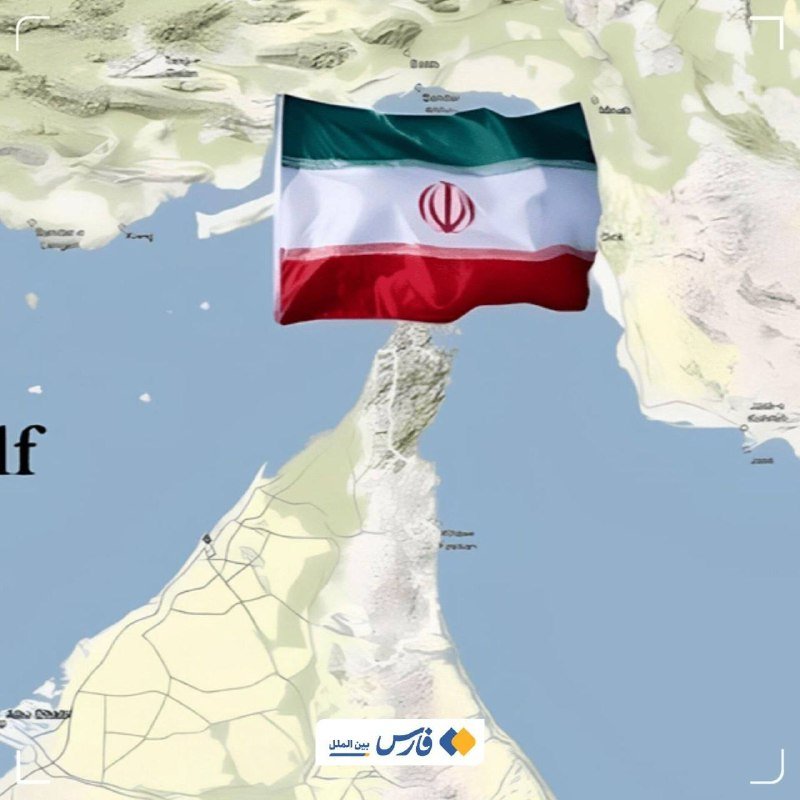
A new round of US airstrikes hit Iran’s southern coast on 7 July 2026, striking air defence systems, coastal surveillance radars, surface-to-air missiles, anti-ship cruise missiles and drone launch sites in the vicinity of the port city of Sirik, according to a US official cited by the Insider Paper wire at 22:30 UTC [https://t.me/insiderpaper]. The strikes were the latest in a sequence that began earlier the same evening, when a separate raid on the village of Ziyarat on the outskirts of Sirik was reported by Iranian state television Al Alam at 22:31 UTC [https://t.me/alalamarabic]. A further broadcast from Iranian TV at 23:27 UTC claimed that the majority of raids on the south of the country had targeted non-military areas [https://t.me/alalamarabic].
The operation extends a US military campaign against Iranian infrastructure that has, over several weeks, moved from nuclear and ballistic-missile sites into the layered air and coastal defences that ring the Persian Gulf. The choice of targets in the Sirik corridor is the operation’s most consequential signal yet: a coastal surveillance and anti-ship missile network sits directly across from the Strait of Hormuz, through which the US Energy Information Administration estimates roughly a fifth of globally traded oil passes. Striking those systems is, in effect, an act of pre-emptive denial — a way of degrading Iran’s ability to threaten Gulf shipping before any further escalation does it for them.
What was hit, and where
Sirik sits in Hormozgan province, on the Iranian side of the Gulf, north-west of the strait’s narrowest point. Iranian state media carried the first reports of blasts on its outskirts, and the Telegram channel Intelslava — which tracks open-source intelligence on the Iran file — logged a new airstrike on the city at 22:30 UTC [https://t.me/intelslava]. The US official’s enumeration is the most specific target list to surface in public: air defence systems, coastal surveillance radars, surface-to-air missiles, anti-ship cruise missiles, and drone launch sites. Each of those categories is dual-use in the sense that matters in a Hormuz scenario — they would all feature in any Iranian attempt to close or threaten the strait.
Iranian state media has contested the framing. The 23:27 UTC Al Alam broadcast pushed back on the targeting, asserting that the bulk of the raids hit non-military areas [https://t.me/alalamarabic]. The claim is unverified, and reporting from Iranian state broadcasters carries an obvious institutional interest in recasting strikes on military infrastructure as strikes on civilians. But it is also true that the Telegram-circulated video from Ziyarat shows blast damage to what appears to be a built-up area, and the targeting packages US officials describe are often co-located with the kind of small-port logistics sites that surround Sirik.
Knock-on effects across the Gulf
Beyond Iran’s coast, the wider Gulf felt the operation. At 22:49 UTC, Kuwait’s government announced an outage affecting several electrical transmission lines, according to Insider Paper [https://t.me/insiderpaper]. The report does not specify a cause. In a region where Gulf-state grids are interconnected and where Iranian and US electronic-warfare capabilities have clashed intermittently in the past, an electrical outage coinciding with US strikes on Iranian coastal infrastructure is the kind of data point that travels fast in Gulf ministries even when its proximate cause turns out to be mundane. Reuters and Associated Press have not, in the source material available to Monexus, confirmed a direct link.
The political geometry is harder than the military one. The United Arab Emirates and Saudi Arabia have spent the better part of two decades trying to insulate their energy exports from precisely this kind of escalation. The Qatari and Kuwaiti response, in so far as it can be read in a power-grid alert, is to keep the lights on and the diplomacy quiet. If the strikes expand further south — toward Bandar Abbas, toward the islands in the strait — the Gulf states’ room to stay neutral narrows quickly.
The counter-narrative, taken seriously
Tehran’s framing, as broadcast by Al Alam, is that the strikes hit civilian areas and amount to a violation of sovereignty. The structural Iranian counter-argument runs deeper than the immediate incident: the strikes, in this telling, are an extension of a long US campaign of maximum pressure, designed not to neutralise a specific threat but to foreclose Iran’s ability to project power in its own littoral. The Monexus view is that both characterisations are partly right. The target list supplied by the US official is consistent with a denial-of-area campaign rather than a punitive strike on a single site; the Iranian reports of damage to non-military structures are consistent with the way that kind of campaign is normally prosecuted, where radars and missile batteries are deliberately dispersed into populated terrain. Neither frame cancels the other.
There is also a third reading, advanced in regional commentary that the source material does not directly name but that the Monexus desk considers worth flagging: that the strikes are a coercive prelude to diplomacy — a way of shifting the bargaining position before any face-to-face talks resume. The pattern of US operations since June — hardening target sets, escalation in measured steps, public target enumerations — is more consistent with a calibrated campaign than with a full war-footing push. If that is the intent, the window for the diplomatic off-ramp is narrow. Iran’s domestic politics do not reward a leadership that negotiates under bombardment, and a single misfired air-defence missile into a Gulf-state capital changes the arithmetic for everyone.
What remains uncertain
The available reporting is enough to establish the basic shape of the 7 July strikes — the coastal location, the target categories, the Iranian counter-claim — and not enough to settle several material questions. The full target list has been disclosed only by a single anonymous US official, in language that the official services can refine or revise. The casualty count, on both sides, is not in the public source material. The cause of Kuwait’s grid outage is officially unspecified, and the link to the Iranian operation is unconfirmed. And the operational end-state — whether the strikes degrade Iran’s coastal-denial capability for weeks, days, or hours — is precisely the kind of question that open-source reporting cannot answer in real time. Monexus will update as more specific reporting reaches the wire.
Desk note: Monexus reports the US target list and the Iranian civilian-area claim at equal weight, and treats the Kuwaiti grid alert as an unlinked coincidence until Reuters, AP, or a Gulf-state ministry confirms otherwise. The framing lane is calibrated — the strikes are a denial-of-area operation, not a casus belli, and the article resists both the maximalist Washington line and the maximalist Tehran line.
Wire provenance
This editorial synthesis draws on the following public wire/social posts:
- https://t.me/insiderpaper
- https://t.me/insiderpaper
- https://t.me/alalamarabic
- https://t.me/alalamarabic
- https://t.me/intelslava