Beirut skies, Nabatieh hills: reading one night of Israeli airstrikes against Lebanon
On the evening of 7 July 2026 Israeli warplanes flew over Beirut and struck targets in southern Lebanon, including the Nabatieh direction. The reporting that night, and the gaps in it, deserve a closer read.
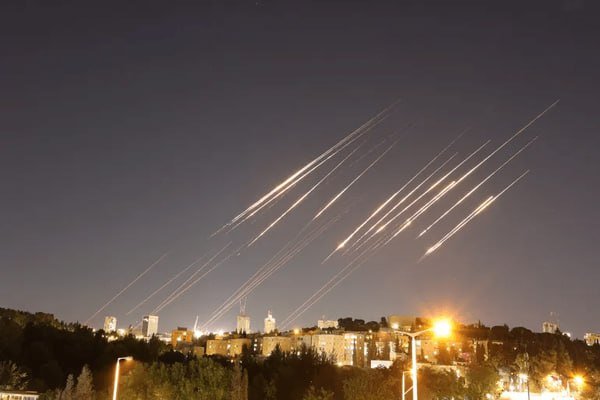
Late on the evening of 7 July 2026, Israeli air activity over Lebanon was the dominant noise on the local monitoring feeds. The Telegram channel wfwitness logged Israeli jets over Beirut and its suburbs at 23:05 UTC, with a withdrawal from Lebanese airspace reported at 23:14 UTC; earlier in the hour, at 23:02 and 23:03 UTC, the same channel tracked jets moving north along the Lebanese coast and an airstrike on the town of Nabatieh Al Fawqa, outside the security zone in southern Lebanon. By the time the Beirut flyover began, the south had already taken several hours of fire. RNIntel reported heavy Israeli artillery shelling of the Ali al-Taher heights in the Nabatieh direction at 22:28 UTC, after flares over the same ridge at 22:25 UTC. At 22:24 UTC, the same feed carried a Hezbollah denial that Israeli forces had taken the heights, insisting the hill remained under its control. In a single two-hour window the night produced a layered picture: artillery, flares, airstrikes, an air presence over the capital, and competing claims about what, exactly, was now held on the ground.
What the wires carried that night was, in effect, a stack of competing first drafts — and the gap between them is the story. This publication argues that the operating reality of the southern front is increasingly being written in real time on Telegram, with the more formal wire apparatus arriving hours later, often confirming only fragments of what local monitors had already logged.
The operational picture as it came in
Strip the night down to what is documented and three layers separate themselves. The first is the air layer: jets tracked along the coast and over Beirut, with an explicitly noted withdrawal from Lebanese airspace by 23:14 UTC. The second is the ground-fire layer: artillery on Ali al-Taher and an airstrike on Nabatieh Al Fawqa, both in the Nabatieh district of south Lebanon. The third is the claim layer: Hezbollah, via the RNIntel feed, denying Israeli control of the Ali al-Taher heights within minutes of the flares and shelling. None of these layers is, on its own, a complete picture of the engagement. Read together they sketch a tactical pattern that has become familiar — shaping fires on ridgelines that Israel has long treated as a security belt, accompanied by air presence over population centres and a press fight about who holds the high ground at the close of the day.
The geographical specificity matters. Nabatieh is not a generic southern Lebanese village in wire copy; it is a provincial capital, the seat of the Nabatieh Governorate, and Nabatieh Al Fawqa — "Upper Nabatieh" — sits above the town on a ridge that has been a Hezbollah-facing front since at least the 2006 war. Ali al-Taher is a hilltop cluster nearby, the kind of feature that changes hands and gets shelled in cycles. Beirut, eighty kilometres to the north, is not a battlefield but a signalling target. When jets are reported over the capital and suburbs on the same evening that southern ridges are being worked over with artillery, the message being sent is to two audiences at once.
The information layer is doing more of the work
The most striking feature of the night is not the strikes themselves but the medium in which they were first reported. Both feeds that surfaced the events in real time — wfwitness and RNIntel — are Telegram channels that have built followings by posting geolocated footage, soundbites from ground contacts, and timestamped screen captures often faster than the major wires file. The wires will, in due course, run their own versions: the casualty count from the Nabatieh Al Fawqa strike, the type of aircraft flown, the political reading from Beirut and from Jerusalem, the diplomatic follow-through from Washington and the Gulf capitals. That apparatus is slower but more verifiable. What it cannot do is match the minute-by-minute cadence of a Telegram war room, which is now where the public first encounters each new round of fire.
The trade-off is now familiar and worth naming plainly. Telegram is fast, granular, and frequently wrong on the specifics that matter most — unit movements, casualty figures, the identity of what was hit. The wires are slower, coarser, and more often right, but they arrive after the news cycle has already absorbed the faster version. Readers who want to understand what actually happened in Nabatieh on a given evening increasingly have to triangulate both, knowing which one to trust with which kind of fact.
The structural frame: a southern front that no longer pretends to be quiet
Set the night against the longer arc and the pattern is one of grinding, low-visibility pressure rather than a discrete operation. The Hezbollah denial about Ali al-Taher, issued within minutes of the flares and shelling, is the kind of statement that gets issued when a position is being actively contested rather than when it has been lost. Israeli artillery on a ridge that Israel has spent two decades arguing must be cleared, combined with an air presence over Beirut on the same evening, is the kind of signalling that fits a doctrine of sustained pressure: keep the southern belt worked over, keep the capital reminded that the air is contested, and let the political bill come due in the diplomacy that follows.
What neither side has any interest in saying out loud is that this is the shape the front now has. The grand campaigns of 2006 and the more recent escalations have given way to a continuous rhythm of strikes, counter-claims, and diplomatic weather. Each individual night is small. The accumulation is not.
Stakes, and what the night does not tell us
The stakes are concrete. Civilian harm in Nabatieh province from a single evening of artillery and airstrikes is the first-order cost, and the sources from the night do not yet carry a verified casualty figure — that is one of the things the wires will arrive at, belatedly. On the other side, the Israeli security concern is real: the Nabatieh-Ali al-Taher corridor sits inside the geography that Hezbollah has, at various points in the past two decades, used to threaten northern Israel, and Israeli planners do not pretend otherwise. Both facts are true on the same evening, and a serious reading holds them in the same hand.
What the night does not tell us, and what this publication cannot fill in, is the scale of what was struck, whether civilians were caught in the Nabatieh Al Fawqa strike, what aircraft were involved, and whether the Hezbollah denial about Ali al-Taher will hold by morning or will be overtaken by events. The competing first drafts will resolve themselves, or fail to, over the next twenty-four hours. For now the southern front has produced another evening's worth of Telegram posts and a Hezbollah denial, and readers are left to do the triangulation themselves.
Desk note: Monexus ran this piece on the Telegram-thread reporting wire (wfwitness, RNIntel) because those are the only feeds carrying minute-by-minute detail for the evening of 7 July 2026. Mainstream wires will catch up overnight; we will update when verifiable casualty figures, aircraft identifications, and official Israeli and Lebanese government statements arrive.
Wire provenance
This editorial synthesis draws on the following public wire/social posts:
- https://t.me/wfwitness
- https://t.me/wfwitness
- https://t.me/rnintel
- https://t.me/rnintel
- https://t.me/rnintel