Brazil’s World Cup exit lays bare a deeper crisis of identity
A 2-1 loss to Norway in the round of 16 ends Brazil’s wait for a sixth title — and forces a reckoning over an ageing squad, a hollowed-out federation, and a manager whose appointment was supposed to settle everything.
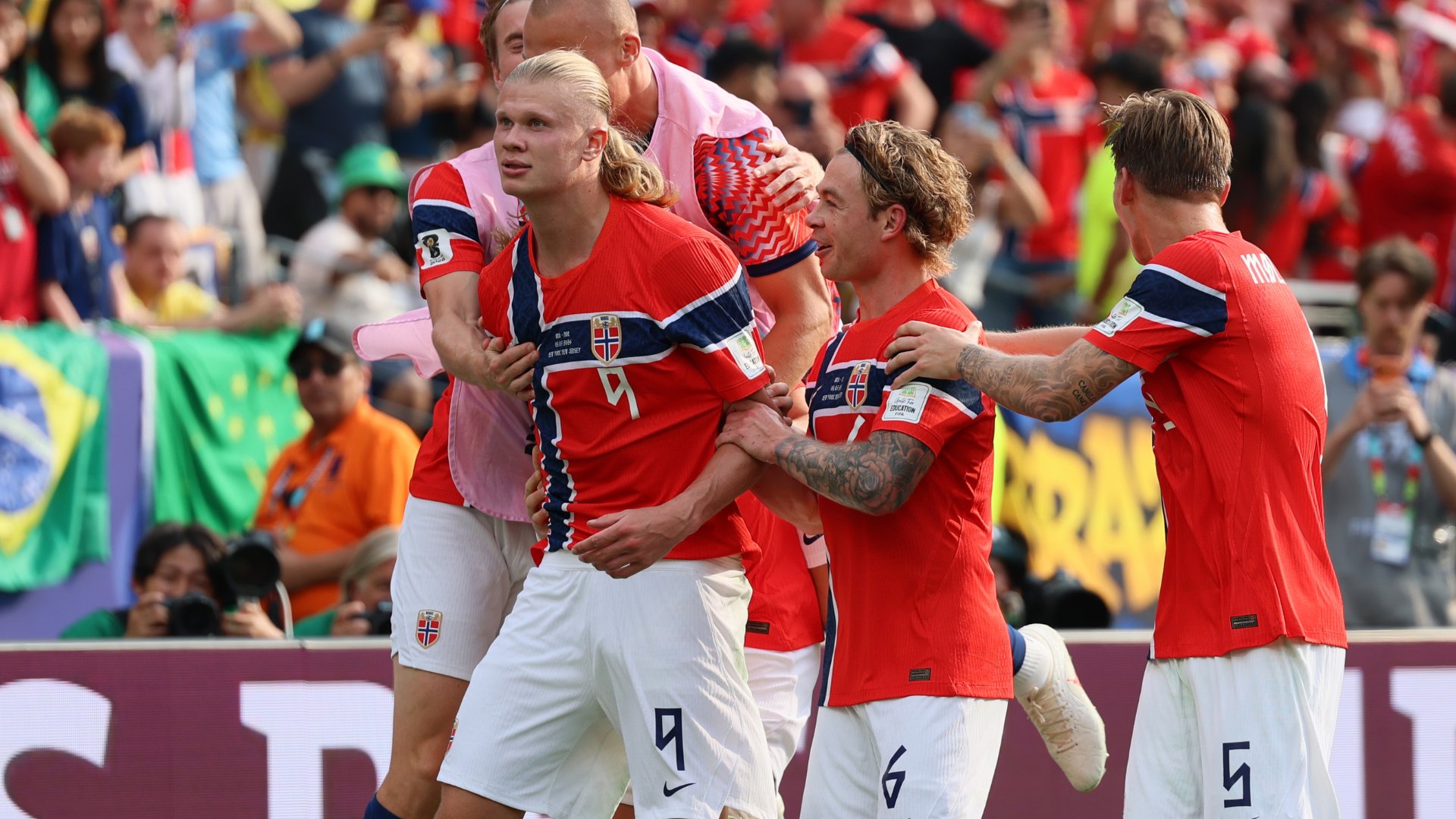
Brazil went out of the 2026 World Cup at the first knockout hurdle on Monday 6 July 2026, beaten 2-1 by Norway in the round of 16. The result did not merely end a tournament; it confirmed a drift that Brazilian journalists and former players had been naming for two years. The selicão — the five-time world champions, still chasing a record-extending sixth title that fans call the hexa — departed the competition in the same round where they have now exited three of the last four World Cups.
The squad that arrived in North America this summer is the oldest Brazil has fielded at a World Cup in the modern era, and the loss in the round of 16 was, on the evidence, deserved rather than unlucky. Norwegian youth internationals pressed high, ran the channels and refused to let the game become a touchline possession exercise. Brazil, by contrast, looked heavy, hesitant and dependent on moments rather than method. The headline — a sixth title still 24 years away — is the easy frame. The harder question is what the exit tells us about how a federation, a player pipeline and a managerial decision made in 2025 have all aged at once.
A loss that landed harder than the scoreline
The reaction in Brazil was immediate and unsparing. The press in Rio and São Paulo used words like vexame (humiliation) and vergonhoso (shameful) on the back pages the morning after. Head coach Carlo Ancelotti, hired by the Brazilian Football Confederation (CBF) in 2025 to be the steady adult in the room after the post-2022 turbulence, was openly mocked by former players on Brazilian television. Veteran voices, including members of Brazil’s 2002 squad, questioned the physical preparation of the team, the defensive structure and the selection of a squad that appeared to lack a coherent identity beyond “give the ball to the experienced forwards and hope.”
Norway, for their part, were not a fluke opponent. The Norwegian side had topped a difficult group with a blend of Premier League–tested attackers and Bundesliga midfielders, and they played the knockout round as if they expected to win it. The Guardian’s live report, filed from the stadium in the early hours of 7 July 2026 UTC, described Brazil’s first-half pressing as “intermittent at best” and noted that the Norwegian back line comfortably absorbed a 30-minute spell of Brazilian possession without conceding a clear chance. The 2-1 final score flattered the favourites.
A squad built backwards
The structural problem, as the BBC’s South American football correspondent Tim Vickery wrote on 6 July 2026, is that Brazil have built from the attack in for too long. The federation has continued to produce extraordinary forward talent — and the 2026 squad still carried forwards from the country’s most decorated clubs — but the midfield base has thinned and the defensive organisation has become a recurring liability. The decision to appoint Ancelotti, the most successful club coach of his generation, was meant to paper over those gaps with tactical maturity. Instead, it exposed them. Ancelotti inherited a roster weighted towards players in the 28-to-32 age band, and the brief to integrate the next wave appears to have been quietly dropped as results in qualifying tightened.
This is the contradiction the CBF now has to resolve publicly. The institution that produced Pelé, Sócrates, Romário and Ronaldo has spent most of the 21st century optimising for short-term tournament results — hiring and firing coaches between cycles, leaning on the individual brilliance of one or two generational attackers — while the underlying production line in the academies has been gradually hollowed out by the European pull on Brazilian teenagers. A growing share of Brazil’s most promising 17-to-20-year-olds sign for Portuguese, Spanish, English or German clubs before they have completed a senior season in the Campeonato Brasileiro. The result is a senior squad that is both older and less cohesive than its predecessors.
The Ancelotti question
Ancelotti’s appointment was sold to the Brazilian public in 2025 as the end of the federation’s revolving-door era. His track record — five Champions League titles, league championships in four countries, a reputation for managing ego in the dressing room — was supposed to be a stabilising force. Twelve months on, the case for keeping him is harder to make. The team did not progress past the round of 16; the playing style was not visibly his; and the squad selections looked more like a federation politics exercise than a coherent technical plan.
There is a counter-narrative worth airing. Ancelotti took the job late, in the middle of a European club season, with limited time on the training pitch and a roster that was not of his choosing. He cannot be blamed for the structural age profile of the squad, nor for the decade of federation decisions that put a collection of veteran forwards above a coherent midfield. By that reading, the Norwegian defeat is a federation problem wearing an Italian suit. The dominant framing, however, holds: a coach of Ancelotti’s calibre is paid precisely to overcome those constraints, and the on-field evidence was not good enough.
What the next cycle has to confront
The stakes are not abstract. A sixth World Cup is now a 2030 project at the earliest, and the federation will spend the next four years answering a question it has avoided for two decades: is the CBF willing to rebuild the production line rather than the brand? That means a serious investment in the under-17 and under-20 pathways, a structural rethink of how young Brazilian players are exported to Europe, and — most uncomfortably — a willingness to appoint a coach willing to lose now in order to win later.
For the millions of Brazilians who watched the round-of-16 defeat at 02:00 local time on the morning of 7 July 2026, the immediate question is whether the federation has the institutional courage to act on what the result plainly showed. The next 12 months will be a referendum on the answer.
This publication framed the result as a structural failure of federation planning rather than a one-off tactical defeat — a distinction the wire copy largely elided in favour of player-by-player verdicts.