Fifa and Uefa trade public blows as Balogun ruling exposes a governance fault line
A suspended red card, a Belgian appeal dismissed as 'inadmissible', and an open war of words between the two governing bodies have turned one on-field decision into a referendum on who runs football.
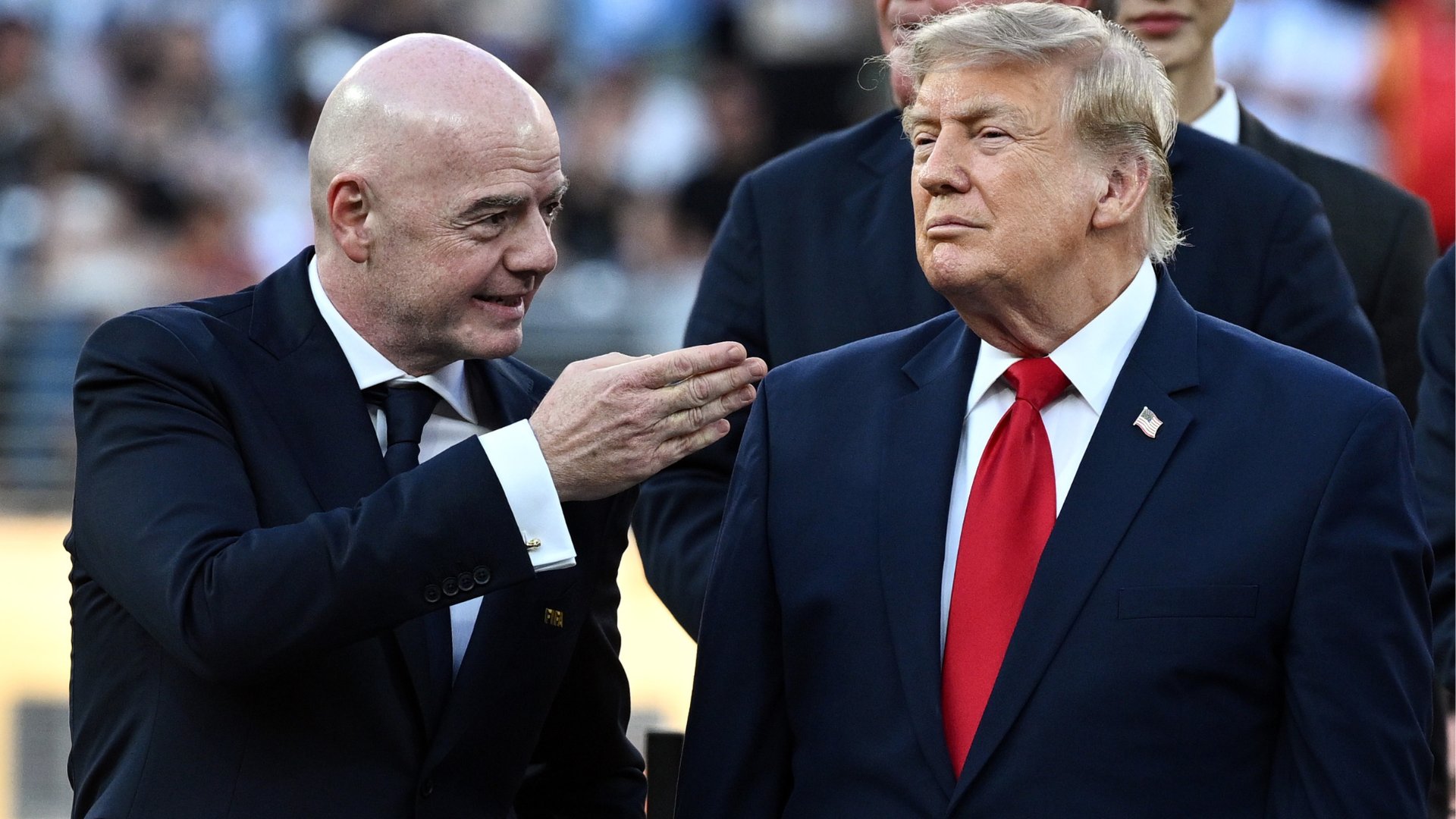
By the evening of 6 July 2026, the most consequential decision of the United States' World Cup was not taken on the pitch at all. Fifa had ruled a formal request from the Belgian Football Association for an explanation of Folarin Balogun's suspended red card "inadmissible," according to reporting on 6 July, leaving Belgium with no formal route to appeal and the USA forward available for the knockout round [ESPN, 6 July 2026, 18:41 UTC]. Within twelve hours, that procedural call had metastasised into a fully public fight between the two bodies that claim to run the sport.
The dispute is no longer about a single foul. It is about whether the global game is governed by one rule book or two — and who gets to redraw the line when the rules embarrass the hosts.
The decision, and how it was reached
Balogun was shown a red card in the USA's round-of-32 tie, a sanction that would normally rule him out of the next match. Fifa then suspended the ban, citing disciplinary procedure, and the federation confirmed the player would be available for the last-16 meeting with Belgium on 7 July. ESPN reported on 6 July that the Belgian federation's request for a written explanation was returned as "inadmissible," a ruling that closes the formal door on a challenge before it begins [ESPN, 6 July 2026, 18:40 UTC]. Sky Sports, filing on the same day, framed the practical result: Balogun took his place against Belgium, and the co-hosts were beaten 4–1 [Sky Sports, 7 July 2026, 02:00 UTC]. The reprieve, in other words, did not change the outcome; it changed the conversation.
CBS Sports called the handling of the suspension "mismanagement" that "mars" the USA's moment and the tournament at large, arguing that the procedural surprise guaranteed a descent into "chaos" regardless of what followed on the field [CBS Sports, 6 July 2026, 18:40 UTC]. A separate CBS piece on 6 July questioned whether the player himself was worth the unprecedented institutional drama [CBS Sports, 6 July 2026, 16:03 UTC]. Both lines of criticism point in the same direction: the decision was taken in a way that left every other stakeholder less, not more, able to plan around it.
Uefa goes on a war footing
European football's governing body did not treat the ruling as a one-off. The Times' Matt Hughes reported on 6 July that Uefa has "put European football on a war footing" with Fifa over the Balogun file, a phrase that signals something closer to a structural standoff than a complaint letter [The Times / Football, 6 July 2026, 15:54 UTC]. The grievance is procedural — overturning red cards through internal review is, Uefa officials argue, a common-enough mechanism that treating it as a scandal in this case amounts to a moving of the goalposts.
Fifa's reply, published on 7 July, hit that framing head-on. The governing body accused Uefa of hypocrisy, pointing out that European competitions have themselves used suspended-ban provisions in the past, and noted pointedly that Uefa said nothing about a "red line" until a Fifa decision went against a European federation [Football (London), 7 July 2026, 08:58 UTC]. The exchange is now being conducted in public, in matched press releases and on-the-record briefings, which is itself a departure from the closed-door norm between the two bodies.
The political-overreach warning
The sharpest external voice came on 7 July from Laura McAllister, a Uefa vice-president, who told the BBC there is a real risk of "an absolute cesspit" of political interference in football if the precedent set by the Balogun ruling is allowed to harden [BBC Sport, 7 July 2026, 15:43 UTC]. McAllister's choice of language is deliberate: she is a Welsh football administrator and academic speaking inside a European institutional frame, and the warning is aimed at both sides. The implication is that the next time a host federation wants a player available, the bureaucratic toolkit now exists to make that happen — and that the only constraint will be whether anyone is willing to pay the reputational cost of invoking it.
What the row is actually about
Stripped of personalities, the dispute turns on three questions. First, who owns the interpretation of disciplinary procedure when a tournament is hosted in a country whose federation stands to benefit from a particular outcome. Second, whether the practice of suspending red-card bans — used routinely at club level — is acceptable at international level when invoked late in a competition. Third, whether the two governing bodies can continue to behave as if they operate inside the same rule book.
Fifa's position is defensible in narrow procedural terms: a request framed as an "explanation" rather than a formal appeal was, on the federation's reading of its own regulations, the wrong vehicle, and was rejected accordingly. Uefa's counter is institutional: a decision taken in the days before a knockout fixture, with no published reasoning beyond a one-line inadmissibility finding, hands incumbents a lever that did not previously exist. Both can be true.
Stakes, and what remains unclear
If the trajectory continues, the winners are the federations and confederations with the administrative capacity to push procedural edges in real time — most often the host, most often Fifa. The losers are the smaller federations whose appeals machinery cannot match the legal weight of the governing body's communications team, and the players on both sides of any future red card whose availability becomes a function of politics rather than process.
Several things remain genuinely uncertain. The Times' reporting suggests Uefa's response could have "major implications for the future of the sport," but does not specify which ones [The Times, 6 July 2026]. The full text of Fifa's inadmissibility ruling on the Belgian request has not been published in the reporting reviewed here, which means the legal reasoning behind the closed door is still inferential. And the on-field result — a 4–1 Belgian win that ended the USA's tournament — will tempt some readers to dismiss the dispute as academic [Sky Sports, 7 July 2026, 02:00 UTC]. That would be the wrong lesson. The match is over; the precedent is not.
This publication has framed the Balogun file as an institutional story first and a sporting one second; the wire coverage on 6–7 July inverted that priority, leading with the red card before turning to governance. Monexus treats the dispute between the two governing bodies as the durable news.