Hormuz reopened, ceasefire cracked: how 18 hours unwound the US-Iran detente
Within 18 hours on 7 July 2026, the Trump-administration ceasefire with Tehran shifted from holding to collapsing, as Iran struck tankers in the Strait of Hormuz and Washington revoked the sanctions waiver that had let Iranian crude flow.
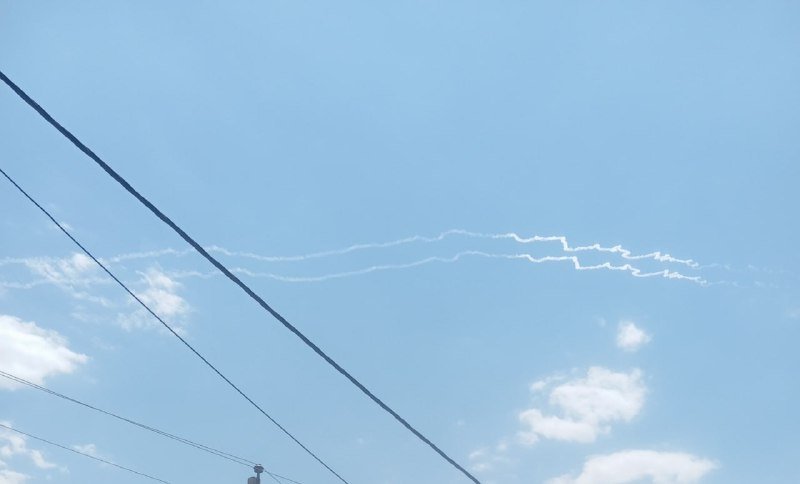
The narrow at the mouth of the Persian Gulf, never more than 21 nautical miles wide at any given point, was the stage on which an 18-month-old detente came apart on 7 July 2026. By 18:30 UTC, security analysts had raised the threat level in the Strait of Hormuz to "severe" after Iranian forces struck oil tankers transiting a corridor nominally protected by the United States Navy. By 19:36 UTC, Washington had officially revoked the sanctions waiver that had allowed Iran to resume crude exports — the financial spine of the ceasefire arrangement. By 19:44 UTC, a senior figure inside Tehran's diplomatic apparatus was publicly declaring that Iran, not the Trump administration, would determine who controlled the chokepoint.
What unfolded on Tuesday was not a sudden rupture. It was the visible collapse of a structure that had been bending for weeks. The pattern is now familiar: an interim deal is announced in tones of historic significance; commercial concessions follow; a single kinetic incident tests the architecture; and the bargain unravels because neither side is willing to absorb the cost of the other side's prestige. Tuesday's version of that pattern played out faster than most, with the financial and the military levers pulled inside a single evening.
The 18-hour sequence
The first public marker came at 18:30 UTC, when the BRICS News channel on Telegram reported that the Strait of Hormuz threat level had been elevated to "severe" following Iranian attacks on oil tankers despite the use of US Navy-protected routes. The framing was precise: tankers were sailing inside a corridor Washington had set up to insure the deal, and Iran had hit them anyway.
Twenty-four minutes later, at 18:54 UTC, BRICS News reported that the United States had declared Iran's actions "unacceptable" and warned of consequences. The phrasing — "unacceptable," with consequences to follow — has become a near-automatic formulation from the State Department and the National Security Council in moments of stress, used when the policy preference is to signal resolve without yet committing to a specific instrument.
By 18:42 UTC, Sajjad Marandi, an Iran-based commentator whose posts are circulated as a window into Tehran's negotiating posture, had written on X that if the Trump administration refused to honour every commitment under the memorandum of understanding, "Iran will not abide by its own either," and that there would be "no nuclear deal — and no normalization." The post does not represent an official Iranian government statement; it sits within the stream of figures who shape, rather than announce, Iranian policy.
At 19:22 UTC, BRICS News reported that the United States had blocked the sale of Iranian oil again, after Iran struck tankers in the Strait of Hormuz. The US position, as paraphrased by the channel: Iran "will only reap benefits if they exhibit good behavior." At 19:36 UTC, the OSINTtechnical channel on Telegram reported that Washington had officially revoked the sanctions waiver that had allowed Iran to resume oil exports — a step that "severs one of the key elements of the ceasefire agreement." The revocation, if confirmed in primary US government releases, returns Iranian crude to the sanctions regime that prevailed before the interim arrangement took shape. At 19:44 UTC, Marandi posted the line that framed the day: Iran, not the Trump administration, would control the Strait of Hormuz, and "the Islamic Republic will ensure this is clearly understood."
What the ceasefire actually was
The arrangement now under strain was, in its commercial core, a sanctions-for-restraint bargain. The United States, via a sanctions waiver, permitted a defined volume of Iranian crude to reach buyers — principally in Asia — on the condition that Iran refrain from attacks on commercial shipping in the Gulf and progress, however slowly, on the nuclear file. The waiver was the mechanism: it made Iranian oil legal for a narrow set of counterparties, and it gave Tehran dollar-denominated revenue that did not have to be routed through the informal hawala networks that dominated the pre-deal period. Once revoked, the same barrels revert to the clandestine-trade status quo of the pre-2025 sanctions maximum.
That structure had a built-in fragility. A sanctions waiver is a delegated act; it can be rescinded by the executive branch without legislative process, and its rescission is not a breach of any treaty — because there is no treaty. The reciprocal commitments on the Iranian side — restraint in the Strait, a partial freeze on enrichment advances — were also discretionary, reported but not codified in a signed document the public has seen. Both sides could, at any moment, withdraw to a prior posture and call it enforcement of the deal as they understood it.
The counter-narrative, Iranian side
The line that emerged from Tehran-adjacent voices on Tuesday — most clearly in the Marandi posts but echoed across channels that cover the file — is that Iran honoured the spirit of the arrangement while the United States tightened the letter. The tanker strikes, in this framing, were either not carried out by Iranian forces at all, or were a proportionate response to an Israeli or US action that has not yet been publicly disclosed. The revocation of the sanctions waiver, on this read, is the first breach, not the second.
This is a structural feature of the reporting environment rather than a quirk of any one channel. The events in the Strait are happening in a body of water where attribution is contested by design — Iranian fast boats, Iranian-backed Iraqi militias, Iranian-supplied Houthi cruise missiles, and unflagged vessels all operate in overlapping patterns. Western wire reporting on incidents in the Gulf has, for two decades, tended to attribute attacks to Iran on the basis of US Navy forensic bulletins, while Iranian and Iranian-adjacent outlets have tended to deny or deflect. The reader of 7 July 2026 sees two coherent narratives and no public forensic release to arbitrate between them.
The structural frame, in plain terms
What is being tested is not a treaty. It is a credit relationship between two governments that do not trust each other and that have, for the moment, a common interest in pretending they do. The credit runs in both directions: the United States extends a sanctions waiver that legitimises Iranian crude sales; Iran extends a forbearance in the Strait that protects Gulf shipping. Each side can withdraw its credit at any time, and each withdrawal is reversible only at a price. The architecture is closer to a repo trade than to a peace accord — collateralised by goodwill, callable at any moment, with no court of arbitration.
A second structural feature is the Strait itself. Roughly a fifth of the world's traded oil moves through it, including crude from Saudi Arabia, the UAE, Iraq, Kuwait and Iran. Even a partial closure, or a sustained insurance premium spike, has knock-on effects far beyond the two governments directly involved: Indian and Chinese refiners face feedstock risk; Japanese and South Korean buyers face shipping-cost risk; Gulf state revenues face price-volume risk. The market does not need a shooting war to reprice. A "severe" threat designation, sustained for a week, is sufficient to push war-risk premia and freight rates into territory that affects retail fuel prices in three continents.
A third structural feature is that the principal external actors with leverage over this credit relationship are not at the table. China is the largest single buyer of Iranian crude under the waiver regime, and India is the second. Neither has a public seat in the negotiations; both have commercial reasons to keep the waiver alive. Their quiet diplomacy, behind closed doors, is one of the few forces that might yet pull the architecture back from full collapse.
Stakes, forward view
If the trajectory of 7 July continues, the next 72 hours are likely to see at least three concrete developments: a US Treasury or State Department formal notice rescinding the waiver; an Iranian announcement of expanded enrichment activity or a new missile test, calibrated to signal capability rather than to strike; and a round of European and Asian buyer consultations, as governments that had placed orders under the waiver regime seek clarity on contract enforceability. The Strait threat level, if it remains at "severe" for a week, will show up in shipping insurance markets before it shows up in headlines.
The two governments have, at this point, a narrow corridor for re-stabilisation. A face-saving formula — a partial restoration of the waiver tied to a public Iranian statement of restraint — is achievable if both sides can bear the political cost domestically. The harder question is whether the underlying credit relationship has been damaged past the point of restoration, and whether the Iranian negotiating class is prepared to absorb another cycle of attack-revoke-restore without concluding that the structure itself is the problem. Marandi's 19:44 UTC post — that Iran will control the Strait and ensure this is understood — reads, in that light, as the public framing of a conclusion that the deal-as-deal is no longer operative, even if a tactical repair is attempted.
What remains genuinely uncertain is the operational ground truth in the Strait on Tuesday. The reporting cites attacks on tankers in US Navy-protected corridors, but the public sourcing does not yet include a Navy incident report, an insurer bulletin, or a Lloyd's Joint War Committee advisory. Until one of those primary documents is on the record, the Tuesday incident is best read as a serious signal of intent from Tehran, with the specific facts still to be confirmed. This publication will update as primary sourcing arrives.
Desk note: Monexus framed Tuesday's events as the collapse of a credit relationship rather than a treaty violation, because that is what the publicly available structure of the arrangement supports. The Iranian counter-narrative — that the US breach came first — is treated as a structural feature of the reporting environment, not as a marginal view.
Wire provenance
This editorial synthesis draws on the following public wire/social posts:
- https://t.me/bricsnews
- https://t.me/bricsnews
- https://t.me/bricsnews
- https://t.me/osintlive