McLaren's Silverstone wake-up call: Norris says the gap to rivals is 'pretty shocking'
A sold-out Silverstone delivered an 'immense' British Grand Prix — and exposed a McLaren car that Lando Norris admits is suddenly a long way from where the team thought it was.
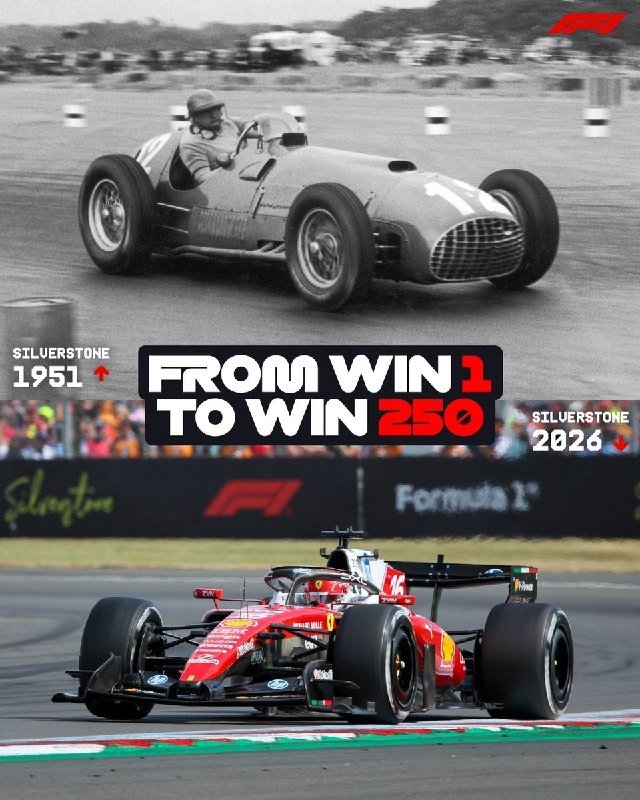
Silverstone was meant to be a homecoming. Instead, on 5 July 2026, it delivered McLaren the most uncomfortable read-out of their season: a fourth-place finish for Lando Norris at the British Grand Prix that he himself described as "pretty shocking," a result that has dragged the reigning constructors' champions back into a development fight they had assumed, until recently, was already settled.
The Sunday afternoon result was respectable on paper — Norris took the chequered flag inside the top five on a circuit where half the garage might gladly have settled for a single point — but the tone in the McLaren debrief was not that of a team celebrating. Norris used the post-race window to publicly warn that McLaren have "a hell of a lot to improve," framing the deficit to the leading runners as the kind of gap that does not close itself on factory upgrades alone.
A home race with an away-day feel
For most of the previous two seasons, Silverstone has been a McLaren-friendly track. High-speed corners, a power-sensitive rear end, and the kind of abrasive surface that punishes underfloor-sensitive rivals have historically suited the papaya car. The 2026 regulations were supposed to compress those advantages — cost caps, active aerodynamics, and the new power-unit envelope were widely tipped to flatten the field — but McLaren's pre-Silverstone run of form suggested the team had threaded the needle better than most.
The race, by Norris's own account, suggested otherwise. Norris was visibly faster than the cars behind him for large stretches but never realistically threatened the podium battle, a positional honesty that sat awkwardly with the optimism in the McLaren motorhome before lights out. The team have not released a public lap-time delta, but the driver's choice of words — "a hell of a lot to improve" — is the kind of sentence engineers parse very carefully. It implies the gap is measured in tenths, not hundredths.
The other side of the Silverstone story
It is worth setting McLaren's discomfort against the broader verdict from the paddock. Sky Sports F1 analyst Martin Brundle called the 2026 British Grand Prix an "immense" event — a judgment shared by most observers who watched the race unfold on a packed Sunday at Silverstone. The lead battle, the tyre strategies, and the unusually large British crowd all contributed to a race that, by the standard commercial measures broadcasters care about, was a clear win for the championship.
Brundle's review, however, came with a familiar complaint. The veteran commentator used his post-race column to single out a long-standing rule — the precise regulation was not specified in the Sky Sports write-up of his verdict — as the one he would change to convert races like this from "immense" to "truly epic." The implication: the spectacle on Sunday was good enough to mask the structural frustration, not good enough to settle it. McLaren's gap to the front is, in that framing, the symptom of a development race the regulations have not yet reined in.
What the wider grid is telling us
Norris is not the first leading driver of this cycle to publicly warn that the field has closed on him. The mid-2025 seasons saw similar mea culpas from rivals who had dominated earlier in the campaign; the difference this time is that McLaren are the team now issuing them, having spent the previous year explaining to others why the wind-tunnel era was over and the gap was permanent.
That rebalancing matters beyond the McLaren garage. A constructors' championship that begins to look like a five-team fight, rather than a two-team fight, has consequences for the £100m-plus commercial calendar that orbits the top three squads. Driver markets, sponsorship tiering, and the FIA's own negotiating leverage with the ten teams all move when the front of the grid gets longer. The 2026 regulations, designed to produce exactly that compression, appear to be doing their job in some respects and failing in others.
The remaining question is whether McLaren's Silverstone result was a track-specific problem — Silverstone's character changes year to year as the asphalt is resurfaced and the kerbs are re-profiled — or the leading edge of a wider trend. Norris's language pointed firmly at the latter. "Pretty shocking" is not the kind of phrase a driver uses to describe a one-off setup misread.
Stakes — for McLaren and for the championship
If Norris is right, the British Grand Prix was the moment McLaren's development lead stopped being a comfortable margin and became a deficit to recover from inside a single regulation cycle. That is the hard arithmetic of modern Formula 1: under the cost cap, the team cannot simply buy the gap back with a bigger upgrade budget; the recovery has to come from prioritisation, wind-tunnel allocation, and the rarer currency of genuinely better ideas.
The stakes for Norris personally are sharper still. A driver whose contract and public profile both rest on a championship challenge cannot afford two or three race weekends in which the car is plainly the third- or fourth-quickest on the grid. Silverstone was one such weekend. Whether Spa, Budapest and the August break produce another will determine whether McLaren's "pretty shocking" line becomes a footnote or the season's turning point.
What remains uncertain
The public accounts do not, at this stage, identify which rival McLaren now regard as the reference point — whether the gap is principally to one team or spread across several — and the team have not, as of writing, committed to a public development timeline. Brundle's specific rule-change target is also not detailed in the available Sky Sports coverage. Both are questions a serious read of the season will need answered before the picture clarifies.
Desk note: Monexus frames this around the development gap rather than the result — Norris's own word choice does the editorial work that a hot-take cannot.