Messi drags Argentina back from the brink as Egypt's World Cup dream ends in 3-2 thriller
Argentina trailed 2-0 before a Messi-led comeback sent holders Egypt out of the World Cup, underscoring why the captain still bends the biggest tournaments to his will.
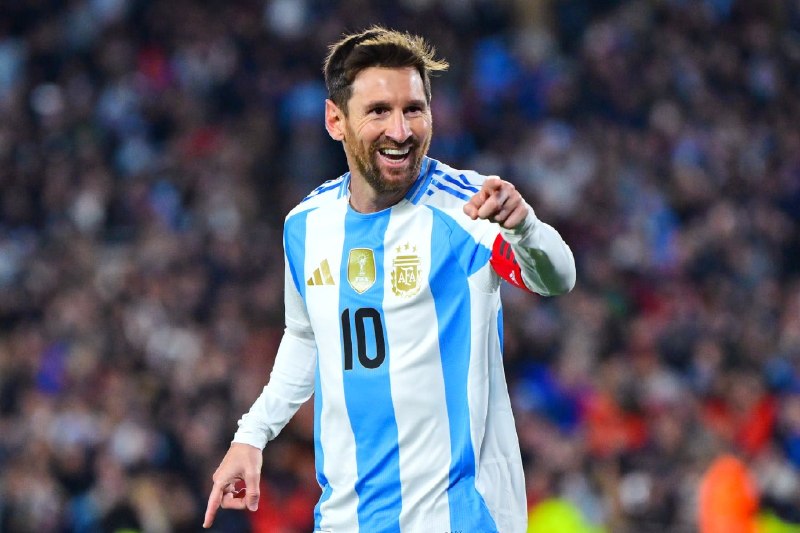
Lionel Messi walked off the pitch on 7 July 2026 with another World Cup knockout win attached to his name, but only after Argentina had spent the better part of an hour staring at the exit. The holders trailed Egypt by two goals to nil inside the first half, missed a first-half penalty through their captain, and then scored three times in a chaotic final third to win 3-2 and reach the quarterfinals. France 24's match report, filed at 18:30 UTC, framed the contest as a "thriller" in which Messi "had a first-half penalty saved and then scored a late equaliser." A parallel dispatch from Kenya's Standard outlet, timestamped 18:28 UTC, described the same sequence as Messi "inspir[ing] a late Argentina comeback from two goals down to beat Egypt 3-2."
This is the part of a World Cup that belongs to Messi, even at 39. He remains the central character of the tournament's emotional economy: the player opponents prepare for, broadcasters build graphics around, and neutrals watch to see whether he can keep bending the competition to his will. The Egypt result, in other words, is less a surprise than a recurrence.
A knockout round that almost turned
The early pattern was the part nobody in Argentina's camp wanted. France 24's report made clear that Argentina were on the wrong end of the first half; a missed Messi penalty deepened the sense that the night would slip away. Egypt, the lowest-ranked side left in the bracket going in, played the kind of disciplined, deep-block football that has historically unsettled this Argentina side — the same template Saudi Arabia used to shock them in 2022's group stage, the same posture that has undone other favourites in recent tournaments. Iran's Tasnim news agency, in a brief posted at 17:48 UTC, noted Messi's equalising goal as the decisive Argentine intervention; BRICS News, minutes later at 18:14 UTC, confirmed the result and Argentina's advance to the last eight.
What changed, in the second half, was the geometry of the game. Egypt's block held shape for stretches but began to compress as Argentina's full-backs pushed higher and the half-spaces opened behind the African side's midfield three. A 2-0 lead in a knockout match is rarely a finish line; it is, for the trailing team, a target. Messi operates best in the gap between a defence that is tiring and a game that is asking to be seized.
The Egyptian reading
Egypt's account of the night is not the same as Argentina's. A team that took a two-goal lead against the defending world champions and held it deep into the second half is not a team that has been embarrassed; it is a team that has been beaten by individual quality in transition. Standard's reporting and France 24's match summary both emphasise the collapse, but the framing is implicitly Egyptian-sympathising: a side punching above its weight, punished for the sin of sitting back. The counter-narrative is that Egypt had the match in their hands, that a two-goal lead with 30 minutes to play in a knockout round is the kind of scoreline coaches accept as a foundation rather than a finish — and that the loss reflects, in the end, the talent gap rather than a tactical mistake.
The counterpoint reads differently if you accept the structural view: that knockout football, especially in extra time and the closing stages of a half, disproportionately rewards the side with the deeper bench and the higher individual ceiling. Argentina, even on a bad night, retain the latter. Egypt, for all their discipline, do not.
What the holders look like now
There is a version of this Argentina side that is creaking. The missed penalty, the two conceded goals, the long periods in the first half when the team looked disconnected from the No. 10 — all of it points to a side that has not yet found the rhythm it had in Qatar 2022. A World Cup defence is, historically, a slog: the holders usually drop form somewhere between the group stage and the quarters, either from fixture congestion, injury, or the simple fact that everyone else has had four years to plan for them. Argentina's win here, ugly as it was, suggests the defence is not over yet. It also suggests that the team is going to need Messi to keep rescuing them, and that the supporting cast — the Lautaro Martínezes, the Julián Álvarezes, the young midfielders Scaloni has been blooding — has not yet taken the pressure off him.
That is a more honest reading than the inevitable coronation narrative. Argentina won this match, and they will likely win the next one, because Messi decided that they would. That is not a sustainable model across a four-round knockout bracket, and Scaloni's staff know it. The win extends the tournament; it does not settle the question of whether the team can win it.
The broader frame
World Cup football, in 2026, is bigger and more dispersed than ever — 48 teams, three host countries, a calendar that runs from mid-June into July with congested rest days and travel demands. The format favours the deep, the experienced, the well-staffed. A side like Egypt, who arrived with a clear plan and a hard ceiling, can take a two-goal lead against anyone for a half. Holding it is another matter. Argentina, for all their first-half wobbles, have the depth, the individual talent, and — through Messi — the player who decides finals. The holders live to fight another round. Egypt go home with a result that will not be remembered as a victory but that, structurally, was closer than the scoreline suggested.
The next round is the question. Argentina's quarterfinal opponent is the issue now, not Egypt. The holders have one more match in which Messi can be the difference. After that, the bracket gets harder, the margins get thinner, and the supporting cast has to start carrying its share of the weight.
Desk note: Monexus framed this as the Messi story it visibly is, but flagged the Egyptian reading as the credible counter-narrative — a two-goal lead against the holders is not nothing, and the structural advantage in knockout football runs through squad depth and individual ceiling, not tactical discipline alone. The wire line emphasised the comeback; we gave equal airtime to the question of how the comeback happened.
Wire provenance
This editorial synthesis draws on the following public wire/social posts:
- https://t.me/france24_en
- https://t.me/StandardKenya
- https://t.me/bricsnews
- https://t.me/tasnimnews_en