Merino's extra-time strike sends Spain past Portugal and into the World Cup last eight
Mikel Merino's stoppage-time finish broke Portuguese resistance in extra time and pushed Spain into the quarter-finals, in a match that may also have carried Cristiano Ronaldo's World Cup farewell.
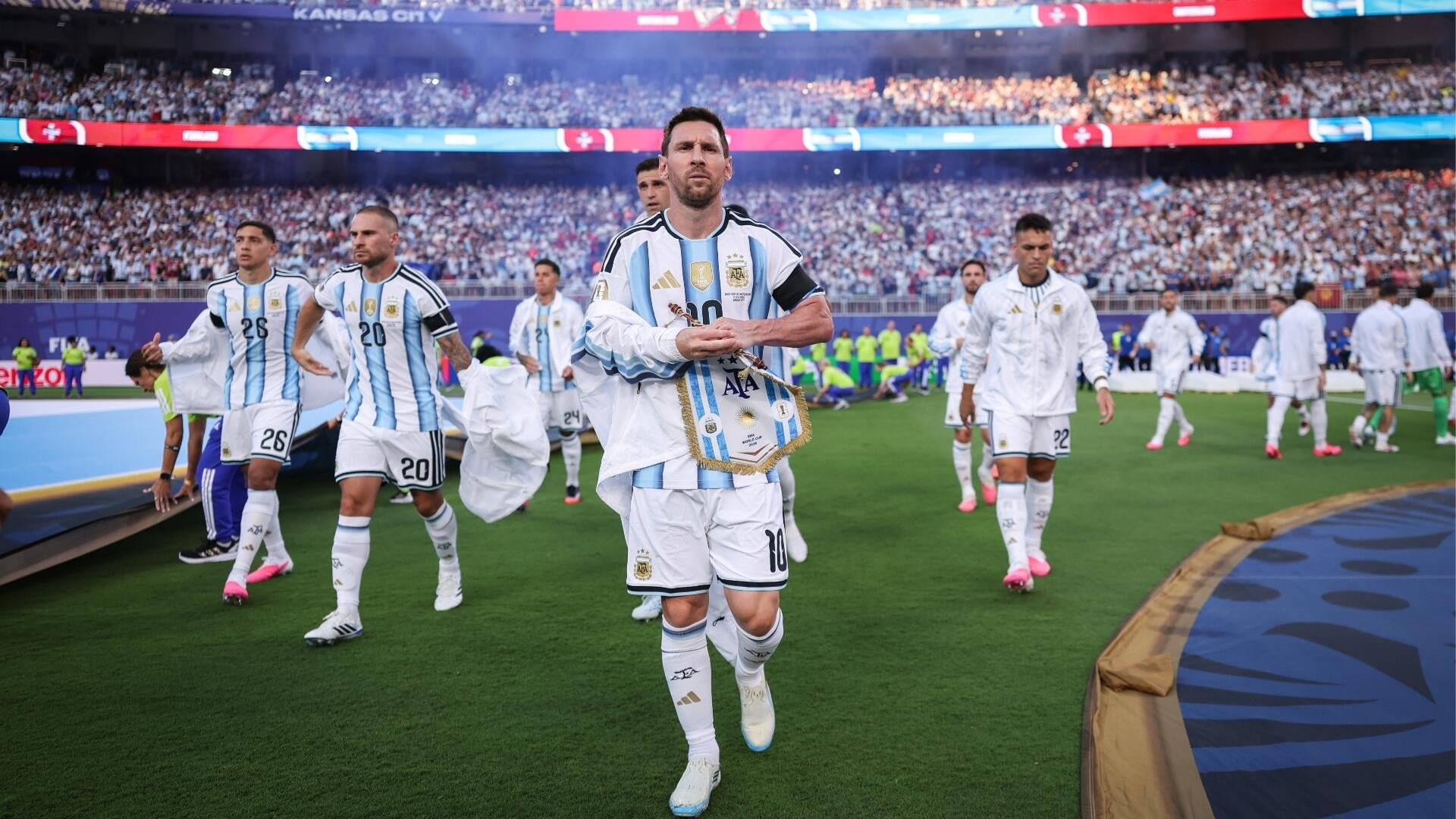
Spain are through to the quarter-finals of the 2026 World Cup after Mikel Merino's added-time finish settled a tense Iberian derby against Portugal on 6 July 2026, ending a contest that, on the Portuguese side at least, may carry the final chapter of Cristiano Ronaldo's tournament career. The goal, struck deep into the extra period at the end of the second half, was enough to break a deadlock that had absorbed everything Portugal's defence could throw at it and to send La Roja into the last eight of a tournament in which they had arrived as one of the favourites.
The strike was not the product of open play so much as of patience. Spain, having dominated possession for long stretches, kept probing the Portuguese rearguard and were rewarded in the moments most likely to break tired legs. Merino, introduced from the bench, applied the finish; the broader point is that Spain's bench depth, so often treated as a luxury in qualifying, looks like an asset in knockout football.
How the goal came
Merino's winner arrived in stoppage time at the end of extra time, a window in which the team that has done the more disciplined defensive work often cracks first. BBC Sport's match report describes the finish as a "killer goal" and credits Merino with the calm to apply it, framing the strike as the decisive moment in a match that Spain had largely controlled without ever quite pulling clear. The phrasing matters: in a knockout round defined by fine margins, "killer" is the right register — there was no scramble, no deflection credited to a defender, just a controlled finish that Portugal's goalkeeper could not retrieve.
The tactical story underneath is familiar. Spain's possession game forces opponents to defend for ninety minutes plus, and the deeper the game goes, the more the substitutes — fresh legs against tiring markers — tilt the field. Merino is a player who has made a career out of arriving in the right zone at the right moment. On this evidence, the habit travels.
Portugal's resistance, and Ronaldo's exit
Portugal were not passengers. They absorbed the bulk of possession, kept their shape, and limited Spain to the kind of half-chances that usually go in highlights rather than the scoreboard. Ronaldo, operating as he has for much of the tournament, did not have the run of the game his side needed — but neither did he disappear. Reporting from Arabic-language outlets described the Portugal captain leaving the pitch in tears after the final whistle, framing the loss as the end of his World Cup career. That characterisation has not been independently confirmed by the major Western wires at the time of writing; the framing should be treated as suggestive rather than definitive, but it is consistent with the broader arc. Ronaldo turns 41 in February 2027, and the next World Cup sits four years beyond that.
The counter-narrative is that Portugal's tournament was already a success by any realistic benchmark: a deep knockout run, a competitive showing against the side widely regarded as the strongest in the bracket, and a generation of young attackers — Rafael Leão, Gonçalo Ramos, the new Fernandes — getting meaningful tournament minutes. The framing that treats this as the end of an era is not wrong, but it is incomplete. Portugal's spine is in the process of being rebuilt; Ronaldo's exit is the most photogenic part of a quieter handover.
What the market thought
The prediction market priced Spain's overall chances of lifting the trophy at 19% immediately after full-time, per a Polymarket contract cited on social media on 6 July 2026. That figure is useful less as a precise forecast than as a temperature read: Spain moved into the latter stages as a live contender without becoming the favourite. Markets tend to compress after results like this — a win over a direct rival in the round of 16 is the kind of data point that recalibrates probability in the direction of the winner — but 19% in a field of eight suggests the book still has France, England and Brazil ahead of them on the long-run probability of being in the final on 19 July.
The structural point underneath: knockout tournaments reward teams that can win ugly, and Spain have spent the past decade being told they could not. Whether this version of La Roja is the one that finally wins the kind of 1-0, 2-1, 0-0-then-1-0 tournament that the modern game demands is the question the next round will start to answer.
Stakes and what to watch
The quarter-final will tell us more. Spain's bench scored the goal, which means Luis de la Fuente's substitutions worked — and that the squad, not just the starting eleven, is a tournament asset. Portugal go home with questions their federation will need to answer in private: whether to keep Roberto Martínez, how to manage the Ronaldo succession in public, and how to convert a generation of talented forwards into a system that does not depend on the captain dropping deep to link play.
What remains genuinely uncertain is the long-term weight of this result. A round-of-16 win over a neighbour is meaningful for bracket position and momentum; it is not yet evidence that Spain can beat France, England or Brazil across ninety minutes. The sources do not specify the venue, the attendance, or the precise minute of Merino's goal in stoppage time — details that will matter less in a week and matter a great deal more if Spain are still standing on 12 July. For now, the ledger is simple: one goal, one ticket, one match that may also have been a farewell.
Desk note: Monexus led with the match action and treated Ronaldo's exit as a strong but unconfirmed framing rather than a stated fact, in line with the editor's standing instruction to paraphrase rather than amplify single-source claims.
Wire provenance
This editorial synthesis draws on the following public wire/social posts:
- https://t.me/s/alalamarabic