Strait of Hormuz goes kinetic: what the US-Iran flare-up actually changes
US Central Command says it is striking Iranian positions along the Strait of Hormuz after attacks on commercial shipping. The escalation moves a shadow war into the world's most consequential energy chokepoint.
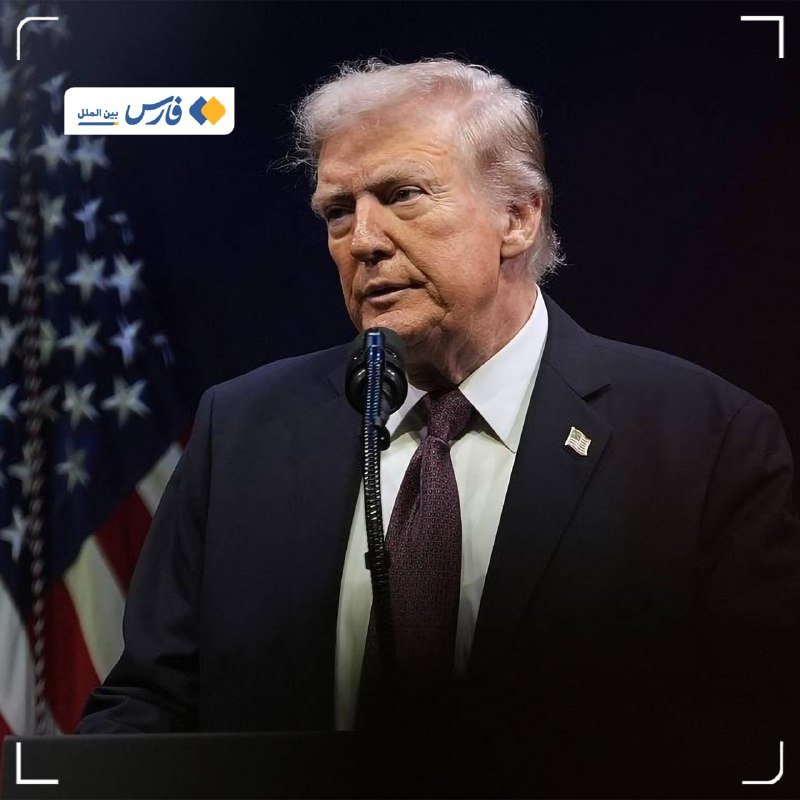
US Central Command acknowledged at 21:21 UTC on 7 July 2026 that it is conducting strikes against Iranian positions along the Strait of Hormuz, framing the operation as a direct response to Iranian attacks on commercial shipping in the same waterway. Within forty minutes, witnesses and local Iranian sources forwarded footage to the open-source channel BellumActaNews showing USAF munitions hitting the Shaheed Haqqani port area in Bandar Abbas and what the channel identified as strikes along the Bandari coast, with tanker support aircraft operating overhead. By 22:18 UTC, unverified jet activity was being reported over Isfahan, hundreds of kilometres inland from the coastal strike footprint.
The episode is the most consequential US-Iran military confrontation of the year, and the first in which the fighting has spilled directly onto the chokepoint through which roughly a fifth of seaborne oil normally transits. Whether it stays surgical or spirals will be decided in the next seventy-two hours.
What actually happened on 7 July
The CENTCOM statement, surfaced in clipped form by BellumActaNews at 21:21 UTC, is unambiguous: US Central Command forces "have begun launching a series of powerful strikes" against Iranian positions on the Hormuz, with the framing trigger explicitly named as prior Iranian attacks on commercial ships. The BellumActaNews feed then layered on operational detail in near real time — fires visible at the Shaheed Haqqani port facility in Bandar Abbas by 22:08 UTC, accompanied imagery of the city's skyline at 22:20 UTC, and concurrent reporting that multiple USAF tankers were airborne in support of the strike package.
Bandar Abbas is not a symbolic target. It is the main port complex on Iran's southern coast, the home base of much of the Islamic Republic of Iran Navy, and the terminal infrastructure that handles a meaningful share of Iran's own export logistics. Striking it is qualitatively different from striking a Revolutionary Guard missile site in some distant province. It brings the war to the coastline, and the coastline is the Hormuz.
What is still thin in the reporting
Two large caveats belong on the record. First, the strike narrative is currently running on a single channel ecosystem: BellumActaNews, an open-source Telegram feed, is the source for both the CENTCOM quote and the on-the-ground footage forwarded by "local Iranian sources." No major wire has independently confirmed the casualty footprint, the specific facilities hit, or the Isfahan airspace claim. Second, the counter-narrative from Tehran — what, precisely, Iran struck on the waterway before the US response — is not in the source set. CENTCOM's framing of "Iranian attacks against commercial ships" stands as the lead characterisation; the underlying maritime incident, vessel names, and any independent maritime-tracking corroboration are absent from the materials in front of us. This publication is reporting the strike; it is not yet in a position to validate the precise casus belli.
The structural frame — and why Hormuz is the line
The Strait of Hormuz is the narrowest chokepoint in the global energy system. Even a partial closure sends spot crude vertical; a sustained one is the difference between a recession and a shock. US planners have spent two decades building a posture designed to keep the strait open under Iranian harassment, and Iran has spent the same period developing the tools — fast boats, coastal anti-ship missiles, mining capability — to contest it. What changes tonight is the framing. Strikes on Bandar Abbas and on coastal positions along the Bandari coast are not a defensive sortie to escort a tanker. They are an attempt to degrade Iran's ability to threaten the strait at its source. That is escalation, even if the targets are presented as surgical.
The reading this publication finds most defensible: Washington has decided that periodic shadow-war attrition is no longer a tolerable equilibrium, and is using a shipping incident as the legal-political cover for a larger coastal-strike package. The alternative read — that this is a one-off retaliation that will end as soon as the headlines cool — is possible but harder to credit once tankers are airborne over Bandar Abbas at 22:08 UTC and unverified jet activity is being reported over Isfahan ten minutes later. The first move in a corridor dispute always looks bounded. The second is the one that defines the new line.
Stakes over the next seventy-two hours
Three things to watch. Oil: the first test is whether Brent breaks decisively above the recent range on the open tonight; the second is whether Saudi Arabia and the UAE quietly signal spare-capacity release. Maritime insurance: war-risk premiums for Hormuz transits were already elevated before tonight; the question is whether underwriters withdraw coverage entirely, which would do more to halt the oil trade than any single missile strike. Iranian retaliation: Tehran's playbook has historically involved escalation proxies — Strait of Hormuz harassment, Israeli-flagged shipping, Iraqi militia action — rather than direct counter-strikes on US assets. If that pattern holds, the most dangerous follow-on is not Tehran's response but the Israeli cabinet's, with the Gaza-war pause and a separate Iran-front pressure track now visibly merged.
The deeper stake is structural. A sustained US-Iran confrontation on the strait hands the world's largest energy buyers — China and India first among them — an immediate argument for diversifying away from seaborne Middle Eastern crude, accelerating pipeline projects from Russia and Central Asia, and treating US security guarantees over the waterway as a depreciating asset. The fighting may stay inside the chokepoint. The economic and strategic consequences will not.
This publication framed the strike around the CENTCOM statement and the open-source footage pipeline rather than relying on either Tehran's or Washington's preferred narrative; the maritime casus belli remains the largest unverified element in the picture as of 22:20 UTC.
Wire provenance
This editorial synthesis draws on the following public wire/social posts:
- https://t.me/BellumActaNews
- https://t.me/BellumActaNews
- https://t.me/BellumActaNews
- https://t.me/BellumActaNews
- https://t.me/BellumActaNews
- https://t.me/BellumActaNews