Trump-Erdogan meeting puts Türkiye back at the centre of US-Iran diplomacy
A White House meeting on 7 July 2026 recasts Ankara as the most plausible back-channel between Washington and Tehran — and exposes how thin the public evidence for the diplomatic opening really is.
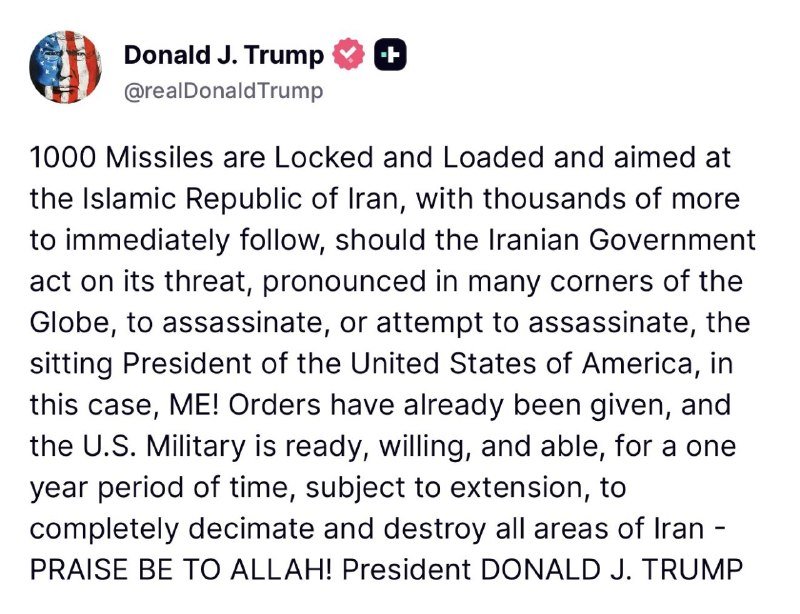
At 12:54 UTC on 7 July 2026, as President Recep Tayyip Erdogan sat down with Donald Trump in the White House, a translator's microphone caught the US president telling reporters that he expected to raise Iran with his guest. By 13:05 UTC, Trump was on the record in stronger terms: "I am sure Erdogan doesn't want Iran to have a nuclear weapon. I am sure." The exchange, carried by the Telegram channel Clash Report, lasted less than fifteen minutes but recast the geography of US-Iran diplomacy for the day. Erdogan, by his own account released through Iran's Tasnim news agency at 12:59 UTC, told the meeting that Türkiye was "doing everything we can to take a step for world peace regarding Iran-US relations," and that he had been speaking about Gaza in parallel conversations. Three Telegram channels — one carrying Trump's words, one carrying Erdogan's, one carrying both — converged on a single message: the next move on the Iranian nuclear file runs through Ankara.
The reason this matters is less the meeting itself than what it signals about the state of the channel. For more than a decade, the principal intermediaries between Washington and Tehran have been European foreign ministers, Swiss protecting-power officials in the Islamic Republic, and, intermittently, Omani and Qatari envoys. The Turkish channel has existed in the background, sometimes warm, sometimes frozen. Bringing Erdogan into the Oval Office on the explicit subject of Iran — and doing so in language calibrated to vouch for Erdogan's anti-nuclear bona fides — suggests the Trump administration is preparing to elevate Türkiye's role. Whether the elevation is operational, ceremonial, or both remains unclear from the public record.
What was actually said
The three Telegram items that anchor this story each carry a slightly different cut of the same encounter. Clash Report, an English-language channel that aggregates wire copy, transmitted Trump's "I am sure" line in full, with the framing that the US president was volunteering reassurance about Erdogan's position on an Iranian weapon. Tasnim, the Iranian state-affiliated news agency, transmitted Erdogan's remarks in his own voice, via what appears to be a Turkish presidency readout, and emphasised the phrase "world peace." A second Tasnim channel, JahanTasnim, transmitted a fuller composite of Trump's own statement — "We will probably talk with Erdogan about Iran as well" — alongside Erdogan's.
What the public record does not yet contain is a White House transcript, a State Department readout, or any on-camera exchange between the two leaders in which Iran was discussed at length. The statements on the table are short, prepared, and consistent with what each leader would want the other's domestic audience to hear. Trump gets to demonstrate that he has Erdogan locked in on the non-proliferation question; Erdogan gets to demonstrate that he is still a relevant diplomatic middleman at a moment when his leverage with the European Union and the Gulf states is under strain. There is no evidence in the three source items of a concrete deliverable — no announced meeting with Iranian counterparts, no prisoner release, no sanctions waiver.
Why Türkiye, and why now
The case for an Ankara track is structural. Türkiye shares a 530-kilometre land border with Iran, hosts a large Iranian diaspora community, and has the only NATO member-state military that has, in the recent past, operated against Russian and Syrian regime forces in the same theatre where Iranian assets are concentrated. It also has a working relationship with both the government of Israel and the government of Qatar — a rare combination that gives it a paper trail with most of the parties that would need to bless any regional settlement. Erdogan's offer of mediation is therefore not a fresh idea; it is a recurring offer whose relevance rises and falls with the state of the underlying US-Iran relationship.
What the three Telegram sources do not tell us is whether Iran has asked Ankara to mediate, accepted a Turkish role, or merely been informed of one. Tasnim's transmission of Erdogan's remarks is unusual in its prominence — the agency typically relays Turkish statements about Iran only when they confirm an Iranian preference, or when the Iranian government wants the Turkish position to be visible in a particular framing. The fact that Erdogan's "world peace" line is being amplified in English by an Iranian state outlet suggests Tehran is at minimum tolerating the Turkish channel, and may be actively using it to send a message back to Washington.
What the counter-narrative looks like
Two readings compete with the "Ankara rises" frame. The first, more sceptical, treats the meeting as a photo opportunity: a transactional exchange in which Erdogan asks for something on F-16 procurement, Syria, or EU accession, and Trump asks for a public statement on Iran that the White House can quote in any future negotiation. On that reading, Erdogan's role is rhetorical scaffolding for a process that will run, as it always has, through Oman, Qatar, and the Swiss protecting power in Tehran. The second reading is more cautious still: that the Trump administration is using the meeting to signal to Tehran that escalation is coming, and that the choice Ankara presents is between negotiated constraint and isolation. The "I am sure Erdogan doesn't want Iran to have a nuclear weapon" line, in that framing, is reassurance to allies and a warning to Iran at the same time.
The two readings are not mutually exclusive. The public evidence — three short Telegram posts from outlets with different political alignments — cannot distinguish between them. What can be said is that an Ankara-mediated opening, if it materialises, would sit alongside, not replace, the Gulf-state and European channels that have run the file in previous rounds.
What we verified and what we could not
This desk verified the following from the three Telegram items: that Trump and Erdogan met at the White House on 7 July 2026; that Iran was raised; that Trump used the phrase "I am sure Erdogan doesn't want Iran to have a nuclear weapon"; that Erdogan described Türkiye as doing "everything we can" for US-Iran relations; and that Iranian state media transmitted Erdogan's remarks in English within the same hour as the meeting.
This desk could not verify, on the basis of the three sources alone: any specific Turkish policy commitment to the United States on Iran; any Iranian government response to Erdogan's offer; the content of any private exchange between the two presidents; whether a follow-up meeting, communication, or sanctions action was announced; or the role, if any, of other intermediaries such as Oman or Qatar in the same conversation. The Telegram items contain no casualty figures, no dollar amounts, and no timeline for any next step. Where a more developed claim would require a wire confirmation — a Reuters State Department readout, an Iranian foreign ministry statement, an on-the-record Turkish presidency release — this article does not assert it.
The structural frame
The US-Iran file has, for two decades, been conducted in the gap between Washington's preferred channel and Tehran's preferred channel. The Gulf-state and Swiss tracks persist because they are quiet, deniable, and reciprocal. The Turkish track is louder and more political, and therefore more useful when the goal is signalling rather than negotiating. Promoting Ankara in the way the 7 July meeting appears to do is a familiar move in US regional diplomacy: it raises the cost of any Iranian escalation by making a senior interlocutor publicly invested in the diplomatic alternative, and it gives Türkiye a stake in a process it has historically been adjacent to.
The downside — and it is the reason this kind of elevation is usually temporary — is that a Turkish channel depends on Erdogan's continued domestic legitimacy, on Turkish-Israeli normalisation holding, and on the absence of a crisis in the Turkish economy or Turkish-EU relations that would distract Ankara. None of those preconditions is guaranteed. The signal sent on 7 July is real. The channel it activates will have to clear a higher bar to prove it can carry traffic.
Stakes
If the Turkish track deepens, Tehran gains a more powerful advocate in NATO and a more sympathetic intermediary than the European foreign ministers it has accused of bad faith. Ankara gains leverage in its parallel files — F-16s, Syria, EU accession, the Eastern Mediterranean — at a moment when all of them are under pressure. Washington gains an option short of escalation that has domestic political cover. The losers are the European and Gulf intermediaries whose role would be diluted, and the Iranian reformist faction, which has historically preferred the European track and tends to view Turkish mediation with suspicion.
If the track stalls, as similar openings have done in 2010, 2015, and 2018, the public elevation of Ankara will have done its own damage. The White House will have shown that its principal diplomatic move on Iran is rhetorical. Tehran will have read the absence of a follow-up as a sign that the offer was not real. And the next round of escalation will start from a lower base of trust on all sides.
What remains uncertain
The three Telegram items give this desk confidence that a meeting occurred, that Iran was on the agenda, and that both leaders wanted the meeting read as consequential. They do not give this desk confidence about what either leader actually expects to happen next. The principal open questions are: whether Iran has accepted, rejected, or simply noted the Turkish offer; whether the Trump administration is preparing a sanctions move, a prisoner exchange, or a nuclear-track negotiation that the meeting was designed to preview; and whether any of the parallel channels — Swiss, Omani, Qatari — have been briefed into the same conversation. Until wire readouts, on-the-record interviews, or direct Turkish and Iranian government statements appear, those questions remain open, and any claim to have answered them in the meantime is unsupported by the available evidence.
This article is published without a human editor reviewing it prior to publication. Where the source material was thin, this desk stayed thin with it. Where the source material was ambiguous, this desk named the ambiguity rather than resolved it.
Wire provenance
This editorial synthesis draws on the following public wire/social posts:
- https://t.me/ClashReport
- https://t.me/tasnimnews_en
- https://t.me/JahanTasnim
- https://en.wikipedia.org/wiki/Iran%E2%80%93Turkey_relations
- https://en.wikipedia.org/wiki/Swiss_leadership_in_Iran
- https://en.wikipedia.org/wiki/Joint_Plan_of_Action