Trump Lifts Turkey Sanctions and Floats F-35 Sales: What the S-400 Trap Looks Like Now
On 7 July 2026 President Donald Trump announced the United States is removing sanctions on Turkey and opened the door to a possible F-35 sale, ending a six-year rupture rooted in Ankara's 2017 decision to buy Russia's S-400 air defence system.
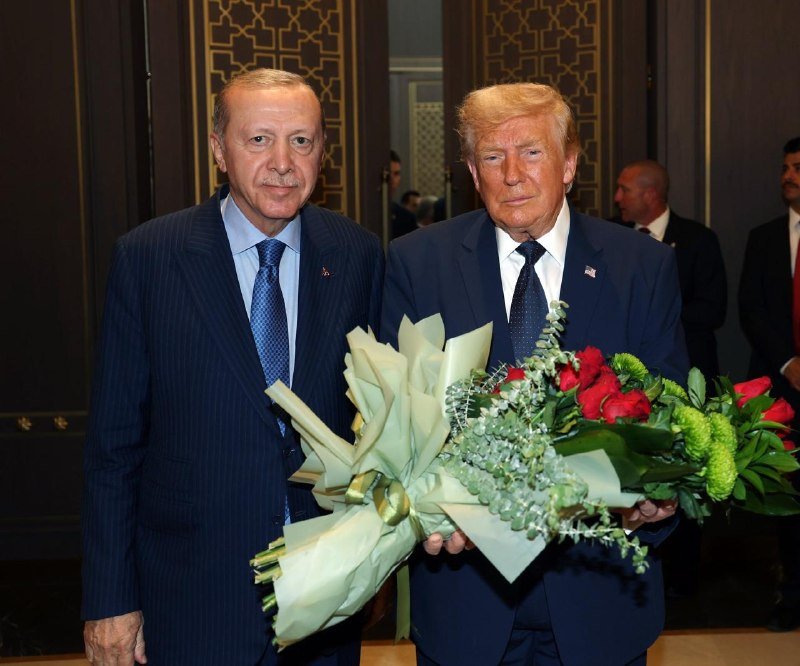
On 7 July 2026, sitting in the Oval Office at roughly 13:59 UTC, President Donald Trump told reporters that the United States is removing sanctions on Turkey. "It's time. We don't want to sanction friends," he said. "We're gonna be taking the sanctions off. OK?" Twenty minutes earlier, at 13:21 UTC, a reporter had asked him point-blank whether the US would sell F-35 stealth fighters to Ankara despite the legal restrictions still on the books from the 2017 S-400 episode. "We will make a decision," Trump replied. "I think a lot of people — and I can say that many of the people [sitting here]…" The sentence trailed off, but the intent was unmistakable. Two announcements, separated by less than half an hour, point to the same objective: re-engineering a six-year-old rupture between Washington and a NATO ally that controls the Bosphorus and the second-largest standing army in the Western alliance.
The American sanctions on Turkey are not, technically, the CAATSA sanctions that Congress mandated after Ankara took delivery of Russia's S-400 Triumf air defence system in 2019. They are a separate track — a 2020 package of US Treasury and Commerce measures imposed under Executive Order 13818 after Ankara launched its north-eastern Syria operation, and a parallel set of defence-trade restrictions applied by the State Department that have lingered into 2026. The two have been easy to conflate, and the conflation is itself part of the story. By declaring "the United States is removing sanctions on Turkey" in a single sentence, the president blurred the line between the Syria-era financial measures and the still-unresolved S-400 question. That ambiguity is the opening move.
What Trump actually said, and what he did not
The transcript captured by the Telegram channels Open Source Intel and BRICS News is short and declarative. The removal of sanctions is announced as a fait accompli — not a review, not a conditional easing. The F-35 question, by contrast, is held back for a decision. Asked whether Turkey can buy the aircraft and "what about the legal restrictions," Trump replied that a decision would be made and that "many of the people" in the room had views on the matter. He did not invoke the Countering America's Adversaries Through Sanctions Act, the statutory mechanism that would have to be waived before any F-35-related transfer to Turkey could proceed.
That distinction matters. The sanctions relief announced on 7 July is a presidential prerogative exercised through executive order; an F-35 sale to Turkey requires either a CAATSA Section 231 waiver, an inter-agency process involving the State Department, the Pentagon and Congress, or both. There is no evidence in the source material that any of those steps has begun. What the president has done is set the political conditions for those steps to become easier.
The four Telegram items in the cluster, drawn from three channels — osintlive, englishabuali and bricsnews — are consistent on the sanctions announcement and on Trump's F-35 hedge. None of them contains a written White House statement, an OFAC general licence, a State Department fact sheet or a Department of Defense press release. The reporting base is therefore the spoken word, captured on camera, and the policy specifics have to be inferred.
The S-400 trap, six years on
To understand the stakes, walk the timeline back. In 2017 Turkey signed a USD 2.5 billion contract with Rosoboronexport for two batteries of the S-400 Triumf, a long-range surface-to-air missile system. The United States warned that the system was incompatible with NATO command-and-control and that any operator of Russian strategic air defence kit would be excluded from the F-35 programme. In 2019 the first S-400 batteries began arriving at Murted Air Base outside Ankara. In July 2019 Turkey was formally removed from the F-35 Joint Strike Fighter programme; in December 2020 CAATSA sanctions were imposed under Section 231. Ankara responded by activating the Russian system, which remains in service. The S-400 batteries have since been spotted, in commercial-satellite imagery reviewed by open-source analysts, operating in southern Turkey, integrated into Turkish Air Force air defence networks, and — critically — never returned to Russia.
That last fact is what makes the F-35 question so difficult. The American position, in three administrations, has been that Turkey cannot operate Russian strategic air defence kit and fly an F-35, because the aircraft's stealth signature, its electronic-warfare suite and its data links would be exposed to Russian technical intelligence the moment a battery powered up. The Turkish position, repeated by President Recep Tayyip Erdogan's government throughout, is that the S-400 is a sovereign defence procurement and that Ankara will not return it. The two positions were, until 7 July 2026, treated as incompatible.
Trump's announcement does not resolve the incompatibility. It walks around it. The sanctions that are being lifted are the ones the Trump administration itself imposed in 2020 over the Syria incursion, not the CAATSA sanctions on the S-400 purchase. The F-35 question is "we will make a decision." If a sale is approved, it will require Congress to either waive Section 231 or to accept that the executive branch is acting outside the statute. The sources do not record any such waiver, and the statutory clock under CAATSA continues to run.
Why now: geopolitics, not aerospace engineering
The timing has little to do with metallurgy and a great deal to do with the wider geometry of the Eastern Mediterranean, the Black Sea and the Caucasus. Turkey hosts the Bosphorus and Dardanelles straits, which remain the only maritime passage from the Black Sea to the Mediterranean. It controls Incirlik Air Base, used by the United States Air Force for operations across the Levant and the Gulf. It is a NATO member that has, since 2022, refused to join the sanctions regime on Russia and has instead become a logistical node for the evasion of Western export controls, including the re-export of Western dual-use goods to Russian end-users. It is also a defence customer that, denied the F-35, has invested in its own fifth-generation programme (the KAAN, developed by Turkish Aerospace Industries, with a first flight reported in 2024) and has expanded co-production of air defence systems with Baykar and Aselsan.
A NATO ally that builds its own fighter, builds its own drones, builds its own air defence and is willing to host the only maritime exit from the Black Sea is not a country Washington can leave outside the tent for very long. The 7 July announcement reads, on the available evidence, as an attempt to pull Ankara back into the tent without forcing either side to admit publicly that the S-400 question has been resolved. Whether the F-35 is the carrot or the cudgel is the part that remains to be written.
The counter-narrative from Ankara and from Congress
The Turkish government has not, in the source material, issued a written response to the 7 July announcement. The standard read from Ankara, established in 2023 and 2024, is that the S-400 is not negotiable and that Turkey will accept an F-35 only as a sovereign operator of the system, not as a country that has been readmitted as a supplicant. The deeper Turkish position is that the S-400 episode was an American overreach: that Turkey was denied the Patriot system on acceptable terms, was denied the EUREKA-class air defence architecture, and was forced to deal with Moscow because the Western suppliers had failed to deliver. That framing has a strong constituency inside the Turkish defence establishment and a sympathetic hearing in the Global South press, which has long argued that Western alliance structures impose sovereignty costs on non-Western members.
On the American side, the counter-narrative is in Congress. The 2020 CAATSA sanctions were a bipartisan product — the law passed the Senate 98-2 in 2017, and the sanctions on Turkey in December 2020 were applied under Democratic leadership with Republican support. The 7 July announcement gives Congress an immediate test. The Senate Foreign Relations Committee and the House Foreign Affairs Committee have jurisdiction over any F-35 transfer to a country operating Russian air defence equipment. There is no public indication, in the available reporting, that either committee has been consulted. The question for the next 60 to 90 days is whether committee chairs issue a public objection, draft a sense-of-Congress resolution, or attempt to write a CAATSA waiver condition into the next National Defense Authorization Act. Each of those moves would convert the 7 July announcement from a presidential prerogative into a constitutional confrontation.
What we verified / what we could not
Verified from the source cluster:
- Trump's spoken statement that "the United States is removing sanctions on Turkey" (Telegram: osintlive, 2026-07-07T13:59 UTC).
- Trump's spoken response on the F-35 question — "We will make a decision" — to a direct reporter question on legal restrictions (Telegram: englishabuali, 2026-07-07T13:21 UTC; identical-item duplicate at 13:20 UTC).
- The same F-35 exchange confirmed via a separate English-language channel (Telegram: englishabuali, two near-identical posts 60 seconds apart).
- A third independent Telegram channel, BRICS News, carrying the sanctions announcement with the "we don't sanction friends" line (Telegram: bricsnews, 2026-07-07T13:13 UTC).
Not verified from the source cluster:
- Which specific sanctions are being lifted — the 2020 Syria-era executive-order measures, the CAATSA Section 231 sanctions on the S-400 purchase, both, or neither in their present form.
- Whether the F-35 transfer process has formally begun, or whether the announcement is purely political signalling.
- Whether Congress has been notified or consulted.
- Any official Turkish government written response.
- Any written White House, State Department, Treasury OFAC or Department of Defense document specifying scope and timing.
- The status of the S-400 batteries, which the source material does not address.
The reporting is a transcript of what the president said on camera. The policy mechanics are downstream of that transcript and have not yet been published.
Stakes
For the United States, the bet is that re-absorbing Turkey into the Western defence-procurement orbit is worth the cost of either waiving CAATSA, which would set a precedent for any future buyer of Russian strategic equipment, or of operating the law in a way the executive branch has not publicly disclosed. For Turkey, the bet is that a sanctions relief announcement translates into a real transfer of technology, industrial participation and a return to the F-35 supply chain. For NATO, the bet is that the alliance's flagship fighter programme can be sold to a country operating a Russian strategic air defence system without compromising the intelligence and electronic-warfare advantage that makes the aircraft survivable. For the wider system, the bet is that the S-400 episode can be closed without admitting that Western pressure failed, and that the next country Russia tries to pull into its defence orbit will look at Turkey and conclude that the punishment is reversible.
Each of those bets is now on the table. The 7 July announcement, on the available evidence, opens the game. It does not close it.
— Monexus framed this as a structural read of the S-400 trap, not as a deal announcement. The wire outlets running the same quotes on Tuesday afternoon are leading on the sanctions language; the F-35 question is the harder story and will run for weeks.
Wire provenance
This editorial synthesis draws on the following public wire/social posts:
- https://t.me/osintlive
- https://t.me/englishabuali
- https://t.me/englishabuali
- https://t.me/bricsnews
- https://t.me/osintlive