Strikes on Sirik and Bandar Abbas: What a Night of US Airstrikes on Iran's Southern Coast Reveals
A four-hour bombardment of southern Iran's port cities marks an escalation that goes well beyond the symbolic strike. The geography tells a story Washington has so far declined to spell out.
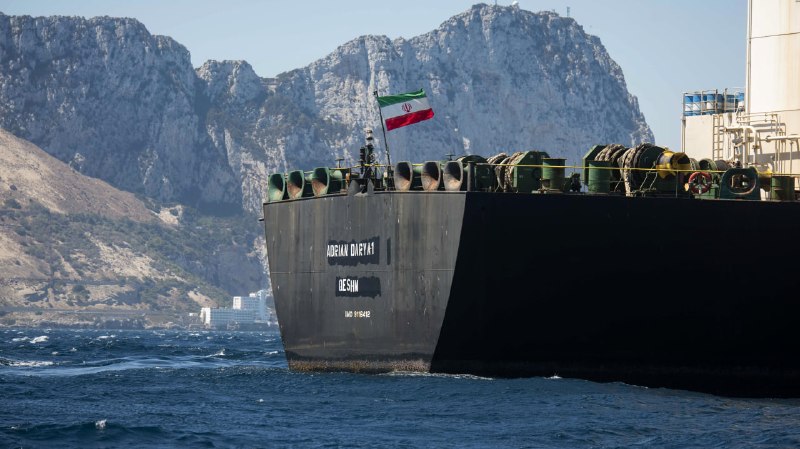
On the night of 7 July 2026, the United States military executed what it described as "a series of powerful strikes" against targets along Iran's southern coast, a corridor that includes the port cities of Bandar Abbas and Sirik and the strategically vital Qeshm Island in the Strait of Hormuz. Within roughly four hours, open-source monitors logged dozens of detonations, Iranian state media confirmed repeated waves, and geolocated footage placed fresh fires at the piers of Sirik's port. The geography, not the rhetoric, is the story of the night.
This publication finds that the strike package is best read as a contest over the Strait of Hormuz, through which a significant share of seaborne oil transits daily, rather than as a stand-alone retaliatory action. The targeting pattern — boat-building areas in Sirik, port infrastructure, and Qeshm's surrounding water-spaces — points at the asymmetric naval capabilities the Iranian state has spent two decades assembling. Whether that interpretation survives the next 48 hours of official statements remains an open question.
What the reporting actually shows
The first detonations were reported in Bandar Abbas at 21:38 UTC, with monitoring channels logging simultaneous strikes on Qeshm Island. By 21:51 UTC, one widely circulated account — relayed by a Telegram channel that tracks regional military movements — listed Sirik hit "8+ times," Qeshm Island and its surrounding waters "10+ times," and Bandar Abbas "3+ times," with footage then circulating of the attacks on Bandar Abbas (RN Intel, 7 July 2026, 21:51 UTC). The figures, drawn from a single non-state monitor, should be treated as preliminary rather than definitive.
Iranian state television IRIB subsequently confirmed a second wave. According to accounts relayed by open-source channels monitoring IRIB, ten explosions were heard in the Bandar Abbas area, with six more reported in a fishing village on Qeshm Island, and IRIB separately put the count at "six new explosions in Bandar Abbas and seven in the port of Sirik" (War Footage Witness citing IRIB, 7 July 2026, 21:59 UTC; Fotros Resistance citing IRIB, 7 July 2026, 21:44 UTC). IRIB's characterisation of the Sirik target area as a "boat-building area" is the most concrete Iranian identification of what was struck.
Geolocated footage obtained by War Footage Witness placed a camera operator at roughly 26°32'52"N, 57°05'1"E — looking toward a fire at approximately 26°31'40"N, 57°04'43"E, both coordinates consistent with the piers of the port of Sirik (War Footage Witness, 7 July 2026, 21:59 UTC). A renewed wave of strikes began again at 22:00 UTC with new explosions in Bandar Abbas and Sirik (GeoPol Watch, 7 July 2026, 22:00 UTC; RN Intel citing IRIB, 7 July 2026, 22:01 UTC), and a third wave was recorded at 22:28 UTC (RN Intel, 7 July 2026, 22:28 UTC; GeoPol Watch, 7 July 2026, 22:27 UTC), with monitors logging additional blasts in the coastal city of Sirik at 22:40 UTC (AMK Mapping, 7 July 2026, 22:40 UTC).
The Cradle, a Beirut-based outlet that has covered Iran closely, headlined the renewed strikes as having "hit Sirik and Qeshm Island in southern Iran" (The Cradle, 7 July 2026, 21:52 UTC). The cumulative picture across roughly two hours is consistent: at least three distinct waves, with the most intense and most precisely localised damage falling on the port of Sirik and the waters around Qeshm Island.
What the framing leaves out
The dominant Western wire framing of any US strike on Iran emphasises restraint, calibrated escalation, and signalling. That framing is not wrong, but it is incomplete. Two counter-frames deserve equal weight.
First, the targeting set itself. Strikes on a boat-building area in Sirik and on the waters around Qeshm are not best read as a symbolic warning. The Islamic Revolutionary Guard Corps Navy operates a fast-attack craft and drone-boat doctrine that depends on dispersed construction, concealment in the mangrove channels around Qeshm, and the ability to launch salvos from coastal sites into the narrow shipping lanes of Hormuz. The pattern of the night — repeated strikes on a single port complex, and repeated strikes on a single island's surrounding waters — is consistent with a deliberate effort to degrade the production and launch infrastructure for that doctrine. That is a campaign-level target set, not a one-off message.
Second, the Iranian state framing. IRIB's confirmation of the strikes and its public identification of the Sirik target as a boat-building area is, in itself, a piece of strategic signalling. Tehran is choosing to acknowledge the strikes and to name the target class. That is consistent with a state that wants to communicate to its own public, and to regional audiences, that the US has crossed a threshold — and to leave open the question of what comes next.
The structural read
What is unfolding in the Strait of Hormuz is best understood in plain terms. The United States has, since the 1980s, treated the free flow of oil through the strait as a core interest. Iran has, since the early 2000s, built a layered capability — naval, missile, drone, and proxy — explicitly designed to contest that interest. A strike on a port in Sirik is not, on its own, a rebalancing of that equation. But a sustained, wave-after-wave strike pattern on the production and launch infrastructure of the IRGCN is.
This publication finds that the most plausible read of the night is that Washington has decided to test, in a confined geographic box, whether a concentrated, multi-wave strike package can meaningfully degrade Iran's anti-shipping capability before any broader escalation. The geographic confinement matters. Strikes have so far been confined to the southern coast, to known IRGCN infrastructure, and to water-spaces. They have not touched Tehran, Isfahan, Natanz, or any of the conventional nuclear-related facilities that dominated the June strike cycle. The US is, in other words, choosing a different target set this time.
The implications run in two directions. If the strike package achieves a meaningful degradation of Iran's ability to threaten shipping in Hormuz, the next stage of the crisis narrows. If it does not — and that is a real possibility given the dispersal of Iran's fast-attack craft inventory — the political pressure inside Washington to widen the target set will be considerable.
The Hormuz corridor and the global economy
The Strait of Hormuz handles a significant share of seaborne crude and a higher share of LNG. Even a temporary disruption to traffic through the strait moves global benchmarks immediately. The insurance and shipping market response to the night of 7 July is therefore, in itself, a measure of how the world is pricing the new risk. Readers should expect, over the coming days, sharper moves in war-risk premia, more aggressive rerouting by major charterers around the Cape of Good Hope, and renewed pressure on Tehran's own export volumes out of Bandar Abbas.
There is also a regional domino to watch. Iranian partners in the Axis of Resistance have, on prior occasions, opened secondary fronts in response to strikes on Iranian soil. The question of whether that pattern repeats — and on what timeline — is the single most important variable for the next 72 hours. The sources available at the time of writing do not, on the public record, point to an imminent secondary activation. The absence of evidence is not evidence of absence.
What remains contested and unresolved
Honest reporting requires naming what the open-source record does not yet show. The first uncertainty is casualty. Iranian state media has, as of 22:40 UTC, confirmed the strikes and the target type, but has not, on the public feeds available at the time of writing, released a casualty figure from a ministry of health or the IRGC. Open-source monitors have not yet published geolocated imagery of a casualty site. The first wave of reporting is dominated by strike locations; the second wave, when it arrives, will be dominated by aftermath.
The second uncertainty is the legal frame. The United States has, on the public record, described the action as a "series of powerful strikes." That phrase is not, in itself, a congressional authorisation reference, an Article 51 invocation, or a coalition description. The White House has not, on the sources available here, elaborated. The framing of the strike — and whether it is presented as a discrete retaliatory action, a campaign, or something else — will be politically consequential on Capitol Hill and at the UN Security Council.
The third uncertainty is the Iranian response. Tehran's choice in the next 48 to 72 hours — whether to respond through the IRGCN doctrine that has just been struck, through a proxy activation, through a diplomatic escalation at the IAEA, or through restraint — will determine whether 7 July 2026 is remembered as the night a campaign began or the night a single operation ended.
What can be said with confidence is narrower than the headlines suggest. Three waves of strikes were executed against the southern Iranian coast in a roughly two-hour window, concentrated on the port of Sirik, the waters around Qeshm Island, and the city of Bandar Abbas. Iranian state media confirmed the strikes and identified at least one target as a boat-building area. Geolocated footage places fires at the piers of Sirik's port. The US military, on the public record, has used the language of "a series of powerful strikes." The interpretation of that pattern — what it means, where it leads, and whether it holds — is the work of the coming days.
How Monexus framed this versus the wire: the dominant wire frame treats 7 July as a discrete retaliatory action. This publication reads the target set and the geography as evidence of a more sustained operation aimed at the asymmetric naval capabilities that Iran has built around the Strait of Hormuz. The piece is built on open-source and Iranian state-media reporting available in real time on Telegram; it does not rely on the speculative sourcing that has characterised some of the wire coverage of this phase of the crisis.
Wire provenance
This editorial synthesis draws on the following public wire/social posts:
- https://t.me/rnintel/
- https://t.me/wfwitness/
- https://t.me/thecradlemedia/
- https://t.me/FotrosResistancee/
- https://t.me/osintlive/
- https://t.me/GeoPWatch/
- https://t.me/Middle_East_Spectator/
- https://t.me/AMK_Mapping/