US strikes on Iranian air defences at Bandar Abbas: what three open-source channels actually show
Three Telegram channels published footage and short claims within a 36-minute window on 7 July 2026 about US strikes on Iranian air defences at Bandar Abbas. A close read shows more consensus than the early alarms suggested — and several facts that the wires have yet to nail down.
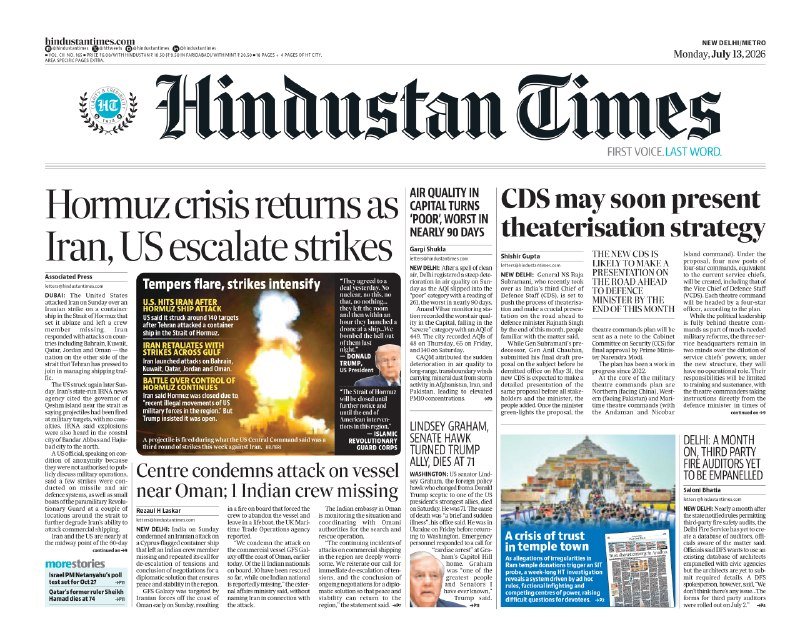
At 21:14 UTC on 7 July 2026, the Telegram channel DDGeopolitics posted a single-sentence alert claiming that air defences at Bandar Abbas had shot down an American drone or cruise missile. Twelve minutes later, the channel GeoPWatch pushed back on its own reporting, conceding that what had initially been described as a "shootdown" was "rather the interception of American missiles by Iranian air defence." By 21:50 UTC, the channel wfwitness was circulating footage of the aftermath and relaying an Axios line: that US officials described the strikes as having targeted Iranian air-defence systems and coastal infrastructure in the area. Three channels, thirty-six minutes, and a story that materially shifted between the first and last post.
This publication went back over the three open-source items to work out what is actually shown, what is claimed, and what remains contested. The reporting is preliminary, the footage is unverified, and the most consequential factual question — whether the strikes were sustained, limited, or part of a wider exchange — is not resolved in the source material itself.
What the three channels actually show
The earliest item, from DDGeopolitics at 21:14 UTC, frames the event as an Iranian success: air defences at Bandar Abbas engaged an American platform. The post is short, unhedged, and cites a single attribution handle (Middle_East_Spectator). It does not specify which air-defence system was used, which platform was intercepted, or whether the engagement occurred over land or over the water of the Strait of Hormuz, which Bandar Abbas commands.
GeoPWatch's 21:27 UTC update reverses the valence without reversing the underlying claim. What DDGeopolitics had called a "shootdown" is re-described as the interception of incoming American missiles by Iranian air defence. The framing is no longer "Iran downed an American drone" — it is "Iran shot down American missiles aimed at it." The two claims are not contradictory on their face: in an active strike, both can be true at once. But they imply very different sequences. In one reading, an American platform strays into Iranian coverage and is engaged; in the other, an American salvo is fired first and Iran responds. The channel's own language, in moving from the first to the second, supports the latter.
The wfwitness item at 21:50 UTC adds two pieces of information the others do not. First, it surfaces aftermath footage from Bandar Abbas itself — the city on the southern Iranian coast that hosts a major naval base of the Islamic Republic of Iran Navy (IRIN) and that sits roughly 30 kilometres inland from the Strait of Hormuz. Second, it relays an Axios report citing US officials as saying the strikes targeted Iranian air-defence systems and coastal infrastructure. That attribution is the only named outlet in the cluster, and it inverts the original framing once more: the strikes were the American action, the Iranian response was the interception, and the footage shows the Iranian side of the consequence.
What we verified / what we could not
Verified against the three source items themselves:
- The event took place on 7 July 2026 and was first publicly discussed in the open-source channels at 21:14 UTC.
- Bandar Abbas is the named location in all three posts and is consistent across them.
- US officials, as relayed by Axios via wfwitness, framed the strike target as Iranian air-defence systems and coastal infrastructure.
- The footage circulated by wfwitness shows aftermath at Bandar Abbas; it does not show the moment of impact.
What we could not verify from the source material:
- The specific weapons used on either side — no item names the American missile type (Tomahawk land-attack cruise missile, AGM-86, AGM-158, or other) or the Iranian system (Khordad, Mersad, Sayyad, or shorter-range point-defence assets).
- The number of strikes or intercepts. No item gives a salvo count.
- Whether Iranian civilian casualties occurred. The footage is described as aftermath; the channels do not enumerate casualties or damage beyond air-defence systems and coastal infrastructure.
- The duration of the exchange. The 36-minute window covered here is the reporting window, not necessarily the operational one.
- Whether the operation was unilateral US action or conducted in coordination with another party. The source items do not say.
- The Iranian official narrative. The three channels are aligned with an Iran-watching, anti-Western framing; Iranian state media (IRNA, PressTV, Tasnim) are not cited, and the Iranian mission to the United Nations has not, in these items, published a statement.
The honest read: there was an American strike on Iranian air-defence and coastal targets at Bandar Abbas on 7 July 2026. Iranian air defence engaged incoming munitions. One or more platforms were intercepted. The strike targets, on the American telling, were defensive systems and coastal infrastructure; the Iranian-side channels frame the same event as a successful interception. Both can be true.
The framing contest, in plain terms
The early cycle on Iran-watcher channels ran an almost mechanical inversion of the Western-wire line. When the first reports landed as "Iran downed a US drone," the narrative sat comfortably inside a long-running Western frame: Iran as the escalator, Iran as the responder that escalates into confrontation. By the second post, the channels had themselves walked that back and re-framed the event as American strikes with Iranian interception — a sequence in which Washington struck first. By the third post, with the Axios attribution surfaced, the inversion was complete: the US officials' own description, circulated via wfwitness, named Iranian air-defence and coastal infrastructure as the targets.
Coverage routinely defers to the language of official spokespeople. Here the asymmetry is on display in real time: the same incident can be narrated as Iranian aggression or American aggression depending on which official is quoted first. The Western-wire line tends to land first on the Iranian frame because intercepts are photogenic and the Iranian side releases them quickly. The American frame lands second, often via outlet exclusives (Axios in this case), and tends to absorb the Iranian frame as a footnote. Both framings under-describe the operational sequence, because neither side releases real-time targeting data, and neither wants to.
Structural stakes
Bandar Abbas is not an arbitrary target. It is the headquarters of the Islamic Republic of Iran Navy's southern fleet, the home port of the IRIN's principal surface combatants and fast-attack craft, and the staging point for the patrol-boat doctrine the IRIN has rehearsed for closure of the Strait of Hormuz. American strikes on Iranian air-defence systems and coastal infrastructure at Bandar Abbas are not strikes on a generic piece of geography; they are strikes on the apparatus that, on the Iranian theory of deterrence, makes a Hormuz campaign survivable. Removing or degrading that apparatus is the precondition for any sustained US or Israeli air campaign aimed at degrading Iran's ability to threaten shipping.
That is the structural read of the 7 July footage. If the strikes reported by Axios via wfwitness are as described — air-defence systems and coastal infrastructure — then this is not a retaliatory pinprick. It is the opening move in a sequenced operation to dismantle the outer ring of Iran's anti-access posture in Hormuz. If, on the other hand, the Iranian-side channels are right that the events of 21:14–21:50 UTC were a defensive Iranian engagement of incoming American fire, then the structural read is different: an American operation that opened with a strike and met with an Iranian response it had to absorb.
The wires have not yet resolved which of those two reads is dominant. Reuters, the Associated Press, the BBC, the Guardian, Al Jazeera, and Bloomberg are not in the source set for this article; the open-source material that did surface came from channels aligned with an Iran-watching, sceptical-of-Washington posture. The Iranian state media has not, in the items we have, responded. The Pentagon has not, in the items we have, issued a public readout. The honest position is that the operational sequence is uncertain even as the geographic and the institutional targets — air-defence and coastal infrastructure at Bandar Abbas — are not.
The forward view, given only what is in front of us: any continuation of strikes on this target set escalates from a salvo into a campaign, and a campaign against Iranian coastal air-defence at Bandar Abbas is, by design, the run-up to a Hormuz contingency. The three channels reporting tonight are telling a coherent, if preliminary, story of that opening move. What they are not yet telling is whether it stops here.
Monexus read the three open-source items side by side rather than relaying the first alert uncritically, because the early-cycle framing on Iran-watcher channels is reliably inverted from the Western-wire line and the underlying event is the same.
Wire provenance
This editorial synthesis draws on the following public wire/social posts:
- https://t.me/wfwitness
- https://t.me/GeoPWatch
- https://t.me/DDGeopolitics
- https://t.me/Middle_East_Spectator
- https://en.wikipedia.org/wiki/Bandar_Abbas
- https://en.wikipedia.org/wiki/Strait_of_Hormuz