US Strikes Hit Iranian Coast as Hormuz Ceasefire Collapses
US Central Command has launched strikes on southern Iran, including Qeshm Island and Sirik, after what Washington calls Iranian attacks on three commercial ships in the Strait of Hormuz. The episode marks the most acute escalation in the corridor since the ceasefire took hold.
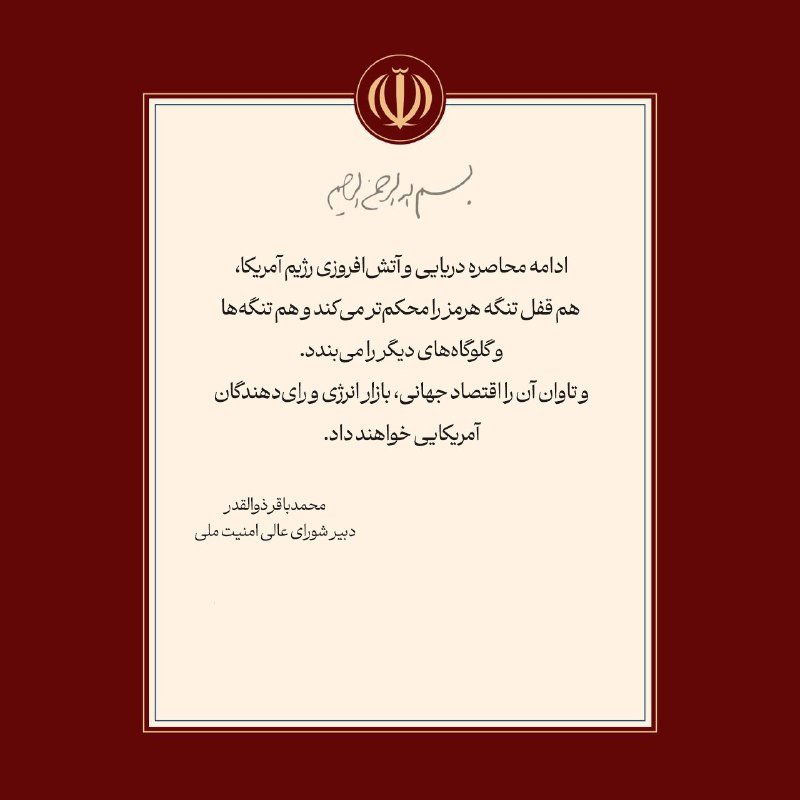
US Central Command forces launched a wave of strikes against targets on Iran's southern coast on the evening of 7 July 2026, hitting locations near Sirik, Qeshm Island and the port city of Bandar Abbas, according to regional Telegram channels and a US Central Command (CENTCOM) statement relayed by multiple monitors. Reporting compiled between 21:09 and 21:23 UTC describes eight to ten airstrikes on Sirik, two further strikes on Qeshm Island, and explosions audible across Hormozgan Province. The action came hours after Washington accused Iran of attacking three commercial vessels in the Strait of Hormuz — a charge Tehran has, in past escalations, denied or framed as retaliation for earlier maritime incidents.
What had been billed as a fragile ceasefire along the world's most important oil chokepoint appears, on the evidence available at publication, to have collapsed. The strikes are the first major US ground-and-sea-targeting operation against Iranian territory since the de-escalation framework was negotiated, and they land in a corridor that carries roughly a fifth of global seaborne oil. The pattern — a maritime incident, a US attribution, a retaliatory strike — has now repeated enough times to look less like a series of discrete failures than like a structural feature of how the two sides manage, or fail to manage, the waterway.
A corridor under pressure
The Strait of Hormuz is not a metaphor. It is a 21-mile-wide channel between Iran and Oman through which something close to twenty million barrels of oil pass each day, alongside the liquefied natural gas exports of the Gulf's largest producers. Any sustained disruption forces tanker insurance rates up, diverts shipping around Africa, and adds weeks to delivery times. The economic tail of an incident is felt well beyond the Gulf — in European refinery margins, in Indian diesel pricing, in the discount at which Iranian crude itself trades.
Reporting on the evening of 7 July places the immediate US action in Sirik, a small coastal town in Hormozgan Province south of Bandar Abbas, and on Qeshm Island, which sits at the mouth of the strait and has long hosted Iranian Revolutionary Guard Corps naval facilities. The Telegram channel "Witnesses from the Front" ("wfwitness") reported initial blasts at Sirik shortly before 21:10 UTC, with explosions also audible in Bandar Abbas and on Qeshm Island in the half-hour that followed. The DDGeopolitics channel, citing local accounts, described "at least half a dozen explosions" in Sirik and corroborated the Qeshm reports. By 21:21 UTC, "rnintel" was reporting that eight to ten strikes had hit Sirik and two more had struck Qeshm.
The official US framing arrived within minutes. CENTCOM announced it had begun "launching a series of powerful strikes against Iran," according to messages relayed by both "disclosetv" and "The Cradle Media." The trigger, as Washington described it, was Iranian action against three commercial ships in the strait — an incident the US said breached the ceasefire. Iran has not, at the time of writing, issued a public response that the channels surveyed have picked up.
The counter-narrative
Two readings of the sequence are available, and both deserve airtime. The first, which is the one US officials have put on the record, is that Iran attacked three commercial vessels in clear violation of an active ceasefire, and that the US response was a defensive, proportionate exercise of force under the rules of the arrangement. The dollar logic behind this framing is direct: commercial shipping in the strait is underwritten by international insurers who price risk in real time, and any sustained Iranian disruption forces the United States to either absorb the cost or act.
The second reading, common in non-Western commentary and echoed in some of the channels that carried the news, is that maritime incidents in the strait have been used as triggers by both sides — and that the framing of "who struck first" is often settled by the side with the faster communications stack. Iranian-aligned outlets have, in past cycles, alleged that US or allied action preceded Iranian retaliation and that the official US narrative arrives after the fact. "The Cradle Media," which carried the CENTCOM announcement, has historically framed US military action in the Gulf as unprovoked escalation; the channel's plain repetition of the US statement on 7 July should be read in that context.
A third, more structural reading: the ceasefire itself was always an arrangement between two parties with incompatible red lines, and the question was never whether it would hold but how it would fail. By that account, the strikes are not a deviation from a working peace but the predictable rupture of a working war.
Structural frame
What the 7 July episode illustrates, beyond the immediate exchange of fire, is the durable pattern by which the United States and Iran manage the Strait of Hormuz. Maritime incidents in the corridor are followed by US attributions; US attributions are followed by strikes; strikes are followed by Iranian counter-claims and, eventually, by a new round of negotiations. The cycle has a built-in rhythm, and the actors on both sides have learned to operate inside it.
The deeper frame is about who pays for the cycle and who profits from it. Insurance premiums for tankers transiting Hormuz spike with each incident; refiners in Asia absorb the cost in narrower margins; and the political weight of the corridor ensures that any US administration, of either party, inherits the same playbook. Iran, for its part, has used the threat to the strait as leverage in negotiations over sanctions, nuclear inspections, and the fate of frozen assets. The result is a system in which both sides have an interest in episodic escalation that does not quite tip into full war.
That equilibrium, if that is what it is, just took its sharpest hit since the ceasefire was negotiated. Strikes on Sirik and Qeshm put Iranian military infrastructure inside the strait at risk, and any Iranian response — whether at sea, through proxies, or in the nuclear file — would be measured against the new baseline. The next seventy-two hours will determine whether the episode is contained or whether the cycle breaks into a wider conflict.
Stakes and what to watch
The immediate stakes are concrete. Roughly a fifth of global seaborne oil transits the strait; sustained disruption would push Brent crude sharply higher and tighten diesel supply across South and East Asia within days. Insurance markets for Hormuz transits, which had eased under the ceasefire, will reprice the moment trading desks reopen. For Iran, the strikes are the first direct US action against its southern coast in this episode, and any retaliation will be calibrated to demonstrate that the cost of further escalation is real. For the United States, the operation is a test of whether maritime-triggered strikes produce a controllable response or an uncontrollable one.
What remains genuinely uncertain, on the sources available at publication, is the full extent of the damage inside Iran, the identity of the specific targets struck, and the Iranian government's formal response. The Telegram channels surveyed agree on the locations and approximate number of strikes; they do not yet agree on casualties, on whether Iranian air defences engaged, or on whether the operation is intended as a one-off or the opening of a sustained campaign. Readers should expect those details to harden over the next twenty-four hours as wire reporting catches up to the on-the-ground accounts.
The deeper question is whether the cycle that has governed US-Iran friction in the strait for the better part of a decade can survive its own logic. Episodes of this kind are typically resolved by a new arrangement that defers the next rupture rather than preventing it. Whether the 7 July strikes accelerate that negotiation or short-circuit it is the question that will define the region's near-term trajectory.
This publication has framed the 7 July episode as the collapse of a ceasefire rather than as the start of a new war, on the evidence available at publication. The Telegram channels cited carry the on-the-ground accounts; the wire confirmations will follow. Where the US framing and the Iranian-aligned framing diverge, both have been presented.
Wire provenance
This editorial synthesis draws on the following public wire/social posts:
- https://t.me/wfwitness
- https://t.me/DDGeopolitics
- https://t.me/rnintel
- https://t.me/disclosetv
- https://t.me/thecradlemedia