Bandar Abbas in flames: what the U.S. strike on southern Iran actually signals
A wave of coordinated strikes hit southern Iran's ports and naval assets overnight, hours after the state funeral of Ayatollah Khamenei, exposing the regional off-ramp as the succession crisis begins.
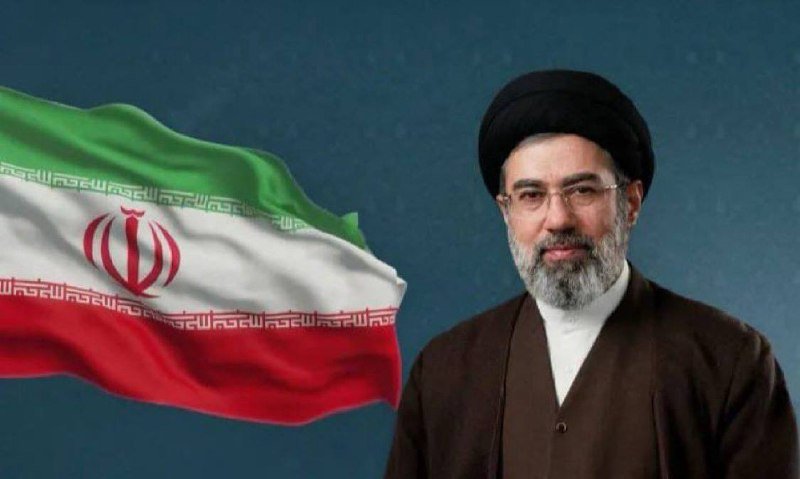
Flames tore through the Shahid Rajaei container terminal at Bandar Abbas before midnight local time on 9 July 2026, with unverified Telegram channels tracking a wave of coordinated explosions that also lit up Chabahar port, the Konarak naval base, Bushehr and Ahvaz in southern Iran. IRGC-linked Fars News reported eight Iranian Air Force and Navy personnel killed in the overnight strikes, the first formal casualty figure to surface on the record. CNN and Axios, citing American officials, said the US military held back follow-on strikes on Thursday morning at the urging of regional mediators trying to keep the exchange from sliding into open war.
The headline out of southern Iran is not the explosions themselves. It is the four-month shadow behind them. Friday also brought the state funeral of Ayatollah Ali Khamenei, killed in an airstrike four months earlier and buried under a flag-draped coffin as fighting with the United States resumed across two consecutive days. Iran is simultaneously burying the architect of its regional posture and absorbing another round of strikes on the assets that posture rests on. The two events together signal that the post-October architecture of Middle East deterrence has not survived contact with reality.
What got hit, and what that list tells you
The strike package, as assembled from open-source feeds in the early hours, is unusually broad for a single night. Chabahar and Bandar Abbas are the two pillars of Iran's Indian Ocean and Persian Gulf commercial shipping footprint. Konarak hosts an Iranian Navy facility on the Gulf of Oman coast. Bushehr carries the country's only operating civilian nuclear reactor. Ahvaz sits over the Khuzestan oil fields, the bulk of Iran's crude export base. A strike package that lights up all five at once is not a precision campaign against a single nuclear or missile site. It is a strike package designed to degrade the system that keeps Iran's regional force projection running.
The choice of targets also tells a story about how Washington and any partners are choosing to apply pressure at this stage of the conflict. Ship identification work from open-source trackers has identified the vessel pattern around the Gulf of Oman strikes through July, suggesting the maritime dimension of any escalation has been under continuous surveillance long before Thursday night. Striking the shipping terminals alongside the naval base suggests the goal is not annihilation of one program but the disruption of the logistics chain that lets Tehran move things, sell things, and threaten shipping at will.
The regional off-ramp that did not hold
Just hours before the strikes, Axios reported that American officials acknowledged the previous night's round of US strikes had been held back from a follow-on wave by regional de-escalation efforts. CNN framed it similarly: military options to strike Iran remain prepared and loaded, but the preference, for now, is diplomacy. Iran's Tasnim News, normally a regime-aligned outlet, confirmed the Konarak naval base had been hit in the first wave, an unusually rapid admission suggesting either the strike damage is impossible to deny, or Tehran wants the casualty and damage figures on the record on its own terms before Western wire services catch up.
The choreography matters. Regional intermediaries, almost certainly including the Gulf monarchies that have been the most alarmed by four months of escalation, appear to have bought a pause of roughly 36 hours. The pause held long enough for Khamenei's coffin to be interred and for Iranian state media to broadcast the line of succession. Then the explosions resumed. The off-ramp did not so much close as run out of road.
What the succession changes
Iran buried Khamenei on Friday under official ceremony, four months after his death in the earlier strike campaign. Coverage from the BBC's chief international correspondent focused less on the funeral rites than on what they reveal about the new leadership's negotiating posture, its internal cohesion, and its tolerance for further escalation. Open-source intelligence commentary circulating in the hours before the burial was blunt: regardless of whether war resumes in earnest, Iran is entering a period of severe domestic strain, with the economy under pressure and serious factional divisions inside the security establishment.
That is the layer the Bandar Abbas strike package is operating on. A leadership in transition, with its legitimacy still being constructed around the funeral rites, is the kind of leadership most exposed to a strike that touches the oil terminals and the naval base on the same night. The calculation in Washington and in any partner capitals may be that the window for degrading Iran's force projection is narrower now than it will be in three months, once the new leadership is fully seated and its chain of command hardened. The risk being run is the opposite: that a strike of this breadth and visibility gives the new leadership exactly the external threat it needs to paper over its internal fractures.
What to watch next
Three markers will determine whether Thursday night was an opening salvo or a one-off spike. First, whether the Bushehr nuclear facility reports reactor damage in the coming days; that would cross a threshold that the regional mediators were almost certainly trying to prevent. Second, whether Iran's new supreme leader makes a public address in the next 72 hours and what language is used; a funeral-eulogy register suggests the leadership is trying to absorb the blow, a retaliation register suggests it has decided the off-ramp is closed. Third, whether the shipping tracker pattern around the Strait of Hormuz shows the kind of vessel diversions that preceded earlier rounds of escalation through the Gulf of Oman.
The overnight strike at Bandar Abbas, whatever its exact target count, was not a strike on a program. It was a strike on the connective tissue of Iranian regional power, timed to coincide with the funeral of the man who built it. That combination is the signal. Whether it is also the start of an even larger phase depends on answers the next three days will give.
Sources
- osintlive Telegram feed, 2026-07-09, initial strike reports, casualty figures via IRGC-linked Fars News, funeral-eve analysis
- rnintel Telegram feed, 2026-07-09, list of southern Iranian cities struck (Chabahar, Bandar Abbas, Konarak, Ahvaz, Bushehr)
- FRANCE 24, 2026-07-09, Khamenei funeral coverage; new round of US-Iran attacks
- alalamarabic Telegram feed, 2026-07-09, Axios and CNN reports on US officials citing regional de-escalation efforts
- Indian Express via Telegram, 2026-07-09, Khamenei burial four months after US-Israel strikes
- BBC World via Telegram, 2026-07-09, analysis of Iran's new leadership challenges
Desk note: The open-source feed in the first hours of the strike carried target reports ahead of full wire confirmation; Monexus has marked the target list as it circulated on Telegram rather than as a single confirmed package, and flagged casualty numbers through Fars as IRGC-linked sourcing.