Treasury revokes Iranian oil waivers after Strait of Hormuz tanker strikes, sinking the May MoU
Two months after the US-Iran memorandum of understanding took effect, Washington has pulled the licence that let Iranian crude reach buyers, citing attacks on tankers in the Strait of Hormuz.
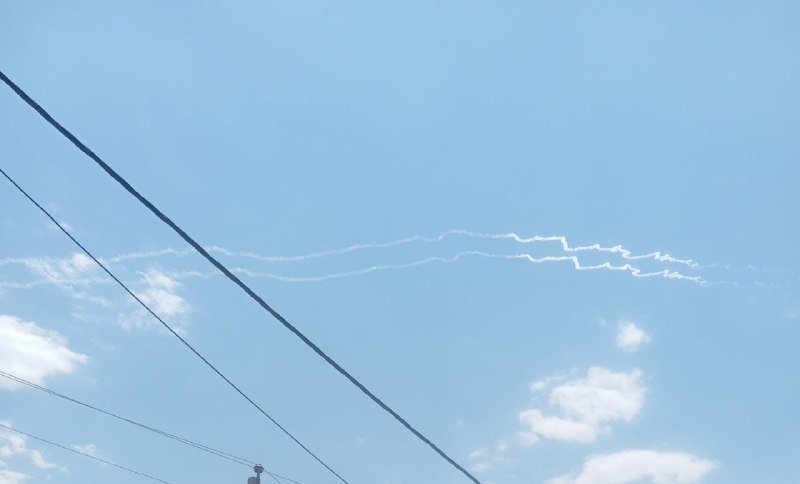
The US Treasury Department on Tuesday revoked the temporary permission that had allowed the sale of Iranian oil, petrochemical products and gas, ending a 60-day window of relief that had been issued in May as part of the US-Iran memorandum of understanding. A US official told Reuters the move was triggered by Iran's recent activities in the Strait of Hormuz, where tankers have been struck in incidents Tehran has not formally acknowledged. The decision collapses the most tangible economic benefit Iran secured from the May deal and returns the country's energy exports to a sanctions footing that, until 7 May 2026, had been the baseline for nearly a decade.
What began as a narrow confidence-building measure has ended, within a single news cycle, as a test of whether the Trump administration's coercive toolkit can be turned on and off without permanently foreclosing diplomacy. The answer, at least for now, is that Washington has chosen to revert to maximum pressure rather than allow the limited commercial opening to harden into a precedent Tehran could cite in future talks.
What the waiver actually covered
The general licence issued in May allowed foreign buyers to settle payments for Iranian crude, petrochemicals and gas without facing secondary US sanctions, on condition that the shipments stayed inside the architecture Treasury designed. The framework was time-bound to the duration of the diplomatic track, with the 60-day clock intended to be renewed in step with progress at the talks. The arrangement did not, at any point, lift the underlying statutory sanctions regime; it suspended enforcement against a defined set of transactions. That distinction is what made the revocation legally routine and economically devastating in equal measure.
Reporting from multiple channels on 7 July confirmed that the revocation covers oil, petrochemical products and gas, not auxiliary sectors such as automotive or industrial licensing. A US official, quoted via Reuters, framed the rationale bluntly: Iran would only benefit from the sanctions architecture if it exhibited what the official described as good behaviour. Treasury's accompanying statement, circulated through the same channels, emphasised that the underlying restrictions remain in force and that any future re-authorisation would require a demonstrated change in Iranian conduct.
Why the Strait of Hormuz is doing the talking
The trigger for Tuesday's reversal sits in the narrow waterway through which roughly a fifth of global seaborne oil passes. Iran's forces, or Iran-aligned actors, have struck tankers in the strait in recent weeks, according to the framing adopted by US officials and relayed through wire services. Tehran's public position has been more equivocal: officials have pointed to the strait's role as a shared transit corridor and warned that disruption serves no one's interest, without claiming or denying responsibility for specific incidents.
The asymmetry matters. For Washington, the question is whether Iran can credibly commit to non-interference in a waterway on which its own exports depend for revenue. For Tehran, the question is whether the cost of being seen to tolerate sanctions enforcement against its own fleet is greater than the cost of being seen to act in the strait. The May deal, by design or by accident, gave both sides a way to defer those questions. Tuesday's revocation ends the deferral.
The structural read
Sanctions architectures of this kind are not just instruments of economic pressure; they are also signals about the credibility of US commitments. A waiver that is issued, observed, and then withdrawn over a single provocation tells counterparties that the threshold for revocation is low. That has consequences beyond Iran. Buyers in China, India and Turkey who began routing payments through the licensed channels in May now have to weigh whether the cost of a two-month compliance regime is worth the risk of re-listing by US enforcers. Several of those buyers are already familiar with the cycle: re-routing, paperwork, the slow grind of compliance. Treasury's decision resets that clock.
Inside Iran, the immediate effect is a revenue shock. The country's budget for the fiscal year that began in March was constructed on the assumption that oil exports would run above 1.6 million barrels a day for at least part of the year; the May licence had made that target plausible. Without it, Iran returns to a smaller customer base, longer payment lags, and the discounts that shadow fleet operators have become accustomed to charging for the risk premium of touching sanctioned cargo. None of that is novel, which is itself the point: the architecture is built to be replayed.
The counter-read, and what remains uncertain
The most plausible alternative reading is that the revocation is not a closing of the door but a renegotiation of the price of reopening it. By withdrawing the licence at the first serious provocation, Washington resets the negotiating clock and gives its own negotiators a fresh baseline from which to offer partial reinstatement. Iran's most experienced operators understand this rhythm; the question is whether Iran's political leadership will treat the move as a tactical pause or as a confirmation that the diplomatic track was always going to be subordinated to the sanctions track.
What the available reporting does not specify is the scale of the tanker strikes in the Strait of Hormuz, the identity of the vessels or operators affected, or whether any country other than the United States has publicly endorsed or criticised the revocation. The Treasury statement is summarised rather than quoted at length, and the Iran-side response in the same reporting cycle is limited to the framing that the memorandum of understanding is now in tatters. Readers should treat the operational details of the strait incidents as contested until either an independent maritime authority or a recognised flag-state administration publishes a confirmed incident report.
What is clear is that the May deal, in the form it was sold to both audiences, is over. The question now is not whether the diplomatic track resumes but what its starting terms will be, and which side concedes more to put the clock back to zero.
The desk note: Where wire coverage on 7 July framed the Treasury move as a routine adjustment, the Monexus read treats it as a structural test of whether time-limited sanctions relief can survive a single serious provocation — and a reminder that the underlying US sanctions architecture on Iran remains the operating default.
Wire provenance
This editorial synthesis draws on the following public wire/social posts:
- https://t.me/middleeastspectator
- https://t.me/bricsnews
- https://t.me/fotrosresistancee
- https://t.me/rnintel
- https://t.me/clashreport