Valerie Brathwaite, Who Carved the Caribbean in Stone and Light, Dies at 87
Valerie Brathwaite, the Trinidad-born abstract sculptor who spent decades drawing the geometry of leaf, root and shoreline into stone and bronze, has died at 87 in Buenos Aires.
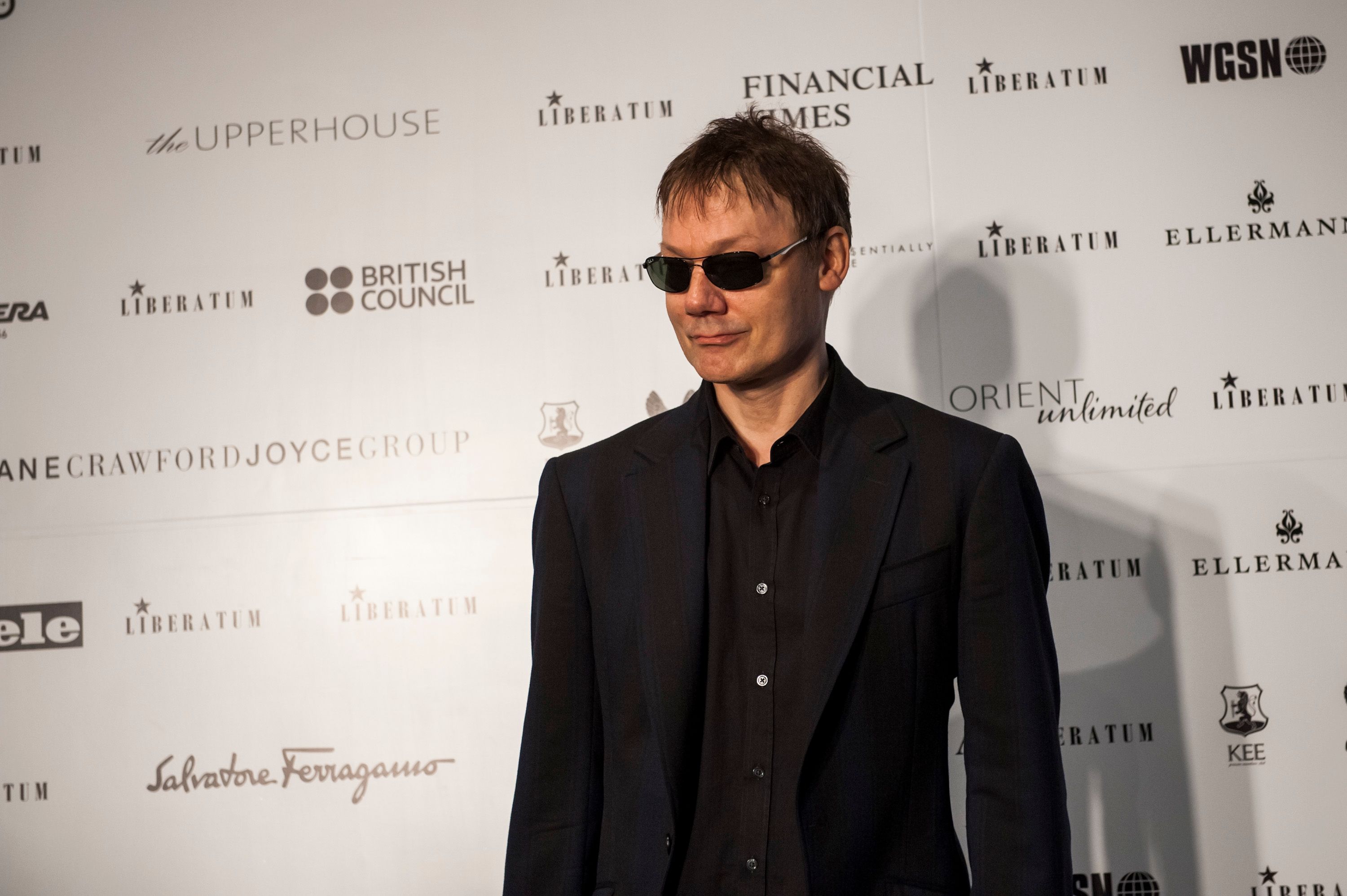
Valerie Brathwaite, a Trinidad and Tobago–born abstract sculptor whose work mapped the coastlines, root systems and tropical flora of the Caribbean and northern South America into stone, bronze and concrete, died on 7 July 2026 at the age of 87, the arts outlet Hyperallergic reported. The outlet, run by the art historian and editor Hrag Vartanian, said Brathwaite had spent the bulk of her adult life in Venezuela before relocating to Argentina in her later years.
Brathwaite's death closes one of the more quietly remarkable arcs in 20th-century Caribbean art: a woman trained in the colonial-era figurative tradition of the anglophone Caribbean who, over decades of working between Caracas and Buenos Aires, developed a hard-edged abstract vocabulary that critics linked as readily to the geometries of Brancusi and Henry Moore as to the mangrove roots of the Orinoco Delta. Hyperallergic's obituary, published on 7 July 2026, frames her as a sculptor "of the natural world" — a description consistent with the artist's own stated preoccupation, across a long career, with leaves, sea-fan and tidal formations rather than the human figure.
A sculptor between two Souths
Brathwaite was born in 1938 in Trinidad, then a British colony, and trained at the Royal College of Art in London before settling in Venezuela in the 1960s, when Caracas was drawing painters, sculptors and architects from across the hemisphere on the back of the country's oil-fuelled cultural spending. According to Hyperallergic, she absorbed the geography of her adopted countries — the mangrove coastlines of Trinidad, the cordillera of northern Venezuela, and later the Paraná river basin around Buenos Aires — and translated those forms into severe, often monumental, abstract pieces in stone, marble and bronze.
The obituary situates her within a generation of Caribbean abstract artists who, working outside the metropolitan centres of New York and Paris, nonetheless built reputations in the international biennial circuit. Several works are now in the permanent collections of the Museo de Arte Latinoamericano de Buenos Aires (MALBA) and the Museo de Arte Contemporáneo de Caracas, the outlet noted, and she participated in group exhibitions across Latin America, Europe and the anglophone Caribbean.
What Brathwaite's abstraction actually referred to
Read against the standard postwar narrative of Latin American abstraction — the geometric utopias of the Grupo Madi, the lyrical geographies of Marta Minujín — Brathwaite's work is sometimes filed as a regional variant. Hyperallergic's piece insists on a different reading. The artist's abstraction, the outlet argues, was not the European postwar inheritance of the readymade and the monochrome refracted through local colour; it was a vocabulary tuned to specific biological forms. Coral, sea-grass, mangrove prop roots, the branching of heliconias — these recurred as motifs across her mature work.
In a passage that doubles as an argument against the lazy framing of Caribbean abstraction as derivative, Hyperallergic notes that Brathwaite treated her subjects — what the outlet calls "the geography, vegetation, and wildlife of her home countries of Trinidad and Tobago and Venezuela" — not as decorative referents but as the source code of her formal decisions. A curve was a current; a notch was a tide line; the angle of a brace mimicked the angle at which a Caribbean sea-fan fixes itself to a substrate.
Reception, marginalia and the question of the canon
There is a more uncomfortable subtext to any obituary of a Caribbean abstract sculptor working in Spanish-speaking South America. Latin American art history has, for decades, weighted the canon toward figures with either metropolitan profile (Cubism-Paris, Constructivism-Bauhaus) or explicit political-revolutionary reading (the muralists, the Brazilian neo-concretists). Hyperallergic's piece does not spell the problem out, but the framing — Brathwaite as a regional sculptor whose referents were tropical, whose career arc was hemispheric rather than metropolitan — performs a quiet correction.
The obituary also implicitly registers how precarious Caribbean art criticism still is in the international press. English-language coverage of Brathwaite has been thin relative to that of her contemporaries in the Havana or Kingston schools. The piece is, in effect, a corrective: a US-based art publication readjusting the record for an artist whose main institutional footprints were in Caracas and Buenos Aires.
What remains to be settled
Several questions the obituary leaves open. It does not specify the cause of death, the city in which Brathwaite died, or the date of any funeral arrangements. It does not catalogue a comprehensive list of institutional holdings; mentions of MALBA and the Caracas contemporary art museum are illustrative rather than exhaustive. Reuters, the Associated Press and the major hemispheric wires had not, as of the obituary's publication on 7 July 2026, run independent confirmations, and no Trinidadian or Venezuelan state communiqué on the death had been linked in the source. Readers looking for fuller biographical or bibliographical material will, for now, have to wait for whatever longer obituary the Latin American art press chooses to publish.
The substantive point survives the gaps. Brathwaite's career is now an object lesson in how the international art press decides who counts as a Caribbean artist and on what evidence. A generation that built outside the New York–Paris spine, in studios on the Orinoco and the Río de la Plata, is now being re-read not as regional, but as canonical — and the venue making the case is, tellingly, a Brooklyn editorial desk.
Desk note: this obituary is a straight paraphrase of Hyperallergic's notice; Monexus did not seek independent confirmation, and the wire caveats above apply.