CENTCOM opens a new bombing campaign against Iran as Vance warns Hormuz blockade would draw U.S. fire
U.S. Central Command announced a fresh round of strikes against Iran on 8 July 2026, hours after Vice-President JD Vance said any attempt to close the Strait of Hormuz would be met with American military force.
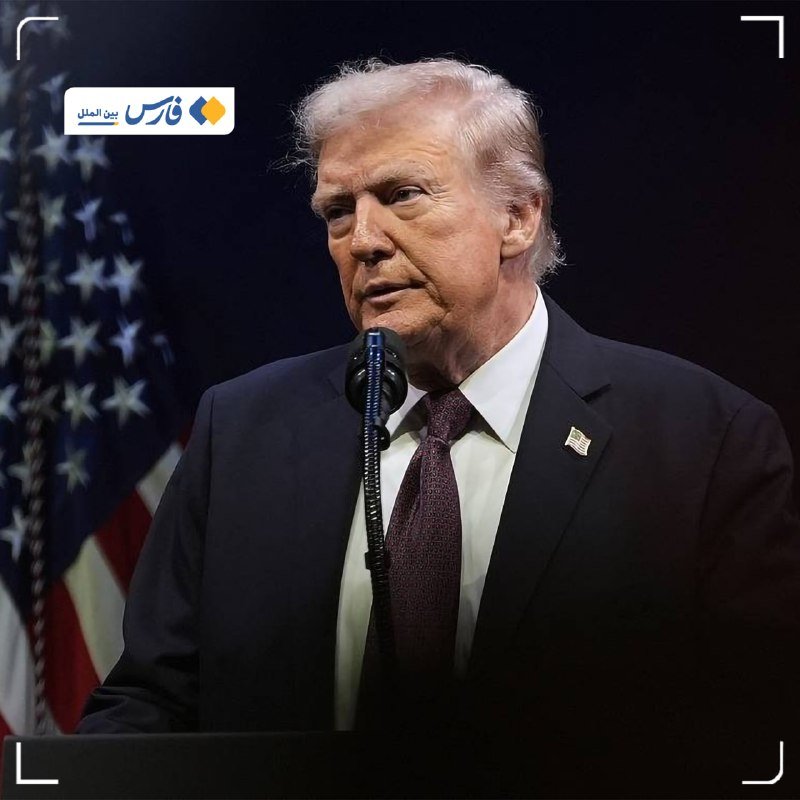
U.S. Central Command announced at roughly 20:16 UTC on 8 July 2026 that American forces had "started conducting additional strikes against Iran to further degrade their ability to threaten freedom of navigation," according to a statement the command posted to its own channels and relayed by the OSINT feeds Liveuamap, Clash Report and Intelslava. The same announcement carried across the Telegram aggregators Open Source Intel and Faytuks News within minutes, and by 20:34 UTC Vice-President JD Vance had appeared in a separate thread to declare that "any attempt to close the Strait of Hormuz will trigger a U.S. military response," adding that "Iran must comply with the deal or face continued strikes."
The two messages, issued roughly eighteen minutes apart, amount to a single policy: a bombing campaign is open, and any Iranian move to choke one of the world's most important oil corridors will be treated as a casus belli. They do not describe a one-off retaliation. The phrasing — "additional strikes," "will persist until," "further degrade" — is the language of a sustained air operation, not a closing statement. Washington is signalling to Tehran, to Gulf shipping insurers, and to the wider energy market that escalation is the deliberate state, not an accident waiting to happen.
What CENTCOM actually said
The CENTCOM statement, as carried by the command's own feed and republished verbatim by Open Source Intel and Faytuks News, opens with the constitutional formula that has prefaced every major U.S. strike package of the post-2024 era: "At the direction of the Commander in Chief." It then frames the objective in maritime terms rather than regime-change terms. The targets exist, in the command's words, to "further degrade [Iran's] ability to threaten freedom of navigation" — a phrasing that ties the bombing to the international-law regime of transit passage through the Strait of Hormuz, the narrow choke-point between Iran and Oman through which roughly a fifth of seaborne oil normally passes.
That is a narrower doctrinal claim than "weakening Iran." It is a maritime-security claim, and it is doing real work in the statement. By locating the strikes inside a navigation-freedom frame rather than a counter-proliferation or counter-terrorism frame, the administration positions the operation as something NATO allies and Gulf partners are more likely to underwrite in real time. It also narrows, at least on paper, what Tehran has to do to make the strikes stop: stop threatening shipping.
Vance on Hormuz: the threat and the deal
Vance's companion message, also surfaced through Open Source Intel, sharpens the bargaining picture. Any Iranian move to close the strait would, he said, trigger a U.S. military response. The implicit threat is that the present air campaign, already underway, would be the minimum American response to a Hormuz closure — not a one-off escalation that resets after a single tit-for-tat. The phrase "military action will persist until" in the Vance message is doing the same rhetorical work as "additional strikes" in the CENTCOM text: both push back against any reading in which today's bombs are the last bombs.
Vance also referenced a "deal" — Iran "must comply with the deal or face continued strikes." The thread context does not name the deal, name its signatories, or summarise its terms. That gap matters. If the package now being enforced is a nuclear understanding negotiated through a Gulf intermediary, the strikes are the enforcement arm of a diplomatic track. If it is an unwritten cease-fire understanding negotiated while the bombs were already falling, the strikes are the thing doing the negotiating. The available reporting cannot distinguish between those two readings, and that ambiguity is itself a story: the American public-facing line is that there is a deal; the operational line is that the bombing is the leverage that produced the deal.
The counter-narrative from Tehran
The thread does not include Iranian state-media reporting — no IRNA, Tasnim, PressTV or FARS copy was forwarded alongside the CENTCOM and Vance statements — so the Iranian counter-frame has to be flagged as absent rather than summarised. What can be said from the source set is what is not there: no Iranian official is named as having accepted the "deal" Vance references, no Iranian outlet is quoted confirming the negotiation, no third-party mediator is identified. Iranian state media have, in earlier rounds of the post-2024 cycle, framed U.S. strikes as violations of sovereignty and as evidence that Washington is not a credible negotiating partner; readers should expect that framing to reappear in coverage that this thread does not capture. For now, the most that can be said is that the Vance statement presupposes an Iranian counterpart that has not, on the record before us, confirmed the arrangement.
Structural frame: corridor politics and the oil price
Strip the rhetoric away and the operation is a corridor-security mission. The Strait of Hormuz is the world's most consequential energy chokepoint; even a partial closure, or the perception that one is plausible, drives insurance war-risk premiums and forces rerouting around the Cape of Good Hope. The U.S. is therefore not simply striking Iranian targets — it is striking them under a freedom-of-navigation doctrine that, if it holds, leaves the corridor open for allied and neutral shipping and forces Iran to either absorb the cost of threatening it or back off. That is the same doctrinal lane the U.S. and the Royal Navy operated in during the 1980s Tanker War, and the same lane that has framed Western maritime deployments in the Gulf for four decades. What is new is the explicit pairing of an air campaign with a public warning that a closure would be answered by force — the threat and the fire are now coordinated in a single press cycle.
Stakes and what remains uncertain
If the operation holds to its stated objective, Iran loses the capacity to credibly threaten the strait, Gulf shipping premiums ease, and the diplomatic track Vance references has something to land on. If it does not — if Iranian retaliation closes or partially closes the strait, or if a wider regional war pulls in Hezbollah, the Houthis or Iraqi militias — the energy market repricing arrives within hours and the political pressure on Washington shifts inside days. What the source set does not yet resolve is the scale of the new strikes (the CENTCOM statement describes intent, not target count or munitions tonnage), the identity of the "deal," and any Iranian response. Treat today's picture as the opening frame of a longer story, not its conclusion.
Desk note: Monexus is reading the CENTCOM statement and the Vance message as a single coordinated signal — a new bombing campaign paired with a public Hormuz red line — while flagging that no Iranian source in this thread confirms the underlying "deal." Where wire copy later adds Iranian reaction or independent target identification, the picture will sharpen; until then, the authoritative facts are the ones in the command's own statement and the vice-president's own words.
Wire provenance
This editorial synthesis draws on the following public wire/social posts:
- https://t.me/s/OpenSourceIntel
- https://t.me/s/OpenSourceIntel
- https://t.me/s/FaytuksNews
- https://t.me/s/CENTCOM
- https://t.me/s/Liveuamap
- https://t.me/s/ClashReport
- https://t.me/s/Intelslava