Zakzaky in Najaf: a Nigerian cleric at the centre of an Iraqi mourning
The leader of Nigeria's Islamic Movement appeared at the funeral of a martyred Iraqi cleric in Najaf on 8 July 2026 — a small photograph that illuminates a much wider axis of Shia solidarity politics.
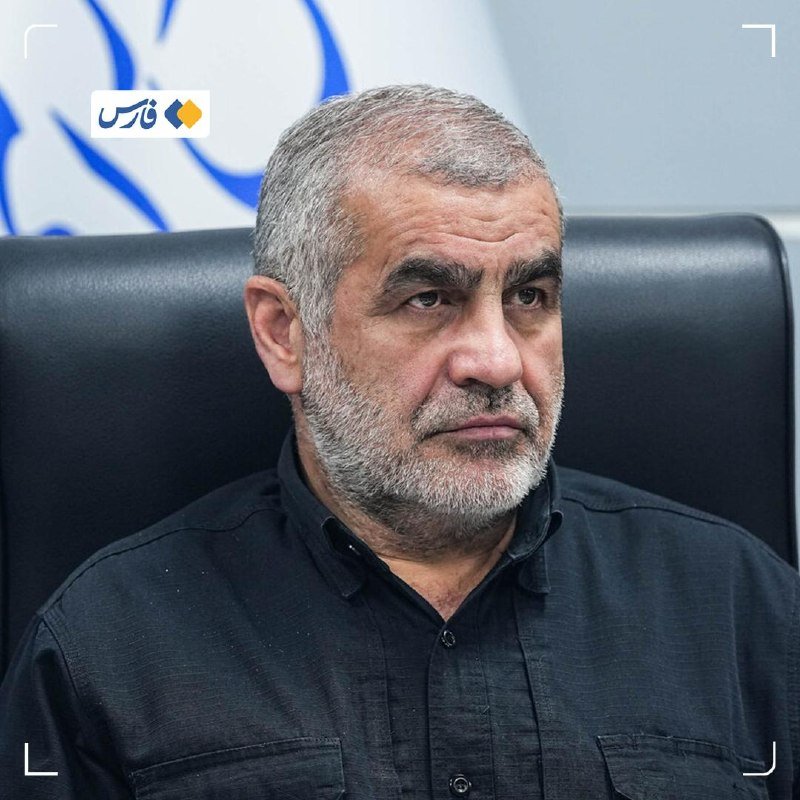
On the morning of 8 July 2026, in the shrine city of Najaf, mourners raised the bloodied banners of martyrdom over the body of a slain Iraqi cleric. Among the foreign delegations paying respects sat a familiar face to anyone who has tracked Nigeria's Shia minority for the last decade: Sheikh Ibrahim Zakzaky, leader of the Islamic Movement of Nigeria (IMN), photographed alongside Iraqi mourners at the burial of the "martyred Imam." Telegram channels close to Iraqi Shia political movements circulated the images within hours; by 04:08 UTC the picture had reached Persian-language feeds via Jahan Tasnim, and by 03:55 UTC Arabic-language outlets affiliated with Iraqi Shia broadcasting were carrying parallel footage.
The image is small. The politics around it are not. A detained Nigerian cleric, recently released, travelling openly to Najaf to honour a dead Iraqi religious figure signals a transnational Shia solidarity network that operates with considerably more reach than Western coverage of either country usually acknowledges — and it underlines how the Iraqi shrine city remains a gravitational centre for Shia politics well beyond Iraq's borders.
A cleric who should not be there
Zakzaky's presence in Najaf is itself a marker of how much has shifted in his personal standing. The IMN leader was detained by Nigerian authorities following the December 2015 military raid on his home in Zaria, Kaduna State, in which his wife and several supporters were killed. He and his wife faced trial on charges Nigerian courts have handled fitfully; her death in custody in 2017 drew sustained international attention from human rights groups. His release and subsequent mobility — including to religious sites in Iraq — is documented in the visual record now circulating.
What the pictures do not say, and what the Telegram sourcing cannot tell us, is the specific reason for his Najaf trip or whether it was coordinated with Iraqi religious authorities. Najaf is the seat of Grand Ayatollah Ali al-Sistani and home to the Hawza, the centuries-old seminary system; foreign Shia clerics and activists frequently transit the city on pilgrimage and political visits.
An Iraqi cleric whose funeral drew a crowd
The object of mourning is described in the Arabic-language Telegram posts simply as "the martyred Imam" and "the martyred leader of the revolution" — a framing used by Iraqi Shia political media for figures killed in violence or assassinated in the years of instability following 2003. The sources do not name the cleric whose funeral is taking place, the date or cause of death, or the specific Iraqi political faction that claimed his body. That omission is the story's most important caveat: this article cannot confirm who is being buried, only that a large mourning ceremony is underway in Najaf on 8 July 2026 and that Zakzaky was among the mourners.
That uncertainty matters. The "martyred Imam" formulation in Iraqi Shia political media has been applied to a long list of clerics killed since 2003 — Muqtada al-Sadr's father, Muhammad al-Sadr, in 1999; Ayatollah Baqr al-Hakim in 2003; scores of Friday-prayer imams killed during the sectarian war of 2006-2007; and more recently figures assassinated for their role in the Hashd al-Shaabi (Popular Mobilisation Forces) or for opposing particular factions. Without a name and a date of death, the framing collapses multiple possible narratives into a single image.
What the picture is doing, politically
Even bracketing the identification question, the circulation of these images does political work. By appearing in Najaf beside Iraqi mourners, Zakzaky is publicly reinserted into the transnational Shia conversation after years of detention and isolation in Nigeria — useful for his domestic standing, useful for his regional networks, and useful for Iraqi factions that want to demonstrate their pan-Shia reach. For Iraqi Shia media, the photograph signals that Najaf remains a gathering point for foreign Shia delegations, not just a domestic shrine city.
The structural frame here is older than the photograph. Since the Iranian revolution of 1979, and with renewed intensity since the US invasion of Iraq in 2003, Najaf has functioned as both a religious capital and a meeting ground where Shia movements from Lebanon, Bahrain, Pakistan, Afghanistan, and West Africa convene around shared martyrology. The clerical and seminary networks that connect these movements are well-documented in academic and journalistic literature; this article does not need to reproduce them. What matters for readers is that a Nigerian cleric's photograph in Najaf is not an oddity — it is a recurring feature of how Shia political identity operates across borders.
What we do not know — and why the caution is warranted
Three things remain genuinely uncertain on this evidence. First, the identity of the "martyred Imam" whose funeral is taking place: the Arabic and Persian Telegram posts name no one, and the photos do not show a coffin bearing a name. Second, the political affiliation of the mourners: while Zakzaky's presence suggests one current within transnational Shia politics, Iraqi Shia factions that share Najaf as a sacred space are often rivals rather than allies. Third, whether the Nigerian state has registered or approved Zakzaky's travel, or whether his appearance abroad is being tolerated, facilitated, or quietly contested by Abuja — a question that bears on his legal status at home.
The dominant framing in the Telegram material is celebratory: a martyred cleric honoured by an international delegation of the faithful. The counter-reading worth holding in mind is that photographs of foreign clerics at Iraqi funerals are a long-standing piece of visual rhetoric — used by Iraqi Shia factions to claim external legitimacy, and used by foreign Shia leaders to signal that they remain politically alive. Both readings are plausible. The image alone does not decide between them.
For now, the cleanest statement this publication can make is the narrow one: on 8 July 2026, Sheikh Ibrahim Zakzaky was photographed in Najaf at a Shia mourning ceremony of significant size; the identity of the cleric being mourned is not specified in the available sources; and the political reading of his presence depends on facts the wire material does not yet supply.
Desk note: Monexus is publishing this on the narrow evidentiary base of two Telegram channels — one Persian-language (Jahan Tasnim), one Arabic-language Iraqi outlet — both circulating the same Najaf images on the morning of 8 July 2026. We have not named the "martyred Imam" because the sources do not. Where the wire material collapses uncertainty into a single image, this article holds the uncertainty open.
Wire provenance
This editorial synthesis draws on the following public wire/social posts:
- https://t.me/s/JahanTasnim
- https://t.me/s/alalamfa
- https://t.me/s/alalamfa