Explosions Reported at Chabahar and Hormozgan: What the First Hours Tell Us
Multiple blasts were reported at Iran's largest Indian-backed port and in Hormozgan province within minutes of each other on 8 July 2026. The first wave of accounts points to a coordinated strike — but the picture is still thin.
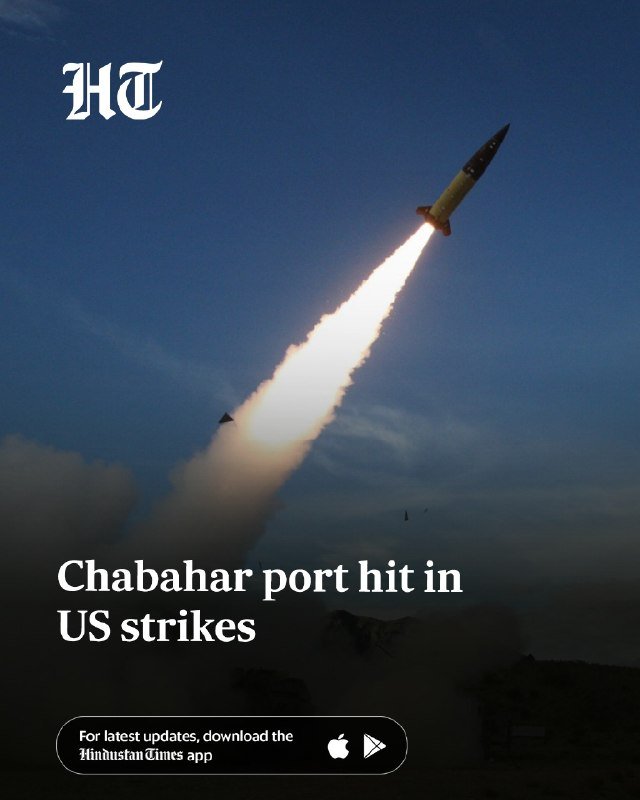
At 20:04 UTC on 8 July 2026, monitoring channels began carrying the first reports of multiple blasts in Chabahar, in Iran's Sistan and Baluchestan province, with a parallel set of explosions reported in Hormozgan province to the west. Within three minutes, additional dispatches from Telegram channels covering the region were describing the events as a coordinated strike on Iranian port infrastructure. The first hours of reporting are fragmentary, the cause is unconfirmed, and the political consequences are still being written — but the geography of the targets, and the timing, are already doing the analytical work.
What the public record shows, four hours after the first blast, is a pattern of reporting concentrated on a single Iranian coastline — the country's southeastern Makran coast and the Hormozgan province that flanks the Strait of Hormuz. Both are strategic assets, and both sit inside an active confrontation between Washington and Tehran that has been intensifying through the spring. The open question is whether this is a discrete strike, the opening move of a longer operation, or something else entirely — and the answer depends heavily on who carried it out, a fact the public record does not yet establish.
What we know, by province
Chabahar is Iran's only deep-water port on the Arabian Sea, and the operational centrepiece of a multi-year Indian investment programme intended to give New Delhi a route into Central Asia that bypasses Pakistan. The Chabahar Free Zone, governed under a special commercial regime, hosts container terminals, a grain handling facility, and an oil terminal that handles a meaningful share of Iran's southeastern exports. Sistan and Baluchestan is one of Iran's poorest and most restive provinces, with a long border with Pakistan and a Sunni-majority population that has historically been at the margins of the Islamic Republic's patronage networks.
Hormozgan province sits on the opposite side of the same coastline, and includes the port of Bandar Abbas, the Imam Khomeini petrochemical complex, and the northern shore of the Strait of Hormuz — through which roughly a fifth of global seaborne oil passes. Multiple Telegram accounts aggregated by Middle East Spectator and intelslava placed explosions in Chabahar and Hormozgan within the same three-minute window on 8 July. GeoPWatch, a third monitoring channel, reported hearing blasts in both locations in the same sequence.
The initial framing across these channels describes the events as a US strike on Iranian territory, an attribution that has not yet been confirmed by any government, by any wire service, or by the Iranian state. It is worth saying that plainly: as of the time of writing, the public record is a stack of unverified Telegram dispatches from monitoring accounts, and the load-bearing claim — that the United States carried out the strikes — does not yet rest on anything firmer than that.
The counter-narrative on attribution
Iranian state media have not, in the first hours, been cited in the open record confirming strikes on Chabahar or Hormozgan. Mehr News, Tasnim, and PressTV, the outlets that would normally be the first to confirm an attack on Iranian soil, are absent from the public reporting on this incident so far. That absence is itself analytically interesting. Either the Islamic Republic is still completing damage assessments and has not yet decided how to characterise the events, or the reports circulating on monitoring channels are not what they appear to be.
Two alternative readings are reasonable on the present evidence. The first is that the blasts are the result of an industrial accident — Chabahar's port has had documented fires in its fuel storage facilities in past years, and the southern coast is also a known transit point for Iranian missile fuel convoys. The second is that a third party — Israel, a Gulf state, or an anti-regime group — conducted the operation, and the early framing on monitoring channels has defaulted to the United States because of the active US-Iran confrontation. Both readings are unsupported by the available sourcing. Both are also unrefuted.
What tilts the analytical weight toward a strike, even at this early stage, is the geographic pattern. Chabahar and Hormozgan are not adjacent — they are separated by roughly 600 kilometres of Iranian coastline, including the country's most heavily monitored maritime and radar infrastructure. Two industrial accidents in both locations, in the same three-minute window, on a day when the US-Iran confrontation is at a particular pitch, would be an unusual coincidence.
The structural frame, in plain language
Chabahar is not a random target. It is the operational expression of a foreign-policy alignment that has, for the better part of a decade, run counter to the United States' preferred regional architecture. India's investment in the port — through the India Ports Global consortium, with a long-term lease on two container berths and an operational role in the Chabahar Free Zone — is intended to give New Delhi a foothold in Iranian trade and, by extension, in Afghanistan and Central Asia, that does not run through either Karachi or Gwadar, Pakistan's competing deep-water port under Chinese development. From Washington's vantage point, Chabahar is an irritant: an Iranian-Indian counter to a Chinese-Pakistani corridor, sitting on a coastline the United States would prefer to keep economically thin.
A strike on Chabahar, if the attribution holds, is therefore a strike inside a three-cornered contest. It hits the Iranian state's prestige project on its southeastern flank. It degrades India's most important infrastructure bet in Iran. And it sends a message to any third country that the cost of substituting for a US-aligned corridor on the Arabian Sea may be higher than the diplomatic benefits. Hormozgan, in this reading, is the escalatory companion — a strike against the province that controls the northern shore of the Strait of Hormuz, signalling that the United States is willing to operate inside the strait's most sensitive airspace and waters.
The structural pattern this fits is a familiar one in US-Iran confrontations: pressure concentrated on the economic and maritime assets that underwrite the Islamic Republic's external relations, with the expectation that the regime will either negotiate from weakness or absorb the cost. What the pattern tends to miss is the regime's demonstrated capacity to retaliate asymmetrically, through the network of partners and proxies that has been built, in part, precisely to make strikes on Iranian soil expensive to plan.
Stakes, and what is still missing
The immediate stakes are concrete. The Strait of Hormuz handles an estimated 17 to 21 million barrels of oil per day, depending on the month; a sustained threat to transit, even a credible one, will move global crude prices within hours. The Indian government, if Chabahar's operational capacity has been damaged, will be obliged to choose between rebuilding at political cost, walking away at financial cost, or escalating. The Iranian regime will, in the coming days, face the choice its predecessors have faced in 1987-88, in 2019, and in 2024: absorb the blow and signal restraint, or respond in a way that risks a wider war.
What the public record still does not contain is a confirmed attribution. It does not contain an Iranian casualty or damage count. It does not contain a US government statement, an Israeli one, or an Indian one. It does not contain a Brent or WTI price reaction sourced to a market tape. The first hours of any strike are typically a fog of competing claims, and the present moment is no exception. What the public record does contain, clearly, is a single evening's worth of consistent monitoring-channel reporting placing two sets of explosions on the Iranian coastline in the same window — and a global economy that has good reason to pay attention to what the next twelve hours confirm.
Monexus will update this story as wire confirmation arrives and as official statements clarify the chain of events.
Desk note: this piece was written from unverified monitoring-channel reporting in the first four hours after the explosions. The framing holds attribution at arm's length and marks what remains unknown. Monexus will revise as wire confirmation and official statements arrive.
Wire provenance
This editorial synthesis draws on the following public wire/social posts:
- https://t.me/Middle_East_Spectator
- https://t.me/intelslava
- https://t.me/GeoPWatch
- https://en.wikipedia.org/wiki/Chabahar
- https://en.wikipedia.org/wiki/Strait_of_Hormuz