China's week in three frames: anti-corruption execution, weather carnage, and an AI race the markets still doubt
A death sentence for a $325 million bribe-taker, viral footage of a tornado lifting a man off his porch, and a 13% implied probability that Beijing finishes 2026 ahead in AI — three data points that read like a single story about how China is being priced by outsiders.
China closed the first week of July with three reports that, taken individually, look like separate stories. Read them together and a sharper picture emerges: a state that executes its own senior officials for nine-figure graft, a state whose citizens are dragged off porches by storms that the world's media cycles through in a single day, and a state whose technological ascent the prediction markets still price as a long shot. The arithmetic of the gap between the first two facts and the third is the story.
The sentence, the money, and what a $325 million bribe looks like from the inside
On 7 July 2026, news that a Chinese official had been sentenced to death for accepting roughly $325 million in bribes circulated through English-language wires and aggregators. The figure is large enough to register as a typographical error — and that is precisely the point. Death sentences for corruption in China are not new; the use of them at this scale is. The case sits inside a multi-year campaign that has reached into the upper ranks of the military, the energy sector, and the financial regulator. The structural reading is that Beijing is willing to pay a reputational cost — international headlines about capital punishment — to send a domestic price signal that no amount of money is worth the taking. That signal only works if the price is paid in full and in public. Western wire coverage of the sentence leans on human-rights framing; the structural counter-reading is that a state with this many officials handling this much money has, in effect, no other enforcement technology at this scale. Both readings can be true at once.
The tornado, the clip, and the attention economy
Hours earlier on the same day, footage from China of a man being ripped from his home by a tornado and slammed onto a car before a fatal impact spread across social platforms. The clip is the kind of raw video that travels: it is short, it is unambiguous, it is human. State-aligned outlets carried it; aggregator accounts carried it further. The reporting that surrounded it was thin — initial accounts do not name the city, the casualty count beyond the single victim shown, or the broader storm system responsible. What the footage actually proves is something more mundane and more interesting: that disaster imagery from inside China now circulates at the same speed, and to the same audiences, as disaster imagery from anywhere else. That is a small but real change in information flow. A decade ago, raw video from a Chinese residential street rarely escaped platform friction; in 2026, it moves like any other clip.
The 13% problem
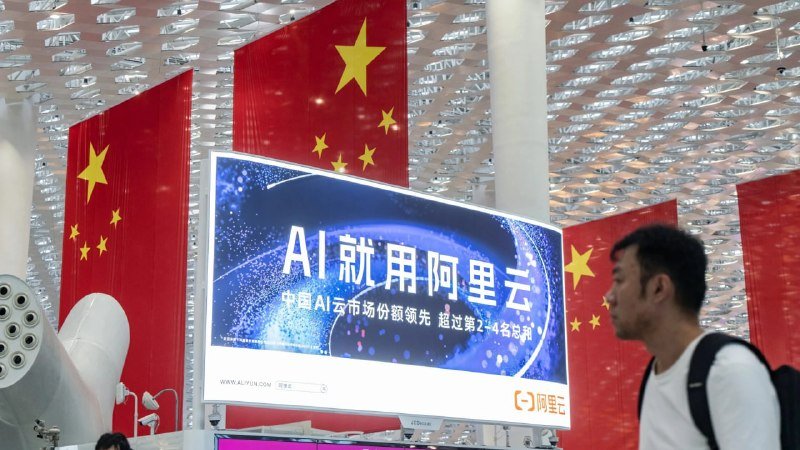
The third data point is the most quietly consequential. On 7 July, a Polymarket contract on which country leads the AI race by the end of 2026 priced China at 13%. The implied probability is the kind of number that draws eye-rolls from Beijing and shrugs from Washington. Read literally, it says that the prediction market — populated by users who are overwhelmingly Anglophone, overwhelmingly plugged into US tech earnings calls and US chip-export controls — puts the United States at roughly an eight-to-one favourite to finish the year ahead. Read as a sentiment thermometer, however, the 13% is striking. China has filed competitive model releases this year, retains dominant positions in battery IP, solar manufacturing scale, and EV production, and runs an industrial-policy state that can move capital into a sector with a speed no Western government can match. None of that has moved the dial above low double digits on the contract.
What the gap actually measures
The most plausible reading is that the market is not betting against Chinese technical capacity. It is betting against Chinese access to the leading-edge compute that the current generation of frontier models appears to require. Export controls, fab capacity, and the HBM memory bottleneck are doing more work in the price than any judgment about Chinese researchers. That distinction matters for policy: if the gap is compute, then the answer is in the chip stack; if the gap is talent or data, the answer is somewhere else entirely. The contract will move as the underlying inputs move, not as opinion shifts.
There is a counter-reading worth taking seriously: prediction markets are bad at slow industrial-policy stories. They price shocks and announcements; they under-price decade-long state-led capacity buildouts. The 13% figure may therefore be a measure of how much US-centric information the market is absorbing, rather than a measure of China's actual position. Either way, the order of magnitude is the news. Three years ago a contract like this would have priced China under 5%. The drift upward is the story even if the absolute level is still low.
The structural frame
Three facts, one week, one country. A state willing to execute a senior official for $325 million in bribes is a state that has decided its internal price signals matter more than its international reputation. A state whose domestic disaster footage moves at global information speed is a state whose information environment is no longer walled. A state whose AI race probability on a US-dominated platform sits at 13% is a state whose ascent is being measured — and partially defined — by external observers who may be under-counting the very inputs they think they are tracking. The through-line is not triumphalism and it is not alarmism. It is that the outside world's model of China is being updated in real time, and the updates are arriving faster than the model can absorb them.
This piece reframed three wire items into a single structural read. Where the underlying reporting was thin — the tornado location, the official's identity — Monexus flagged the gap rather than filling it.
Wire provenance
This editorial synthesis draws on the following public wire/social posts:
- https://t.me/presstv