British wildcard Arthur Fery stuns Cobolli to reach Wimbledon semi-finals
A British wildcard priced out of every futures market reached the Wimbledon men's semi-finals by outplaying the formbook. The structural question is why the rankings keep getting Wimbledon's middle week wrong.
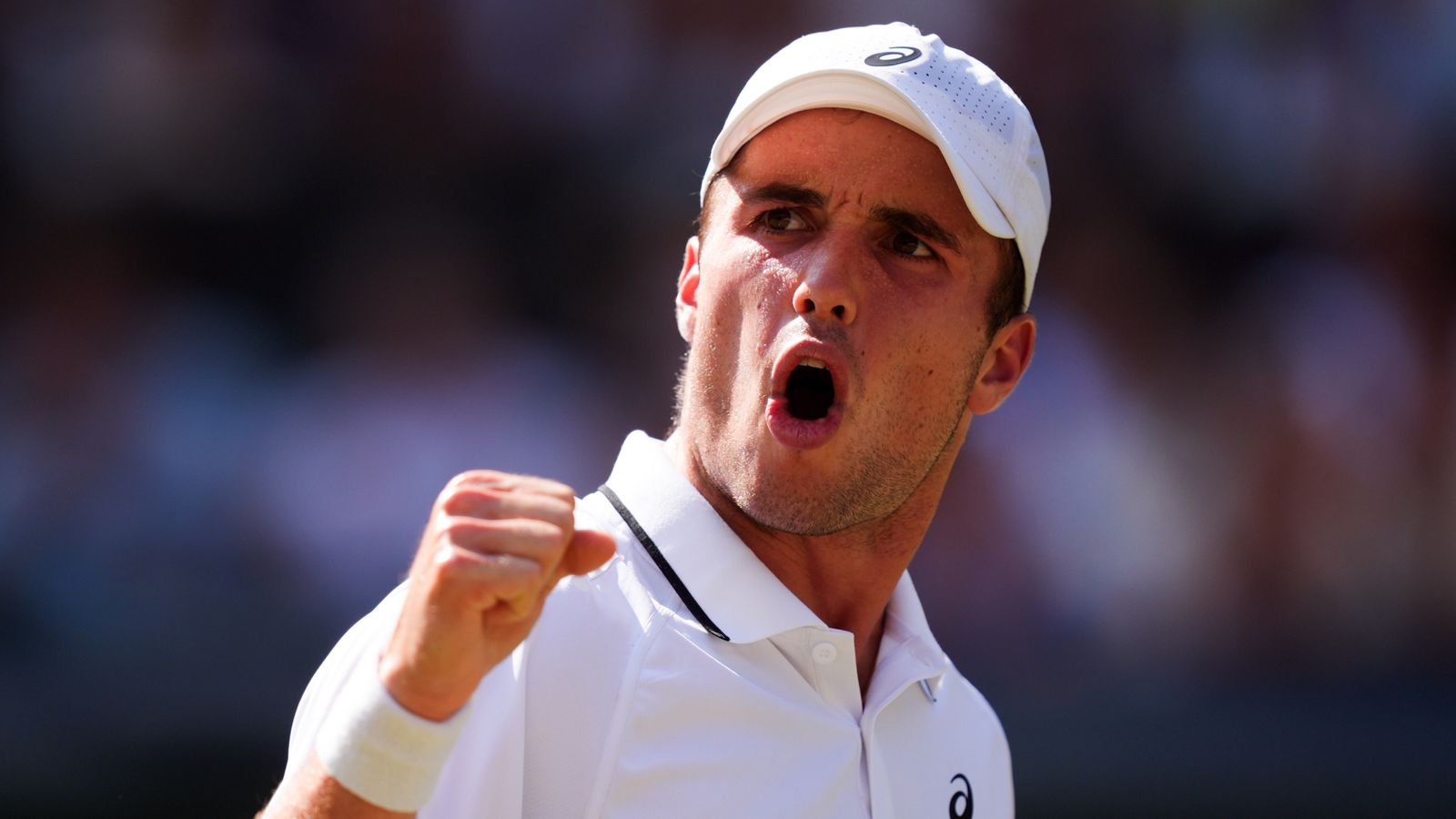
Arthur Fery had spent the better part of two weeks pretending the rankings were not a running joke at his expense. By Wednesday afternoon on Centre Court, the joke was on the formbook: a British wildcard, written off in every pre-tournament market, three sets from a place in the Wimbledon final. Forty-five minutes of that semifinal against Alexander Zverev still belonged to him before the German's serve and depth did what depth and serve tend to do at the business end of a major. The final score, 7-6 (0), 6-2, 6-4, understates how long the second set refused to settle [Sources 3, 4].
The thesis this tournament quietly handed out, between the strawberries and the applause lines, is that ranking systems and form are different languages for the same sport. Zverev, the French Open champion, had every credential to win and duly reached his first Wimbledon final. Fery had the kind of week that should make every futures trader in SW19 rethink their priors.
The qualifier who would not qualify his shots
From the first round against Damir Dzumhur onwards, Fery's draw offered little charity. Run after run of capable opponents, matches scheduled on the outside courts where the broadcast world is not watching, and a game built less on raw power than on pattern recognition. The British No 1 tag that Sky Sports now applies to him is recent, and earned on grass and in cavernous arenas rather than the slower surfaces of his junior career [Source 7]. The wildcard was always a gamble by the All England Club; the only debate was whether anyone outside his box had bothered to read the dossier.
By the time the quarterfinals had cleared, the dossier was being rewritten in public. Sky Sports dispatched the headline "Can King Arthur conquer America?" alongside a US Open window of 30 August to 13 September, the kind of punctuation a player's calendar acquires when the week has outgrown its bracket [Source 7]. Fery's path to the last four owed as much to tactical discipline as to his opponent's misfortune: ball placement, refusal to overhit on second serves, a willingness to come in behind the first delivery.
A semifinal the form book had priced differently
Zverev's game on grass remains an underrated story. The 6-foot-6 frame that the Daily Sport's tactical preview flagged as the dominant physical variable doubled as the load-bearing wall of the second set [Source 1]. For the first hour, Fery held the scoreboard alive on his own racquet; from 0-0 in the second-set tiebreak onwards, the match moved to the German's preferred tempo. The scoreline reads like a procession; the first set was a fight, and the photograph archive will quietly carry that.
Andre Agassi and Tim Henman, with the affordance that only studio analysts enjoy, called Zverev's serving the decisive lever while singling out the British wildcard's temperament for praise. "Could have one heck of a career," Agassi said, the kind of endorsement that does double duty as a forecast [Source 5]. The Telegraph's John Inverdale framed the match in plainer language: "the second-lowest-ranked man," a metric the broadcast graphics had been displaying with the restraint of a schoolteacher [Sources 2, 3].
What the markets had wrong
Wildcards at majors are routinely priced around 100/1 in outright markets and roughly the same in any sane forecast of rounds advanced. Fery's price on Monday morning of quarterfinal week had been drifting outward, not contracting. By Wednesday's first game, the in-running numbers had become a footnote. The structural lesson for any reader who follows tennis not as spectacle but as a probability engine is uncomfortable: the markets for low-ranked players rely on a thin tape of recent matches, weight surface history hard, and almost never price in a player peaking on grass at the exact fortnight the tour shows up in London.
The corollary holds for Zverev. Every reasonable model had him as a top-four seed for a reason; few had him pegged for a Wimbledon final specifically, because the surface had historically been his soft patch. He has spent the past 18 months closing that gap, and the semifinal served as a quiet correction to a stale narrative about his game [Source 3].
The other half of the draw, in relief
While Fery was busy reshaping British expectations, world No 1 Jannik Sinner was ending Novak Djokovic's pursuit of a record 25th Grand Slam title with a 6-4, 6-4, 6-4 semifinal win that the BBC's headline writer described, accurately, as "too strong" [Sources 12, 18]. Djokovic told ESPN within minutes of the final handshake that he hopes to return to Wimbledon next year [Source 9]. A two-line bulletin that doubles as the day's small grace note: a 38-year-old confirming he is not yet finished, and a younger generation confirming there are no more doors left half-open.
The Sunday final, then, is a meeting between the world No 1 and the French Open champion; the kind of pairing that, six months ago, might have been pencilled in as the men's tennis future [Sources 6, 12]. Fery's role in that picture is the one the official brackets never quite acknowledge. He forced the tournament to recalibrate.
What to watch before the trophy lift
Three threads worth tracking through Saturday and Sunday.
First, the wildcard's calendar. Sky Sports' US Open question is no longer rhetorical; the entry deadline and the protected ranking points both matter for a player whose ranking sits far below his week warrants [Source 7]. Second, Zverev's grass-court ceiling. A maiden Wimbledon final is one thing; a maiden Wimbledon title against the defending champion, who has not lost on Centre Court since 2024, is a much larger number. Third, Djokovic at 38. His post-match availability was gracious and brief; the tour's leading men now have a date with their own inheritance.
Fery's semifinal against Zverev, in the end, will be remembered more for what it suggests than what it contains. A wildcard into a Grand Slam field is a placeholder, a courtesy, an entry in a database. For one week in July, it became the headline.
Sources
- [Daily Sport, 2026-07-10] "Tall order: the tactics Arthur Fery must employ to shock 6ft 6in Zverev"
- [BBC Sport, 2026-07-10] "Fery's Wimbledon run ended by Zverev in semi-finals"
- [Daily Sport, 2026-07-10] "Arthur Fery's magical run ends with crushing Wimbledon defeat by Alexander Zverev"
- [BBC Sport, 2026-07-10] "Fery beaten in straight sets as Zverev reaches Wimbledon final"
- [BBC Sport, 2026-07-10] "Fery's a 'fighter and could have one heck of a career' - Agassi"
- [Daily Sport, 2026-07-10] "Sinner dismantles Djokovic's dreams of 25th slam in one-sided Wimbledon semi-final"
- [Sky Sports, 2026-07-10] "Can King Arthur conquer America? Fery eyes the US Open after Wimbledon heroics"
- [BBC Sport, 2026-07-10] "'Good but not good enough' for 'blessed and cursed' Djokovic"
- [ESPN, 2026-07-10] "Djokovic hopes to play at least 1 more Wimbledon"
Desk note: Monexus framed this as a player-profile story with a structural undertow: the gap between ranking systems and in-tournament form, rather than a parade round. The wire coverage leaned on atmosphere and crowd reaction; the analytical layer asks why the markets kept getting this run wrong.