Eight teams left, a widening talent gap: what the World Cup quarterfinals will actually turn on
With the World Cup field cut to eight, individual superstars carry more weight than at any earlier stage. A look at the players most likely to decide who reaches the semis.
The 2026 World Cup field narrowed to eight teams on 8 July, and the shape of the knockout rounds is now legible: a contest in which a small handful of individuals can swing a tie more decisively than at any point since the group stage closed. ESPN's mid-tournament survey of the "8 most important players of the World Cup" — published as the round-of-16 wrapped — is the most explicit admission yet from a major US outlet that the remaining fixtures will be settled, in large part, by who carries the ball across the halfway line with the game in the balance.
What changed in the past 72 hours is not the identity of the favourites so much as the margins. Squads are thinner, injuries have compounded, and tactical plans that worked against second-tier opposition now meet peers with comparable preparation. In that environment, one moment of individual quality — a turn in the box, a recovery run at the back post, a set-piece delivery with the right weight — is worth more than a week of video work.
The narrowing of variance
Through the group stage, depth could mask a poor night from a star player. Coaches rotated; federations carried 26-man squads specifically to absorb the cost of a suspension or a knock. By the quarterfinals, the rotation window is closed. The XI that takes the field in the last eight is, in most cases, the XI a manager trusts to execute a single game plan against a single opponent — and the difference between winning and going home is now the difference between that plan working and a single player improvising beyond it.
ESPN's list leans heavily on players who have already decided matches in this tournament: creators who have produced goals or chances from positions where the script said they shouldn't exist, and defenders whose interventions have prevented the same from happening at the other end. The framing matters because it implicitly concedes what the analytics community has argued for a decade: at the elite international level, once you control for squad quality, the variance a single player introduces is larger than the variance a system introduces.
The NFL crossover question the US conversation keeps circling
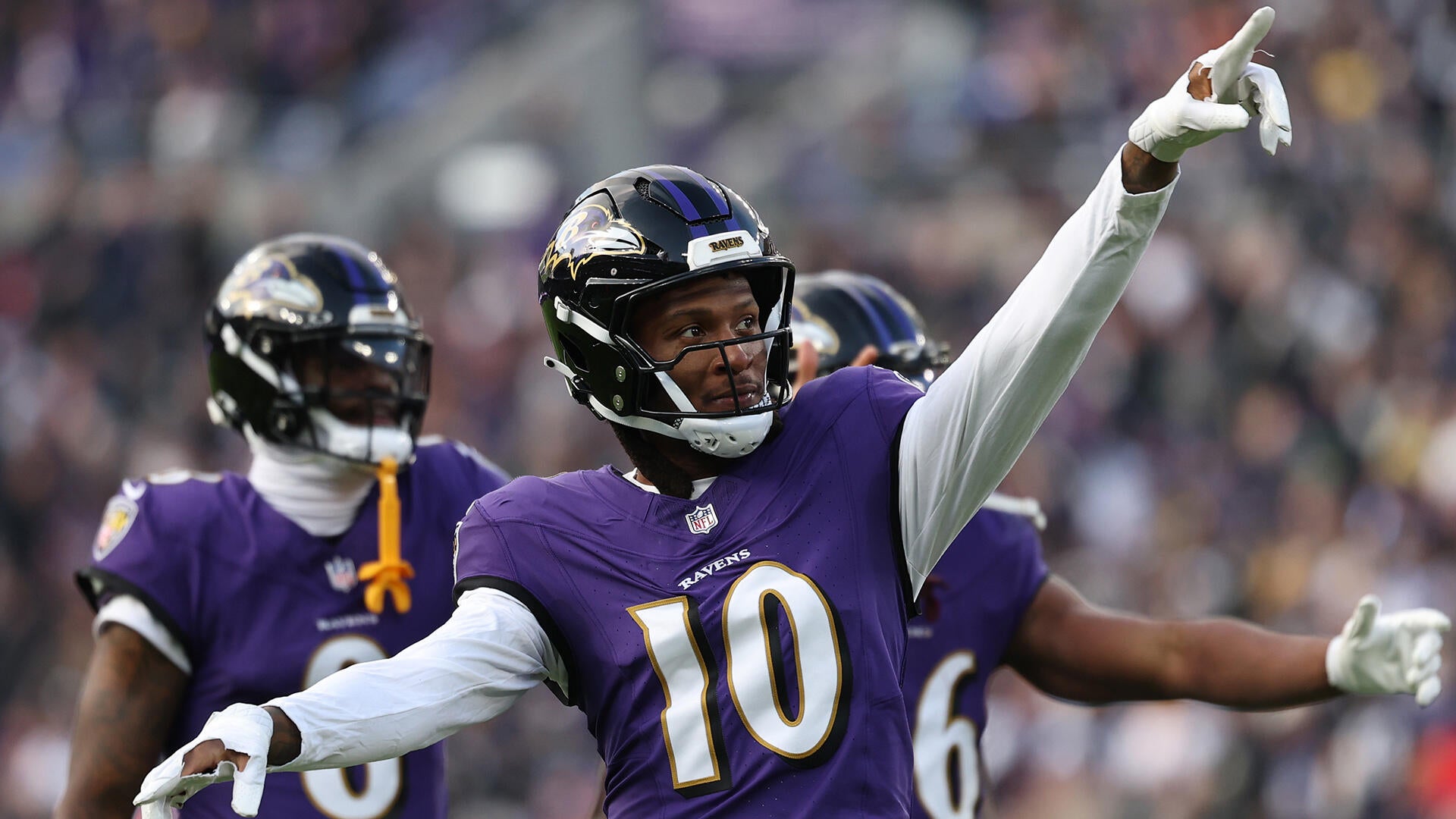
CBS Sports' parallel feature on 8 July — headlined "NFL players at a crossroads who could have helped Team USA, including former All-Pro receivers" — is a more speculative exercise. Its premise is that for every plausible soccer-to-NFL pipe dream, there is a realistic transfer: an athletic profile built in one sport that would, in another era or another federation, have been steered toward the other code. DeAndre Hopkins, the former All-Pro receiver, is the lead example — a player whose contested-catch mechanics and change-of-direction metrics, the argument runs, would have translated to a target-man role up front.
The piece is honest about the obstacles. International clearances, federation politics, and the absence of a serious US developmental pipeline for late-converts all make the scenario a thought experiment rather than a recruitment brief. But it surfaces a real anxiety underneath the World Cup conversation in the United States: that the country's athletic talent is broad enough that, with different institutional choices, the men's national team could plausibly have contested a deeper run than the current one. Whether that anxiety is well-founded is a different question — the same piece concedes that several of the players it names would have needed a decade of football-specific coaching to reach a tournament-ready level.
What the bracket is actually asking of these eight teams
The deeper analytical point, which both features circle without quite stating, is that the quarterfinals reward teams with two specific profiles: a player who can produce from nothing, and a structure that limits the opposition's access to the same. Most of the eight remaining sides have one of those. Only a handful — and the identity will become clearer over the next 48 hours — have both.
That asymmetry is what makes individual brilliance disproportionately valuable at this stage. A system can be coached around; a single elite creator, on a given night, cannot. The teams that survive the next round will be the ones whose best player has his best game.
Stakes beyond the trophy
For the federations still standing, the financial and reputational arithmetic of a semifinal berth is substantial. FIFA's prize pool for the 2026 cycle rewards progression more steeply at the back end of the bracket, and the broadcast and sponsorship inventory for a semifinal is in a different commercial category from a round-of-16 exit. For individual players, a quarterfinal-defining performance is the kind of data point that moves a transfer market the following window.
There is also a quieter stake: the players on these lists are, in many cases, the last of a generation. The next World Cup will be played under a different set of competitive conditions — an expanded field, a heavier fixture load, and likely a younger core for several of the sides still involved. What gets decided in the next ten days will be the closing argument of a cycle that began, in effect, four years ago.
What remains uncertain
The injury situation across the eight remaining squads is fluid; both ESPN and CBS Sports acknowledge that the lists they have published are not the lists they would publish 48 hours from now. Tactical surprises are also under-priced at this stage — a manager willing to abandon the structure that brought his team to the quarters is often the manager who takes his team through them, and the players best equipped to absorb that disruption are not always the ones who have produced the most highlight-reel moments so far.
The honest answer to "who matters most" is that the tournament will decide that itself, and it usually does so in a way that the pre-quarterfinal lists do not predict.
Desk note: Monexus framed this as a question of variance and squad depth rather than a star-power ranking — a deliberate move away from the personality-led framing both CBS Sports and ESPN leaned into.