France's title defence meets its first real test against a Morocco side with nothing to lose
The 2022 semi-finalists meet again on Thursday, with Les Bleus chasing a third star and the Atlas Lions riding the most improbable run an African side has ever made in the tournament.
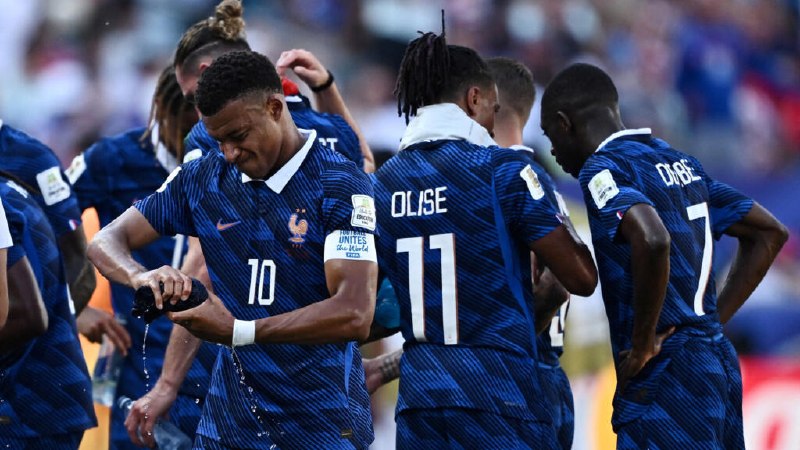
When the draw was made, this was the tie most neutrals circled. On Thursday at 19:00 UTC, France, the reigning world champions and pre-tournament favourites, meet Morocco in a World Cup quarter-final — a rematch of the 2022 semi-final in Qatar that Didier Deschamps's side won 2-0 on the way to the title, and the first genuine test of Les Bleus' credentials at this tournament.
France arrived in North America with the deepest squad on paper and the clearest mandate. Morocco arrived with a story. That gap, more than any tactical wrinkle, is what makes the fixture legible: a heavyweight chasing legacy against a side writing one.
A familiar opponent, a different Morocco
Four years ago, Morocco's run to the last four was the story of the tournament — the first African and first Arab side to reach a World Cup semi-final, having knocked out Belgium, Spain and Portugal on the way. France ended it with goals from Théo Hernandez and Kylian Mbappé, the latter's coming in added time at the end of a contest the Atlas Lions had largely controlled. The debrief inside the Moroccan camp, as several players said at the time, was less about defeat than about confirmation: that the gap to the elite was closable, and that the squad that finished third in Qatar had only scratched the surface.
The squad that walks out on Thursday is in some respects a continuation. Achraf Hakimi, Sofyan Amrabat, Yassine Bounou and Romain Saïss were all central to that 2022 run. Around them, though, a generation has matured: Bilal El Khannouss in midfield, Brahim Díaz in attack, and a forward line with greater variety than the side Walid Regragui sent out in Doha. France 24's preview on 8 July framed the match as "their toughest challenge of the tournament," language that acknowledges what the underlying numbers already suggest: that Morocco have conceded fewer expected goals than any side left in the competition, and that their high block has unsettled every opponent with a reputation.
What France actually have to solve
The French complaint at this tournament has not been a lack of talent. It has been a lack of conviction. Mbappé has scored, but largely in bursts rather than as the connective tissue of the side. Olivier Giroud, restored to the starting eleven for the knockout rounds, remains an aerial reference point, but France's goal threat has come from set-pieces and individual moments more than from sustained pressure. Against a Belgium side in the round of 16 that conceded possession willingly, that was enough. It will not be enough against a Morocco that defends in a 4-1-4-1 with the discipline to sit for long stretches and the pace to punish a turnover.
There is also a Deschamps problem the manager has not fully solved. The France squad is unusually rich in central defenders and unusually thin in defensive midfield, which means that whenever Aurélien Tchouaméni has been unavailable — and he has been — the side has asked its full-backs to compress and its forwards to press from the front. Against Mbappé, Ousmane Dembélé and Bradley Barcola, the press can be ferocious. Against Morocco, who will look to release Hakimi and El Khannouss into the channels, it can also leave space behind the French back line that Dayot Upamecano and William Saliba will need to manage.
The structural frame: an African side, fully arrived
What is most striking about Morocco's 2026 run is that it no longer reads as an upset cycle. The 2022 run was historic precisely because it broke a pattern; four years on, the Atlas Lions are seeded, they have players at Real Madrid, Paris Saint-Germain, Bayer Leverkusen and AC Milan, and they are no longer the side that has to absorb the favourite's best punch and hope to land one back. They are a side that can dictate the shape of a game.
This is the part the dominant European framing of African football has been slow to absorb. Coverage of Morocco's run in 2022 leaned heavily on the words "story" and "history" — the first, the first, the first. That language is accurate, but it also subtly confines: it treats a structural shift as a single tournament's anomaly. The evidence of 2026 is that the shift is durable. Morocco did not need a favourable draw; they took Belgium apart in the group, then negotiated a knockout round that any side in the competition would have recognised as brutal.
Stakes: legacy versus arrival
For France, the calculation is straightforward. A third star, achieved in the United States, would put Deschamps's side alongside the Brazil of Pelé as the only nations to win three men's World Cups, and would ratify a generation that has now contested three successive finals. A loss would not be a crisis — France would still be France — but it would puncture the aura that has surrounded this squad for the better part of a decade and would open a manager-of-the-future conversation Deschamps has so far been insulated from.
For Morocco, the stakes are differently constructed. There is no failure case at this point: a quarter-final that no one outside Casablanca had on their bracket four weeks ago is already a surplus. But the ceiling is genuinely high. A win would put Regragui's side into the last four of a second consecutive World Cup, would confirm Morocco as the most consistent African national team of the modern era, and would do so against the side that ended the last run. That is the contest Regragui has spent four years pointing his squad toward.
What remains uncertain
The available reporting on 8 July frames the match as the headline fixture of the quarter-finals but does not yet confirm line-ups, fitness decisions on the French left side, or whether Tchouaméni will be available after the knock he took against Belgium. The Moroccan side has been unusually consistent in selection through the knockout rounds, which makes their starting eleven the more predictable of the two. On the French side, the variables are Tchouaméni's fitness, the choice between Giroud and Marcus Thuram through the middle, and whether Deschamps trusts Eduardo Camavinga to start at left-back against Hakimi. None of those calls are settled in the public reporting as of Wednesday afternoon UTC. The match itself, then, will resolve at least one of them.
This article leans on France 24's preview framing rather than recycling aggregator copy from the European sports desks. Monexus frames Morocco's run as a durable structural shift in African football, not as a feel-good anomaly.
Wire provenance
This editorial synthesis draws on the following public wire/social posts:
- https://t.me/s/france24_en
- https://en.wikipedia.org/wiki/2026_FIFA_World_Cup
- https://en.wikipedia.org/wiki/France_at_the_FIFA_World_Cup
- https://en.wikipedia.org/wiki/Morocco_at_the_FIFA_World_Cup