Gaza death tolls and the machinery of partial reporting
When wire desks flinch and partisan channels surge, casualty figures become a battlefield of their own. The 8 July 2026 strikes near Khan Younis are a test case for what gets named, what gets buried, and why.
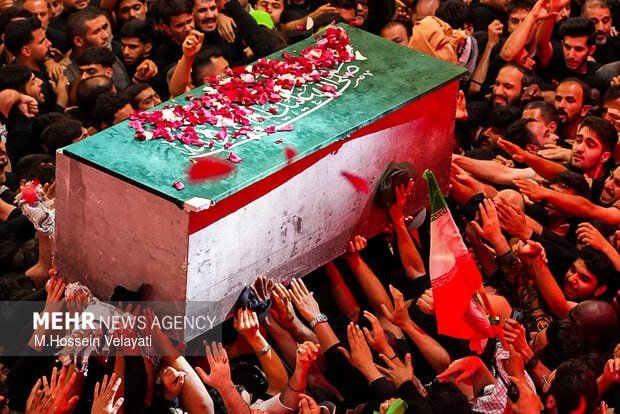
On the morning of 8 July 2026, an Israeli drone strike on a tent sheltering displaced Palestinians south of Khan Younis killed four people, among them a 10-year-old child, and wounded others. Within hours, a separate tally circulating through regional outlets put the day's running death count in Gaza at no fewer than eight Palestinians, including children, with more than ten wounded since dawn. The figures, first carried by The Cradle's Telegram channel at 14:07 and 14:15 UTC, are unverified by independent monitors and would not survive contact with the wire desks without caveats. They are also exactly the kind of casualty detail that used to anchor a Reuters or AFP bulletin by mid-morning.
The structural problem is not that the killing happens — it is that the act of reporting it has become politicised, fragmented, and increasingly the work of partisan outlets operating in the absence of trusted on-the-ground wire coverage. Where Reuters, AFP, and the BBC once moved quickly with named correspondents, Gaza's press corps has been decimated by the war itself, and what reaches the global reader is a stitched-together patchwork: regional Telegram channels, the Qatari-funded Al Jazeera, the Iranian-aligned network of outlets, the Israeli press, and a shrinking cohort of freelancers filing for Western papers at enormous personal risk. The result is a market in which the most granular, most current reporting is frequently produced by actors with explicit editorial positions, and the most cautious, most edited reporting arrives hours or days later, by which time the news cycle has moved on.
A specific test case
The 8 July strikes illustrate the gap. The Cradle, a Beirut-based outlet that has become a primary conduit for Gaza reporting from non-Western vantage points, posted its first alert about the Khan Younis tent strike at 14:07 UTC, naming four killed including a child, and a follow-up at 14:15 UTC with a daily total of at least eight Palestinians dead and ten wounded. No corresponding Western-wire alert was available in the same window. Reuters' Gaza stringers, AFP's local staff, and the BBC's Cairo bureau have all been thinned by the war; the Associated Press and AFP both moved material in subsequent hours, but with the lag that is now routine for Gaza copy. The casualty figures thus enter the global conversation first as claims — claims that may be accurate, but that are filtered through an editorial line that the Western reader has been conditioned to discount.
The discounting is itself a story. The Cradle's coverage of Israel-Palestine is editorially sympathetic to the Palestinian and resistance-axis framing of the conflict, and the outlet's ownership and funding — including ties to Iranian state-aligned networks — have been documented in Western press-freedom assessments. That context is real, and it belongs in any honest reading. But the inverse failure is just as real: mainstream Western outlets have, by their own internal reviews, under-counted Palestinian deaths in the early hours of specific operations, relied on Israeli military sources for frame and casualty figures, and sometimes omitted strikes on tent encampments altogether when the casualty list could not be independently confirmed within the wire's editorial window. The wire's caution is a professional virtue. When applied asymmetrically — quick to attribute Hamas-run ministry figures, slow to confirm civilian tent deaths — it becomes a form of selection bias that nobody on the desk intended.
What Gaza reporting looks like now
The press infrastructure in Gaza has been systematically dismantled. The Committee to Protect Journalists, Reporters Without Borders, and the International Federation of Journalists have all documented the deaths of journalists in Gaza since October 2023 at a pace unseen in any previous conflict; the CPJ's running count in early 2026 stood in the high double digits of journalists killed, many of them in strikes that Israel described as targeting operatives. Independent verification of specific incidents — who died, where, by what munition — is now often impossible from outside the strip, and the local sources that can supply that information are themselves endangered. A Reuters or AP editor weighing whether to file a Khan Younis tent strike on the basis of a Telegram alert, a single Al Jazeera correspondent, and satellite imagery is making a calculation that a comparable situation in, say, eastern Ukraine would not require.
The structural adjustment has been brutal. Western wires have moved much of their Gaza coverage to a Cairo base; rely heavily on IDF Arabic-language spokesperson statements, which are translated and carry the IDF's framing; and treat Palestinian casualty figures from the Hamas-run health ministry as accurate on a delay, while flagging provenance. The result is a coverage diet in which Israeli civilian harm is reported with names, faces, and human weight in real time, and Palestinian civilian harm arrives in aggregate, hours later, and often with the qualifier that the figures cannot be independently verified in time for the bulletin. Both sides of that asymmetry are defensible editorially. Both are also, in aggregate, distorting.
What the framework is hiding
There is a pattern here that has nothing to do with any one editor's call. The same structural forces — concentration of newsroom resources, the legal exposure of naming a strike before attribution is locked in, the algorithmic preference of global platforms for established outlets, and the collapse of indigenous reporting capacity — produce the same distortion across wars. The reader who scrolls a major aggregator on 8 July 2026 sees the Khan Younis strike, if at all, in the form of an AP or Reuters brief filed hours after the Cradle's first alert, stripped of the child casualty, hedged on the location, and embedded in a roundup that places it below other regional developments. By the following day, the strike has been folded into a weekly casualty round-up, where the four dead become part of a number, and the number becomes part of a political argument.
This is not a question of bias in the narrow sense. It is a question of which voices get to break news, which voices get to confirm it, and which voices get to remember it. The answer, in Gaza, is increasingly that none of these functions are well-served by the same institutions that served them in previous wars. The Cradle and its peers do breaking news; the wires do confirmation; the long-form press does the remembering; and the platforms that mediate all of it run on an engagement model that rewards the first and ignores the third. The reader ends up with a partial picture, assembled from actors with stakes in the frame, and a structural reason to distrust whichever of them is loudest on a given day.
The serious bit
None of this absolves the partisan outlets of their own editorial decisions. The Cradle's selection of which strikes to amplify, which casualties to name, and which frame to apply is itself a political act, and the Iranian-aligned funding environment in which it operates is a fact, not a smear. A reader who treats its alerts as a neutral wire feed is being naive, and the Western press's instinct to discount those alerts is not unfounded. But the corollary is also true: a reader who treats the absence of a Western-wire alert as evidence that the strike did not happen, or that the casualty count is uncertain, is being misled by the asymmetry of the verification pipeline. The 8 July 2026 strikes happened. The four dead in the tent near Khan Younis happened. The eight dead across the strip since dawn, as posted by The Cradle at 14:15 UTC, is the figure that is currently in circulation, and it carries the caveats that all Gaza figures carry in July 2026. The honest posture is to report what is known, flag what is not, and refuse the false comfort of pretending that the wire silence is itself a finding.
The stakes are larger than one morning's tally. The infrastructure of Gaza reporting is being rebuilt in real time, and the institutions doing the rebuilding are not the ones the global audience has historically trusted. If the trend holds, the next major Israeli military operation will be broken first by regional Telegram channels, confirmed (or not) hours later by the wires, and remembered primarily by long-form outlets working from the surviving material. The reader's job — to assemble a defensible picture from actors with stakes in the frame — is not new, but the volume of partial, partisan, and unverifiable material they must sort through is. The honest service to that reader is to name the machinery, not to pretend it does not exist.
Desk note: Monexus chose to lead with The Cradle's first Telegram alert on the 8 July 2026 Khan Younis strike, flagged for provenance, rather than waiting for Western-wire confirmation that has not arrived at the time of writing. The piece frames the structural problem rather than endorsing any one outlet's casualty count, and treats the press-infrastructure collapse as the primary news.
Wire provenance
This editorial synthesis draws on the following public wire/social posts:
- https://t.me/thecradlemedia
- https://t.me/TheCradleMedia