Explosions rock southern Iran as unverified reports of US strikes at Jask, Sirik and Abu Musa surface across state and regional media
Iranian state outlets report blasts at Jask port, Sirik and Abu Musa island. The scale, the perpetrator, and the response are all still being established.
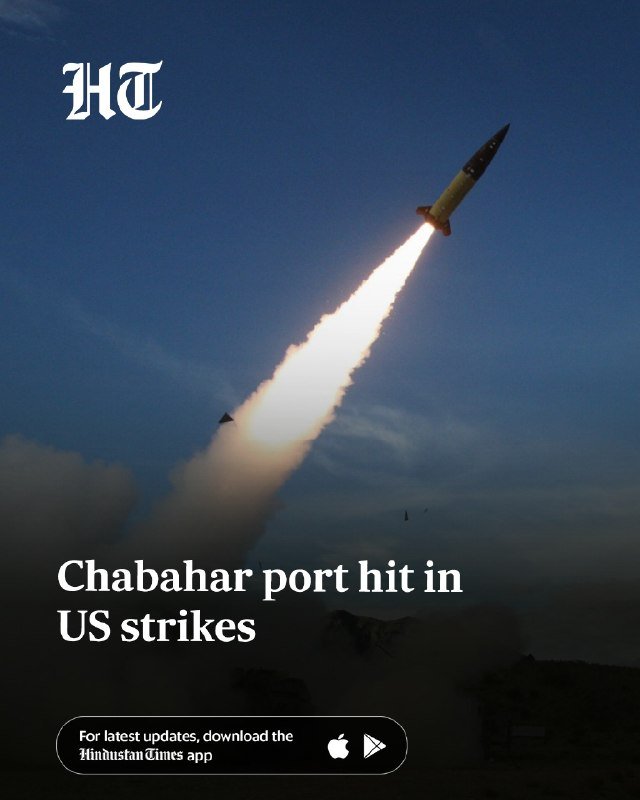
Multiple explosions were reported across southern Iran between roughly 20:55 and 21:04 UTC on 8 July 2026, with state-run and regional outlets pointing to incidents at or near the port of Bandar-e Jask, the nearby town of Sirik, and the island of Abu Musa in the Persian Gulf. The picture is, at the time of writing, partial and contested: Iranian state media confirmed the blasts and identified the United States as the operator, while the US has not, on the public record available to Monexus, publicly claimed responsibility.
What the available reporting establishes is narrow but consequential. The southern Iranian coast opposite the Strait of Hormuz has come under fire from a series of strikes that, if confirmed at scale, would represent a direct American military action against infrastructure inside the Islamic Republic — a step well beyond the maritime interdictions and proxy exchanges that have dominated the recent cycle. The strikes would also fall inside a region that handles a meaningful share of Iran's port traffic and sits within a few hundred kilometres of some of the world's most important energy chokepoints.
What the wire says — and what it doesn't
The clearest public account comes from Iranian state outlets. Press TV reported three explosions in Sirik, a coastal town in Hormozgan Province west of Jask, while IRIB, the state broadcaster, said blasts were heard on Abu Musa, an island in the Persian Gulf that has been administered by Iran since shortly after the 1971 British withdrawal and is also claimed by the United Arab Emirates. Iran's IRIB later confirmed, according to Telegram channels monitoring its broadcasts, that the blasts at Bandar-e Jask were US airstrikes. The regional Telegram channels intelslava, wfwitness and rnintel all carried near-identical wording from these Iranian sources within minutes of each other. None of these channels is independent of the Iranian state or of the regional Telegram ecosystem that aggregates state outlets in real time; their value here is as a chronological record, not as adjudication.
What the wire does not yet establish is the material scale of the operation. Press TV's count of "three explosions" at Sirik is a single-outlet figure. IRIB's identification of Abu Musa as a strike site appears only in early reporting and has not, on the public record available to Monexus, been corroborated by satellite imagery, by Western wire reporting, or by Iranian opposition outlets. The reported US airstrike attribution at Jask sits in the same evidentiary bucket: it is an Iranian state claim repeated by channels that lifted it, and it cannot, on what is presently public, be independently confirmed.
No US Central Command statement, no Pentagon readout and no White House confirmation is reflected in the available thread material. Casualty figures, target identification, weapons used and the legal authority cited are all absent from the public record. Until a US statement or an independent visual confirmation emerges, the framing of this as a US operation is a claim made by one side of the conflict and re-circulated by channels that routinely aggregate that side's output.
Where, exactly, this is happening
The geography matters. Bandar-e Jask is a small port on Iran's Makran coast, on the Gulf of Oman rather than the Persian Gulf proper, separated from the Strait of Hormuz by roughly 120 kilometres of coastline. It has periodically been cited in Iranian planning documents as a secondary oil-export terminal, intended to give Tehran a routing option outside the Strait should the main Kharg Island and Bandar Abbas flow be disrupted. Sirik, a short distance west, sits in the same coastal belt. Abu Musa, further west still, is one of three islands — Abu Musa and the Greater and Lesser Tunbs — at the centre of a long-running dispute between Iran and the UAE.
Three sites on the same coast, reported inside a roughly ten-minute window, is consistent with a coordinated strike package rather than a single incident. It is also consistent with a series of unrelated events: a munitions accident, an air-defence exercise, or a detonation in port infrastructure. The available reporting cannot distinguish between these. Iranian state media's prompt attribution to the United States is, on past form, the kind of claim that often moves faster than the evidence.
The structural frame
Even on a partial record, the incident sits inside a pattern that has been tightening for months. The United States has, since 2025, maintained a naval presence in the Gulf and the Gulf of Oman explicitly framed around Iran's nuclear file, its support for regional armed groups, and — more recently — its maritime seizures of commercial tankers. Strikes inside Iran would, if confirmed, shift the contest from the maritime domain into the territorial one and would put pressure on Iran's retaliatory calculus at exactly the moment its regional allies are under strain.
For Iran, the cost-benefit of public attribution is asymmetric. Naming the United States as the operator rallies domestic opinion and signals to regional partners that the confrontation has escalated; it also forecloses a quiet diplomatic off-ramp. For the United States, the absence of a public claim is itself informative: operations of this kind, when sanctioned at the policy level, are typically acknowledged within hours, and silence at this stage suggests either a covert action that is meant to be deniable, or a strike package that has not yet been officially authorised at the senior civilian level.
What remains uncertain
The honest summary is that the public record contains an Iranian state account, repeated by regional Telegram channels that lifted it, of US strikes at three sites on Iran's southern coast. It does not contain an American confirmation, an independent visual verification, a casualty count, a target list, or a legal characterisation. Any further reading of motive, scale and consequence outruns the evidence. The next decisive inputs will be a US official statement, satellite imagery of the affected sites, and reporting from independent outlets with staff in the region — none of which is, at the time of writing, reflected in the thread material Monexus is working from. Until those arrive, this article is a record of what Iranian state media claimed at 21:04 UTC on 8 July 2026, and nothing more.
Desk note: Monexus is leading with the Iranian state account because it is the only public attribution in the available thread material, while explicitly flagging that the US has not confirmed the strikes and that no independent visual corroboration has surfaced. Where Western wire reporting and Iranian state reporting diverge, both lines are named; the conclusion waits on evidence neither side has yet produced.
Wire provenance
This editorial synthesis draws on the following public wire/social posts:
- https://t.me/intelslava
- https://t.me/wfwitness
- https://t.me/rnintel