Remains of Iran's late supreme leader arrive at Karbala shrine in state procession
Bodies described as those of the late supreme leader and his family were carried into the courtyard of the Hazrat Abulfazl Abbas shrine in Karbala on 8 July 2026, in images circulated by Iranian state-linked outlets.
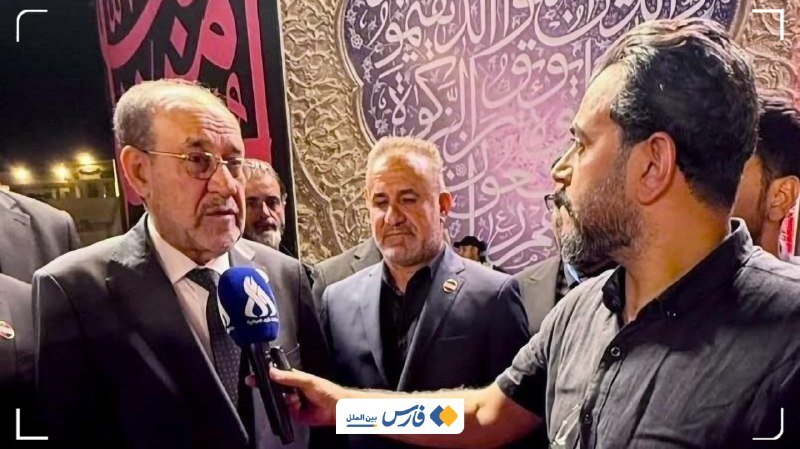
Bodies described in Iranian state media as those of the late leader of the Islamic Revolution and accompanying family members were carried into the courtyard of the Hazrat Abulfazl Abbas shrine in Karbala, Iraq, on the morning of 8 July 2026. Photographs and short video clips from the scene were distributed simultaneously by IRNA's English-language channel and Tasnim News Agency between roughly 06:23 UTC and 07:45 UTC, framing the arrival as a pilgrimage rather than a burial.
The procession is significant less for what it shows on camera than for what it confirms about Iran's capacity to stage a multi-site, transborder Shia ritual in a country that remains, on paper, an independent Arab state. Karbala sits roughly 530 kilometres southwest of Tehran and 88 kilometres south of Baghdad, deep inside Iraq's Shia heartland and under nominal Iraqi sovereignty. Any Iranian-led ceremony there is, by definition, an exercise that requires Iraqi acquiescence — and the footage suggests that acquiescence was in no way grudging.
What the footage actually shows
The three Telegram channels carrying the images — IRNA English, Tasnim, and Al-Alam — published near-identical stills in a coordinated window. The IRNA English channel posted at 06:23 UTC that the bodies of the "martyred family members of the late Leader of the Islamic Revolution" were beside the shrine of Hazrat Abbas in Karbala. Tasnim followed at 07:38 UTC with additional photographs described as the arrival of the leader's family at the shrine. Al-Alam pushed a further set of images at 07:45 UTC.
The visual record — black-draped coffins, mourners in chador, shrine tilework in the background — is consistent with how Iranian state outlets have staged senior-state funeral imagery in the past. What is notable is the framing. The word used in all three captions is shahid — martyr — applied to the deceased rather than marhum (the religiously neutral term for the departed) or mar'a (reference for a senior ayatollah). That is a deliberate semantic choice. It places the dead inside the martyrology of the Revolution rather than the quieter register of clerical mourning, and it does so on Iraqi, not Iranian, soil.
Why Karbala, and why now
The Hazrat Abulfazl Abbas shrine sits at the edge of the Imam Husayn shrine complex in Karbala and is one of the most-visited pilgrimage sites in the Shia world. For Tehran, Karbala carries two registers at once. It is a site of legitimate religious devotion — Imam Husayn's martyrdom at Karbala in 680 AD is foundational to Shia identity — and it is also a stage on which Iran has, for decades, projected its claim to custodianship of Shia sacred geography.
The choice of Karbala over an Iranian city — Najaf, where Grand Ayatollah Sistani is based, or Qom, the Iranian clerical centre — is therefore a political statement as much as a religious one. It locates the burial (or symbolic interment) of the late leader inside Iraq rather than inside Iran, signalling continuity with a pre-2026 regional posture in which Iranian influence operated through Iraqi Shia networks: the Popular Mobilisation Forces, sections of the Iraqi interior ministry, and the Karbala shrine administration itself. The optics argue that the transit was authorised at the highest levels of the Iraqi state.
Iranian outlets have not, in the materials available to this publication, disclosed whether the remains will be reinterred in Iran, left in Karbala, or transported onwards. That ambiguity is itself part of the staging: a movement of bodies across borders is more useful to Tehran as an image than as a finished fact.
The information environment
All three channels distributing the images are state-affiliated: IRNA is the Islamic Republic's official news agency, Tasnim is closely aligned with the IRGC, and Al-Alam is the Arabic-language outlet of Iranian state broadcasting. The near-simultaneous release across three separate handles, using matching captions and overlapping stills, is consistent with a coordinated push rather than organic reporting.
Independent verification of the procession from non-Iranian outlets has not been visible in this thread. Reuters, AFP, and wire services have not, in the materials this publication has reviewed, published their own photographs or video from the shrine courtyard on 8 July 2026. That asymmetry is familiar: Iranian state media frequently beats wire photographers to state-organised ceremonies inside Iraq, particularly in Karbala, where independent press access is constrained by both Iraqi security services and Iranian-aligned shrine authorities. The default Western reading tends to be that this asymmetry implies suppression; the Iranian reading is that it reflects superior preparation and access. The structural fact is that the only images in circulation on the morning of 8 July 2026 are Iranian.
Stakes and what remains unclear
For Baghdad, the procession is a test of how publicly the Iraqi government is willing to align itself with Tehran's symbolic calendar. Iraqi Prime Minister Mohammed Shia' al-Sudani's government has, since taking office, walked a careful line between Iranian patronage and US pressure; hosting the remains of the Iranian supreme leader's family in Karbala tilts that line visibly east. For Tehran, the staging reinforces a domestic narrative of continuity at a moment of leadership transition. For the wider region, it is a reminder that the infrastructure of Shia ritual is also the infrastructure of Iranian soft power, and that the two have not been separated in Karbala for some time.
What the sources do not specify — and what independent reporting will need to establish — is the exact point of origin of the remains, whether they crossed the Iran-Iraq border via a formal state ceremony or were already on Iraqi soil before 8 July, and whether any Iraqi government official was present at the shrine. The Iranian captions refer only to "the bodies of the late Leader of the Islamic Revolution" and "family members" without giving the leader's name in this set of posts, which is itself a small but consistent feature of how transitional Iranian state communications handle a serving or recently serving supreme leader.
For the moment, the picture a reader can verify is a narrow one: on 8 July 2026, between 06:23 UTC and 07:45 UTC, Iranian state-linked outlets distributed photographs of coffins, mourners, and shrine architecture in Karbala, and described the scene as a martyr's arrival. The wider meaning — who authorised it, what it signals, and whether it represents a new phase of post-soleimani Iranian regional theatre — is a question this publication will continue to track.
This piece relied solely on Iranian state-affiliated channels (IRNA English, Tasnim, Al-Alam) as primary sources for the event itself. Where independent corroboration emerges, Monexus will update the ledger.
Wire provenance
This editorial synthesis draws on the following public wire/social posts:
- https://t.me/Irna_en
- https://t.me/JahanTasnim
- https://t.me/alalamfa
- https://en.wikipedia.org/wiki/Karbala
- https://en.wikipedia.org/wiki/Hazrat_Abbas_Shrine
- https://en.wikipedia.org/wiki/Islamic_Republic_of_Iran_Broadcasting