A War Stops, a Story Doesn't: How to Read the Iran–US Ceasefire Without the Press Briefings
US strikes on Iranian territory paused within hours; Tehran's president cut a pilgrimage short. The official readout will harden over the coming days — here is how to read it without inheriting the spin.
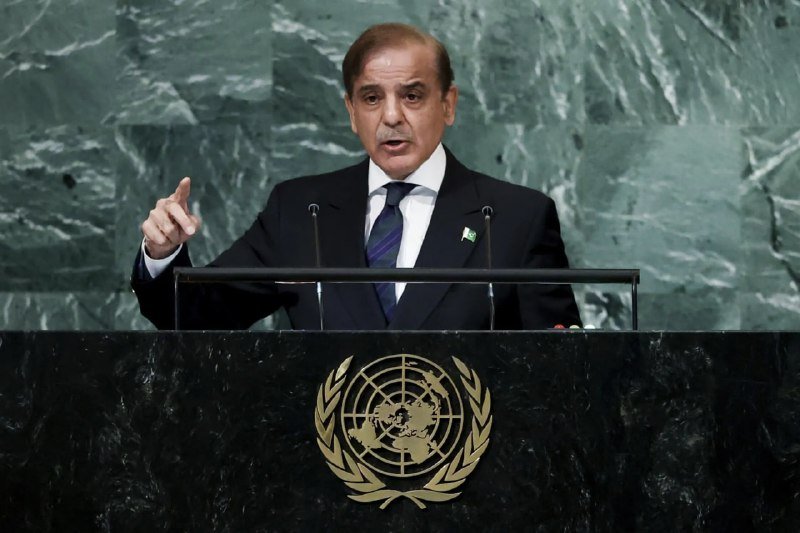
The shooting stopped before anyone agreed on a name for it. By 23:17 UTC on 7 July 2026, two Iran-focused Telegram channels — Fotros Resistance and DD Geopolitics — were carrying the same three-line bulletin: Iranian President Masoud Pezeshkian had cut short a visit to Najaf and flown back to Tehran; US attacks had ended; shrapnel from strikes on a commercial site had injured several people. That is the size of the verified record at the moment of writing. Everything else is interpretation. And in the hours after a US–Iranian exchange of fire, interpretation is what does most of the political work.
The temptation, in such a window, is to treat the first wire summary as the truth. It almost never is. A brief round of strikes, a presidential itinerary change, an unspecified casualty count — these are inputs to a story that will harden over days, not minutes. The useful discipline right now is to slow down: name what is confirmed, flag what is asserted, and resist the gravitational pull of whichever press briefing arrives first.
What the bulletins actually say
Strip the Telegram traffic to the load-bearing facts. The reported items are: (1) Pezeshkian left Najaf for Tehran earlier than scheduled; (2) the US attack sequence is described as ended; (3) several people were injured by shrapnel at a struck commercial site. None of the three items specifies a duration, a target list, or an Iranian counter-action. None names a military formation or a chain of command. The Telegram sources carrying the bulletin — Fotros Resistance, an Iranian-opposition channel with a documented anti-regime editorial line, and DD Geopolitics, a regional desk that aggregates Persian- and Arabic-language dispatches — are not neutral wires, and their convergence on the same lines does not make the lines independent. It means a single underlying feed propagated across two adjacent audiences. That distinction matters.
The "end" of US operations, in particular, is a categorical claim that rarely survives first contact with a Pentagon readout. Strikes pause. They do not always stop. The reporting so far gives the reader a verb without a timeframe, which is precisely the shape of claim that gets quietly walked back over 48 hours.
The framing problem
Two competing storylines will arrive in the next news cycle, and they are already drafting each other. The first — favoured by Western wire desks covering a White House press conference — will frame the episode as a calibrated American operation that achieved its aims and was always intended to wind down quickly. The second — favoured by Iranian state-aligned outlets and by sympathetic regional coverage — will frame it as a humiliation or a forced de-escalation, with Pezeshkian's early return read as the choreography of a leader returning to manage consequences rather than victory.
Both framings start from the same three facts and reach opposite conclusions. That is the giveaway. When two opposing narratives can both be hung on the same evidence, the evidence is doing less work than the narrative is. The honest move is to name which additional facts would distinguish the two readings: a confirmed target list, a US statement of political objective, an Iranian retaliatory action, a casualty count beyond "several," a return date for Pezeshkian's regional travel, a public statement from the supreme leader's office. None of these have appeared in the verified record.
The itinerary tell
Pezeshkian's cut-short Najaf trip is the single most legible signal in the bulletin, and the most under-read. Heads of state do not abandon Najaf visits on a whim — the pilgrimage carries religious, diplomatic, and factional weight inside Iranian politics, and the schedule around it is negotiated across offices and weeks. A return to Tehran earlier than planned is either a response to a security event the president judges to require his presence, or a pre-emptive repositioning ahead of one that officials believe is coming. Either reading implies an Iranian assessment of risk that the public record does not yet capture. The bulletin does not tell us which. It does tell us the Iranians themselves treated the next 24 hours as consequential enough to relocate a head of state mid-pilgrimage.
Stakes, and what to refuse
If the trajectory continues — a pause, then a renewed strike package under a different operational name — the losers are the civilians at the struck commercial site whose injuries the bulletin flattens to a count. They are also the Iranian and US publics being asked to absorb a foreign-policy shock without a confirmed objective, a confirmed cost, or a confirmed end-state. The winners are the actors — on both sides — who benefit from ambiguity: a White House that can describe a single strike package as either escalation or restraint, an Iranian security establishment that can frame the same event as either defiance or prudence. Press briefings exist to convert ambiguity into narrative. The reader's job is to recognise the conversion as it happens.
What this publication will refuse, over the coming 72 hours, is the temptation to treat whichever official readout arrives first as the ground truth. The Telegram traffic that produced this article is sourced, traceable, and limited. Wire copy will be more polished and less constrained. That is not the same thing as being more accurate. The verified record — three lines, two channels, no target list — is the floor. Everything above it is a claim, and the claim's first responsibility is to declare itself.
Desk note: Monexus ran the bulletin as filed, attributed the lines to the two channels that carried them, and declined to fill the gaps with sourced-not-in-the-record context. Western-wire framings of the strike as "calibrated" and Iranian-aligned framings of it as forced de-escalation are both held for a later cycle, once target lists and casualty figures exist.
Wire provenance
This editorial synthesis draws on the following public wire/social posts:
- https://t.me/FotrosResistancee
- https://t.me/DDGeopolitics
- https://t.me/FotrosResistancee