Iraq's Dollar Detour: How a Four-Month Cash Pause Reshaped the U.S.-Iran Periphery
After the U.S. paused cash shipments to Baghdad for four months to choke militia financing, Iraq agreed to tighter dollar controls — a swap that landed the same day Washington declared the Iran ceasefire "over."
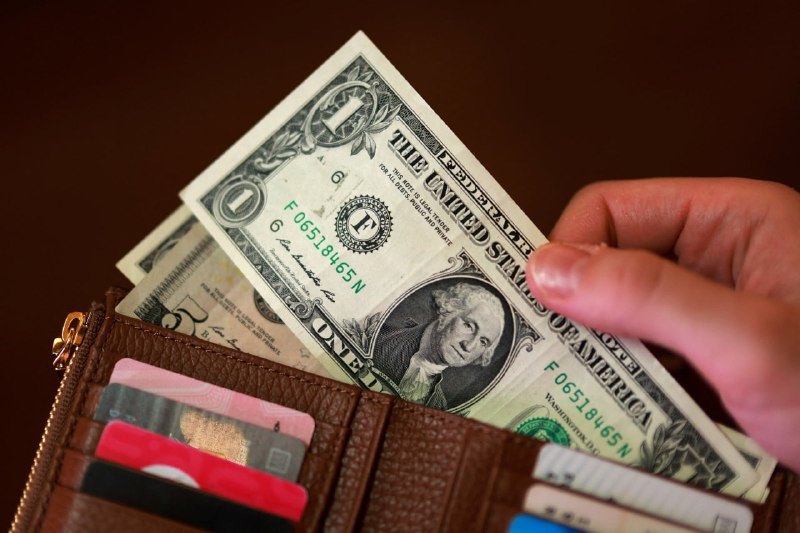
On 8 July 2026, the United States resumed billions of dollars in cash shipments to Baghdad that it had paused for four months, after Iraq agreed to tighten financial controls aimed at keeping U.S. dollars out of the hands of Iran-backed militias. The mechanics — a temporary suspension of physical-dollar flows into the Iraqi banking system in exchange for tighter anti-money-laundering and correspondent-banking rules — read like a sanctions-enforcement action dressed up as a logistics story. The same day, separately, U.S. President Donald Trump declared that both the U.S.-Iran memorandum of understanding and the broader Iran ceasefire were "over," according to posts on X by the Polymarket account and by Unusual Whales citing the YF feed. The conjunction of those two developments offers a clean snapshot of how dollar plumbing and ceasefire rhetoric now operate as twin instruments of U.S. pressure on Tehran.
What the wire items describe is less a single episode than a recoupling: Iraq's banking sector, the U.S. Federal Reserve's New York cash-carrier operation, and the militia-finance map of the Iran-aligned axis are being forced back into alignment after a period in which they drifted. The trade is explicit — liquidity for compliance — and the timing, landing the same day the diplomatic track was declared ruptured, is the news. Read together, the two stories suggest that the United States is betting that financial plumbing can do the work that diplomacy currently cannot.
A four-month pause that rattled Baghdad
The mechanics of the pause, as described by the Telegram channel Clash Report on 8 July 2026, were unsentimental. The U.S. suspended cash shipments into Iraq for roughly four months — a window long enough to squeeze Iraqi bank liquidity, squeeze merchant importers who trade in notes, and squeeze the informal hawala networks that have historically ferried cash across the Iraqi-Iranian border. In return for the shipments being switched back on, Baghdad agreed to tighten financial controls aimed at stopping U.S. dollars from reaching Iran-backed militias operating on Iraqi soil or transiting Iraqi territory.
The relevant instrument is the network of dollar-clearing relationships Iraqi banks maintain with the Federal Reserve Bank of New York via correspondent banks — chiefly JPMorgan and Citi. Since 2020, Iraqi banks have been operating under a series of tightening measures aimed at preventing dollar invoices from being settled for imports that, on paper, are food and medicine but in practice finance Iranian trade. The current deal, as flagged by Polymarket's 8 July 2026 post repeating the breaking line, is the latest tightening of that regime: an Iraqi commitment to police its own dollar flows in exchange for U.S. willingness to keep printing shipments moving. The Polymarket post does not name Iraqi institutions, and the Clash Report summary does not specify the dollar amount involved — the sources do not contain a figure. Both characterise the financial scale as "billions."
For Baghdad, the calculus is coercive. A country that imports most of what it consumes cannot afford a multi-month freeze in the physical delivery of dollars. The pause's effect on Iraqi merchant balance sheets would have been immediate and visible: importers unable to settle letters of credit, manufacturers unable to pay for imported inputs, and a parallel market in U.S. banknotes tightening around those with cash already on hand. The compliance concession is the price of restoring that flow.
A coincidence of timing with the ceasefire collapse
That this deal lands on the same day that Trump declared both the Iran ceasefire and the broader U.S.-Iran memorandum of understanding "over" is not, on the available evidence, coincidence. According to the Polymarket account's 8 July 2026 post, Trump declared the Iran ceasefire "over." Approximately six hours later, per Unusual Whales' same-day post citing the YF feed, Trump said the U.S.-Iran memorandum of understanding itself is "over."
The two-step is significant. A "memorandum of understanding" is the softer legal animal of the two — a non-binding agreement that signals political alignment without committing either side to enforceable terms. A "ceasefire" implies an active halt in kinetic operations between named parties. For Trump to publicly retire both labels in the same 24-hour news cycle is to communicate that the diplomatic layer between Washington and Tehran has been, by the U.S. side's own admission, withdrawn — not merely paused or re-negotiated.
That renders the Iraqi currency corridor the principal live instrument. When the diplomatic channel is shuttered, the financial channel becomes the channel. Iraqi dollar controls, in that reading, are not a side file; they are the file.
What the dollar controls actually target
The militias named by Clash Report's 8 July 2026 item as the Iraqi side of the Iran-backed network — Kata'ib Hezbollah, Asa'ib Ahl al-Haq, Harakat Hezbollah al-Nujaba, and the political organisations that sit in the Coordination Framework coalition in Baghdad — operate partly through formal payrolls and partly through hawala. The hawala route takes physical U.S. banknotes, moves them across the Iraqi-Iranian border, and converts them into rials, goods, or services on the other side without leaving a correspondent-banking audit trail.
Cutting that route requires either of two things: choking the physical supply of dollars that reach the hawala dealer in the first place, or forcing the dealer into the formal banking system where they can be identified and reported. The U.S. four-month pause of cash shipments delivered the first: a temporary scarcity that, if extended, would have starved the hawala network of input inventory. The Iraqi compliance commitment delivers the second: tighter Know-Your-Customer rules, transaction-monitoring requirements, and audit trails on the banks that touch the cash. The "billions" shipped by the Federal Reserve to Iraq annually are the chokepoint, because they are the input that flows both to the legitimate Iraqi economy and, by leakage, to the militias.
The sources available do not specify which Iraqi banks have agreed to the tightening, which militia finance streams are the named targets, or how the controls will be verified on the Iraqi side. They confirm only that a tightening agreement was reached and a cash resumption followed. That asymmetry — a public confirmation of the deal, a private specification of its terms — is itself part of how the policy works.
Counter-reads: is the deal as robust as it looks?
Three plausibly competing reads of the same data deserve airtime alongside the dominant framing.
First, the deal may be more performative than financial. Iraqi politics have produced several such tightening announcements in the past decade — most recently during 2023-24 when the U.S. Treasury sanctioned a series of Iraqi banks over alleged Iran-linked transfers — without the underlying leakage measurably ending. Compliance theatre is a known genre, and the four-month cash pause may have been a U.S. demonstration of leverage rather than the opening of a sustained pressure campaign. The Polymarket framing, by contrast, treats the Iraqi concession as the headline itself; that framing is consistent with treating the deal as a substantive shift.
Second, the simultaneous declaration that the Iran ceasefire and memorandum of understanding are "over" may be read not as a collapse but as a deliberate escalation designed to squeeze the Iraqi side into compliance. Under that reading, the ceasefire rhetoric is the visible instrument; the Iraqi currency corridor is the quiet one. The sources do not permit a verdict between the two reads.
Third, the deal may not in fact materially change the militia finance picture, but may instead re-route it. Hawala is a substitute technology: when banknote supply tightens, the network moves to gold, to digital stablecoins pegged to the dollar, to Chinese yuan routed through UAE, or to barter. The structural critique — that policing correspondent-banking flows at the level of Iraqi banks cannot intercept a network that has many substitutes — is consistent with the broader limits of extraterritorial sanctions enforcement. Neither the Clash Report item nor the Polymarket posts address the substitution question.
What the available evidence does support is that the U.S. resumed cash shipments only after Iraq agreed to tighten controls, and that the Iranian diplomatic track was declared severed the same day. The causal direction between the two is not specified in the wire items, and this publication finds that the most defensible read is the simultaneous one: the financial and diplomatic levers are being pulled in coordination, not independently.
The structural frame — dollar politics in plain prose
What is unfolding in Baghdad is a working example of how the dollar's plumbing has become a primary lever of U.S. foreign policy toward Iran. The mechanism is older than the current cycle — it stretches back through the 2012-15 SWIFT-era sanctions campaign against Iranian banks, through the 2018 reimposition of secondary sanctions after the U.S. withdrawal from the JCPOA, and through the 2020-23 era of Iraqi and Lebanese bank delistings. Each phase pushed the same lever harder: choke dollar access at the overseas clearing banks and the leverage travels upstream to Tehran.
The current phase is the more granular version. Instead of threatening entire economies with correspondent-banking cutoff, the U.S. is negotiating individual country compliance on the strength of a temporary, reversible cash pause. Iraq is the case in point, but the template — temporary liquidity squeeze for compliance concession — is portable. Lebanon has been operating under a similar set of constraints. Jordan's banking sector has been under varying degrees of compliance pressure. Even the UAE, despite the 2024 de-risking push, has been subject to the same architecture.
Read in that frame, the dollar is being converted from a transactional currency into a political instrument with growing precision. The Iraqi deal, modest as it is, is part of that same drift.
Stakes: who wins, who loses, over what horizon
If the Iraqi tightening holds and the financial pressure on Iran-aligned militias intensifies, the winners are the U.S. Treasury and the Federal Reserve operation in New York — both of which retain a leverage tool over Baghdad that has now been re-validated. The Iraqi government gets the cash shipments it needs for ordinary commerce, at the cost of an erosion in the autonomy of its banking regulator. Tehran loses a financing conduit that has been historically hard to police. The Financial Action Task Force, the global body that sets anti-money-laundering standards, gets a higher-profile example of bilateral pressure substituting for multilateral rule-making.
If the tightening does not hold, the precedent moves the other way. Iraq demonstrated that a finite cash pause could be absorbed; a future Iraqi government — or a Lebanese, Jordanian, or Gulf one — would be less willing to make compliance concessions once the cost of holding out has been shown to be survivable. The U.S. would have spent its most credible short-term lever.
What remains uncertain is whether the U.S.-Iran ceasefire label is "over" in the sense of formally abandoned, merely rhetorically downgraded, or something in between. The Polymarket and Unusual Whales posts quote Trump as having said it is "over"; they do not specify whether the underlying arrangement is being replaced, renegotiated, or simply left in suspense. The sources do not address Iranian-side reactions, the status of any active back-channel, or whether Gulf state intermediaries are still holding parallel files open. Those gaps are the things the next 48 hours of wire traffic will resolve — or expose.
Desk note: Where wire coverage frames the Iraqi dollar concession as the headline and Trump-era outlets amplify the ceasefire-overline as the closing beat, this publication finds the more durable story is the conjunction: financial plumbing and diplomatic rhetoric being operated as twin instruments on the same day. Both beats matter; the linkage is the news.
Wire provenance
This editorial synthesis draws on the following public wire/social posts:
- https://t.me/ClashReport
- https://en.wikipedia.org/wiki/Federal_Reserve_Bank_of_New_York
- https://en.wikipedia.org/wiki/Iraqi_dinar
- https://en.wikipedia.org/wiki/Kata%27ib_Hezbollah
- https://en.wikipedia.org/wiki/Hawala